Japandi is the calm mix of Japanese simplicity and Scandinavian comfort — and honestly, it feels like it was designed for small apartments. Low furniture, warm wood and soft neutral colours make tiny rooms feel taller, brighter and quieter, all at once.
The best part for renters? Nothing in this style needs drilling, painting or a landlord’s permission. Every idea below is deposit-safe and works in a studio or one-bedroom flat, whether your lease is six months or six years.
You do not need a full makeover either. Swap one harsh ceiling light for a paper lantern, add a low coffee table, clear a single surface — small moves create big calm. Japandi rewards restraint, not spending.
Here are 15 Japandi small apartment ideas you can start this weekend. Each one comes with a renter-friendly tip and a real product to shop, so you can build the look piece by piece.
Key Points
- Japandi = Japanese minimalism + Scandinavian cosiness — a style built for small spaces.
- Keep furniture low, the palette warm-neutral, and surfaces nearly clear.
- All 15 ideas are renter-friendly: no drilling, no painting, no damage.
- Natural materials do the heavy lifting: light wood, linen, paper, ceramic and plants.
- Start with light and one anchor piece — the calm follows quickly.
Table of Contents
- Start With a Low-Profile Platform Bed
- Ground the Room With a Natural Woven Rug
- Swap Harsh Lighting for a Paper Lantern Glow
- Choose One Low Wooden Coffee Table
- Go Vertical With a Bamboo Ladder Shelf
- Divide Space With a Linen Noren Curtain
- Style One Wabi-Sabi Vase Moment
- Hang Sheer Linen-Look Curtains High and Wide
- Add One Sculptural Plant
- Try Low Floor Cushions for Extra Seats
- Calm the Entryway With a Bench and Basket
- Use Open Cube Storage for Display and Hide
- Lean Thin Black Frames Instead of Nails
- Add a Warm LED Glow Behind Furniture
- Build a Tiny Reading Nook
1. Start With a Low-Profile Platform Bed
Credit: @alexthanhn
A low bed changes everything in a small bedroom. It drops the visual weight of the room, makes the ceiling feel taller, and gives that grounded Japanese calm instantly. You do not need to buy a whole new frame — adjustable bed risers let you fine-tune the height of the bed you already own. Take off a bulky headboard and the wall behind it suddenly breathes. Keep the bedding simple: warm white or oatmeal linen, one dark accent pillow, nothing fussy. This pairs beautifully with earth tone small bedroom palettes, where clay and sand shades do the decorating for you.
Lower the bed you already own. Adjustable risers change your bed height without tools or a new frame — your deposit stays safe and the silhouette reads instantly Japandi.
🛒 Shop this idea: Utopia Bedding Adjustable Bed Risers
View on Amazon2. Ground the Room With a Natural Woven Rug
Credit: @byronhartzel
Bare floors make a small flat feel cold and echoey. One flat-weave rug in jute, wool or cotton pulls the seating area together and adds the natural texture Japandi loves. Stick to warm beige or oatmeal — nothing patterned or bright. A washable rug is the renter’s best friend: spills, muddy shoes and pet paws wipe clean without a fight. Place the front legs of your sofa on the rug so the whole zone reads as one calm room instead of scattered furniture on bare boards.
Size down, not up. A rug that fits just the seating zone — not wall to wall — keeps a studio feeling open while still warming up the floor.
🛒 Shop this idea: Hazo Haus Washable 5×7 Area Rug
View on Amazon3. Swap Harsh Lighting for a Paper Lantern Glow
Credit: @homebaes_
Overhead “big lights” are the enemy of calm. A paper lantern pendant or a simple arc floor lamp throws soft, warm pools of light instead of flat brightness. Paper shades are cheap, light and very Japanese — hang one over the coffee table with a plug-in cord kit so there is no wiring at all. Use warm bulbs (2700K) everywhere; cool white kills the mood instantly. One glowing lantern in the corner at night will make your whole flat feel like a retreat.
Store the original fixture. Keep the landlord’s ceiling light in a cupboard and rehang it on moving day — zero drama, full deposit back.
🛒 Shop this idea: Brightech Mason Arc Floor Lamp
View on Amazon4. Choose One Low Wooden Coffee Table
Credit: @slowdownstudio
In Japandi rooms the coffee table sits low — around 30 to 40 cm — which stretches how tall the room feels. Pick light oak or ash with clean lines and slim legs so the floor stays visible underneath. One table, not a nest of three; every extra piece is visual noise in a small flat. A lift-top version doubles as a work-from-home desk in a studio, which is very on-brief for tiny living. Style it with exactly three things — a tray, one ceramic piece, one book — and then stop.
| Do | Skip |
|---|---|
| Low table, 30–40 cm high | Chunky high tables |
| Light oak or ash | Dark glossy finishes |
| Three styled objects max | Crowded tabletop clutter |
One table earns its footprint. A lift-top coffee table works as desk by day and table by night — two jobs, one piece, zero extra floor space.
🛒 Shop this idea: Yaheetech 47.5-Inch Lift-Top Coffee Table
View on Amazon5. Go Vertical With a Bamboo Ladder Shelf
Credit: @kurashicom_en
Small flats run out of floor space fast, so borrow the walls. A leaning bamboo ladder shelf gives you five tiers of storage without a single drill hole — perfect for books, ceramics and a trailing plant. Bamboo keeps the palette natural and light, and the slim profile suits narrow walls. Style it sparsely: leave a third of each shelf empty so it reads calm, not cluttered. For more compact-room thinking, browse these small living room decor ideas for tiny homes before you buy anything new.
Lean, don’t mount. A leaning shelf needs no brackets, no wall anchors and no patching — it simply moves with you to the next flat.
🛒 Shop this idea: Maydear Bamboo 5-Tier Ladder Shelf
View on Amazon6. Divide Space With a Linen Noren Curtain
Credit: @libu_home
Studio renters know the pain: one room has to be bedroom, living room and office. A Japanese noren curtain — the split fabric panels you see in shop doorways — divides zones softly without blocking light the way a folding screen does. Hang it from a tension rod in a doorway or across an open-plan corner. Linen or cotton in natural white keeps it Japandi; it sways, it breathes, and it costs far less than any room divider while looking ten times more intentional.
🛒 Shop this idea: Room Divider Curtains Set
View on Amazon7. Style One Wabi-Sabi Vase Moment
Credit: @thedesignfiles
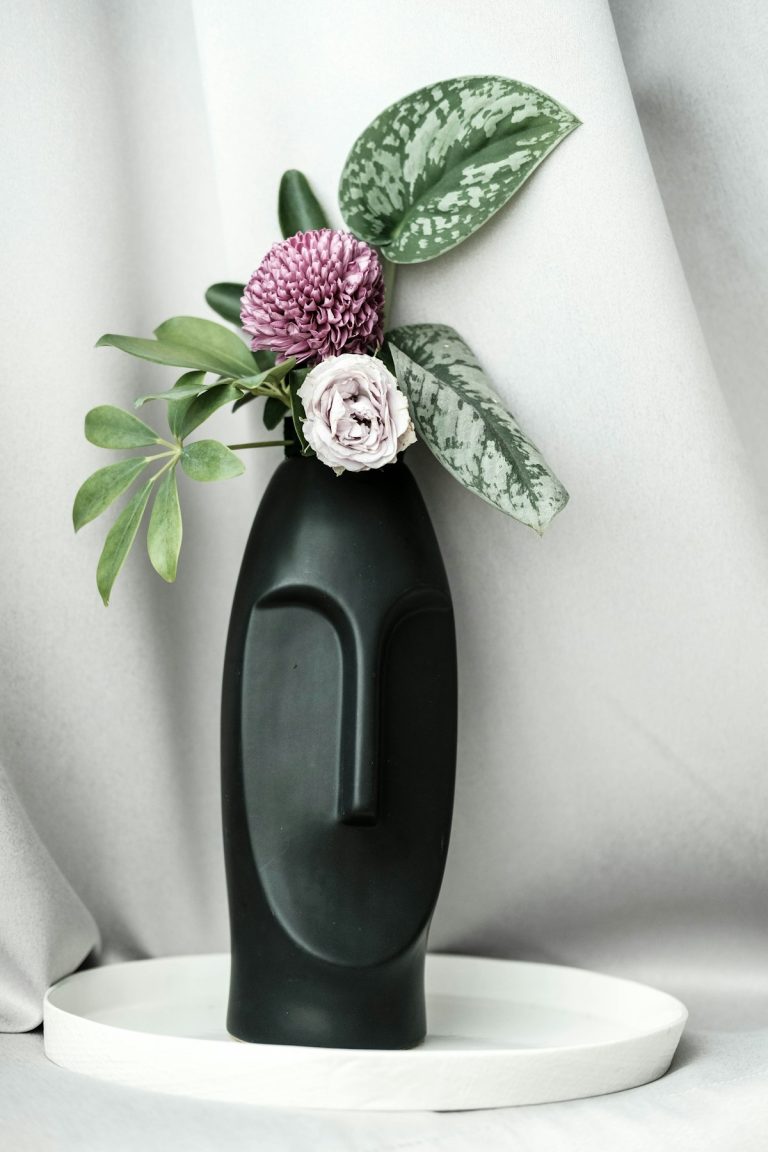
Wabi-sabi is the Japanese love of imperfection — and it is the soul of Japandi. Instead of a shelf crowded with trinkets, style one quiet moment: a handmade-look ceramic bud vase holding a single dried stem or branch. Ribbed or matte finishes in beige, clay or charcoal catch the light beautifully and feel collected rather than decorated. One imperfect object, chosen with care, beats ten perfect ones every time.
🛒 Shop this idea: Beige Ribbed Ceramic Bud Vase Set of 3
View on Amazon8. Hang Sheer Linen-Look Curtains High and Wide
Credit: @colorandspace_
Heavy curtains chop a small window in half and eat the daylight. Sheer linen-look panels filter the sun softly and make the glass feel twice as wide when you mount the rod close to the ceiling and well past the frame. White or oatmeal keeps the palette calm and Scandi. They need no lining, wash easily, and a tension rod means no drill holes in rental walls. If your walls are already pale, sheers in the same tone make the whole room glow — see these small bedroom white walls ideas for the full effect.
🛒 Shop this idea: White Sheer Curtains 84 Inches Long, 2 Panels
View on Amazon9. Add One Sculptural Plant
Credit: @apartmenttherapy
Every Japandi room needs something alive. One sculptural plant — a fiddle-leaf fig, an olive tree, even a simple bonsai — adds height and a deep green note against all the beige. It is the single fastest way to stop a neutral room feeling flat. If your flat is dark or you are a serial plant killer, a good faux tree gives the same silhouette with zero watering. Set it in a matte ceramic or terracotta pot, never glossy plastic, and let it be the tallest thing in the room.
🛒 Shop this idea: Aveyas 6ft Artificial Fiddle Leaf Fig Tree
View on Amazon10. Try Low Floor Cushions for Extra Seats
Credit: @studio.one_designs
Japanese homes sit low, and floor cushions are the renter-friendly way to copy it. A couple of large round poufs around the coffee table give you guest seating that stacks in a corner when you do not need it. Look for cotton or linen covers in solid earthy tones — oatmeal, clay, stone grey. They double as footrests, cost far less than extra chairs, and keep the whole room at that low, grounded Japandi height.
🛒 Shop this idea: HIGOGOGO Round Stuffed Pouf Ottoman
View on Amazon11. Calm the Entryway With a Bench and Basket
Credit: @jamesseah
Japanese entrances (genkan) are a small ritual: shoes off, clutter hidden, calm begins. Copy it in your hallway with a low wooden bench and one seagrass basket for the daily mess — post, keys, reusable bags. It takes up almost no floor space but makes the whole flat feel considered from the first step inside. Choose natural fibres and wipeable surfaces so the entryway stays serene even on the busiest mornings.
🛒 Shop this idea: Vintiquewise Seagrass Wicker Gift Basket
View on Amazon12. Use Open Cube Storage for Display and Hide
Credit: @smallspacearc
Closed storage hides clutter; open cubes display the beautiful bits. A nine-cube organizer does both in one footprint, which is gold in a studio:
- Baskets on the lower cubes for chargers, paperwork and the ugly-but-necessary stuff.
- One styled object per upper cube — a ceramic, a book stack, a small plant.
- Light finishes only — white or natural wood melts into a small room instead of looming.
Leave at least two cubes empty. Negative space is a Japandi design material, not wasted space.
🛒 Shop this idea: Best Choice Products 9-Cube Storage Organizer
View on Amazon13. Lean Thin Black Frames Instead of Nails
Credit: @boligmagasinetdk
Japandi art is quiet: one ink-wash print, one abstract landscape, thin black frames. And renters can skip the hammer entirely — leaning frames on a shelf, console or even the floor looks intentional and costs nothing in wall repairs. A set of matching frames in different sizes gives you a gallery wall without a single hole. Keep the artwork monochrome or muted; the frames should whisper, not shout.
🛒 Shop this idea: Americanflat Gallery Wall Frame Set (7 Piece)
View on Amazon14. Add a Warm LED Glow Behind Furniture
Credit: @communa.sg
Layered light is what makes Japandi rooms feel expensive at night. A strip of warm-white LED tucked behind the TV console, under a floating shelf or along the back of the bed frame adds a soft halo with zero wiring — most strips are USB-powered and stick on with adhesive that peels off cleanly. Keep it warm white, never colour-changing rainbow mode, and run it along one edge only. One hidden glow beats three visible lamps.
🛒 Shop this idea: Govee White LED Strip Lights 16.4ft
View on Amazon15. Build a Tiny Reading Nook
Credit: @todayhouse
You do not need a spare room — one corner is enough. A comfortable boucle chair, a small side table and a floor lamp turn dead space by the window into the calmest seat in the flat. Keep the palette consistent with the rest of the room so the nook feels built-in, not bolted on. Add one throw in a natural fibre and a small stack of books, and you have a Japandi retreat that costs less than a night out.
🛒 Shop this idea: Yaheetech Boucle Barrel Accent Chairs, Set of 2
View on AmazonAmazon prices change often — check Amazon for today’s price.
Conclusion
Japandi is not about buying a whole flat’s worth of furniture — it is about choosing less, choosing natural, and keeping everything low and calm. Start with one idea this weekend: swap the harsh overhead light for a paper glow, or clear a single shelf down to one beautiful object. Notice how the room feels. Then add the next piece slowly, letting each one earn its place. Your small apartment will feel bigger, quieter and kinder within days — and your landlord will never know a thing changed.
Frequently Asked Questions
What is Japandi style in simple terms?
Japandi blends Japanese minimalism with Scandinavian comfort. Think low wooden furniture, warm neutral colours, natural materials like linen and paper, and rooms that feel calm rather than empty. Every object earns its place.
Is Japandi good for small apartments?
It is one of the best styles for small spaces. Low furniture makes ceilings feel taller, pale walls bounce daylight deeper into the room, and the “less but better” rule stops tiny flats feeling cluttered.
Can renters do Japandi without drilling or painting?
Absolutely — all 15 ideas above are renter-friendly. Tension rods, leaning shelves, plug-in lighting, washable rugs and leaning frames give you the full look with zero wall damage and your deposit intact.
What colours work best in Japandi decor?
Warm neutrals: oatmeal, beige, warm white, sand and soft clay, with natural wood tones and one dark accent like charcoal or matte black. Avoid cool greys and bright colours — they break the calm.
Is Japandi expensive to pull off?
Not at all. The style is built on restraint, so you buy fewer pieces. Start with lighting and one anchor piece like a rug or low table, then add slowly. Many of the biggest wins — decluttering, rearranging, leaning frames — cost nothing.