
In 2026, kids’ bedroom paint choices have moved beyond “pink for girls, blue for boys.” Color now follows the room’s light, size, and the mood a family wants, with muted shades and thoughtful accents that can suit a child through changing tastes. These 11 kids bedroom wall paint ideas pair versatile colors with practical ways to use them.
Matte paint gives walls a soft, low-sheen look, while limewash adds gentle texture and tonal variation. Both offer a quieter finish than glossy paint; for walls that need frequent cleaning, a washable matte formula is worth considering.
1) Soft Sage or Gray-Green
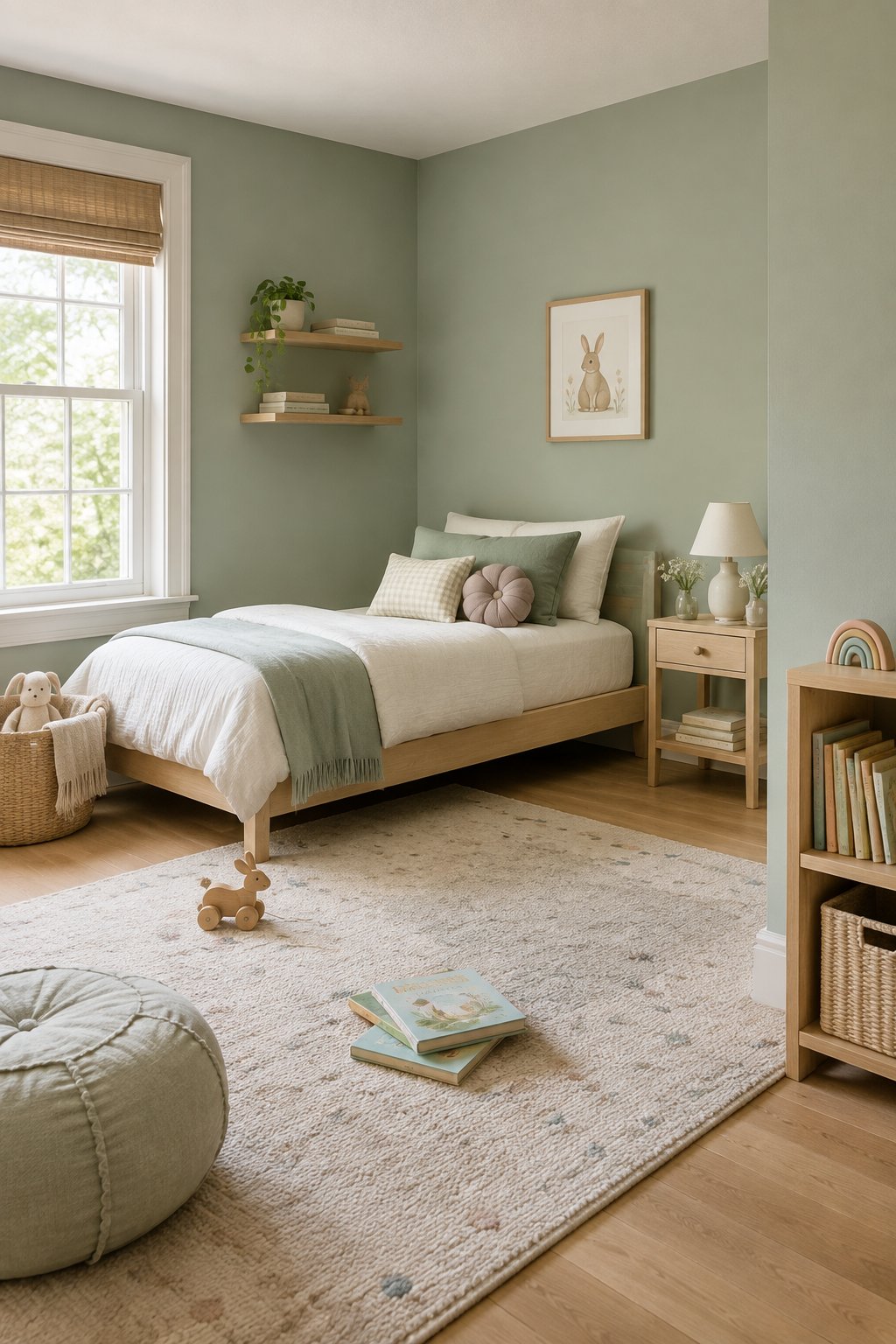
Soft sage or gray-green brings a gentle, nature-inspired feel that works well as an all-over wall color. Its muted quality pairs easily with wood furniture, cream bedding, and brighter toys. Choose a pale shade to keep a small bedroom feeling open, or a deeper gray-green for a cozy room with strong natural light. The color can carry through childhood as furniture and decor change.
2) Muted Aqua-Teal
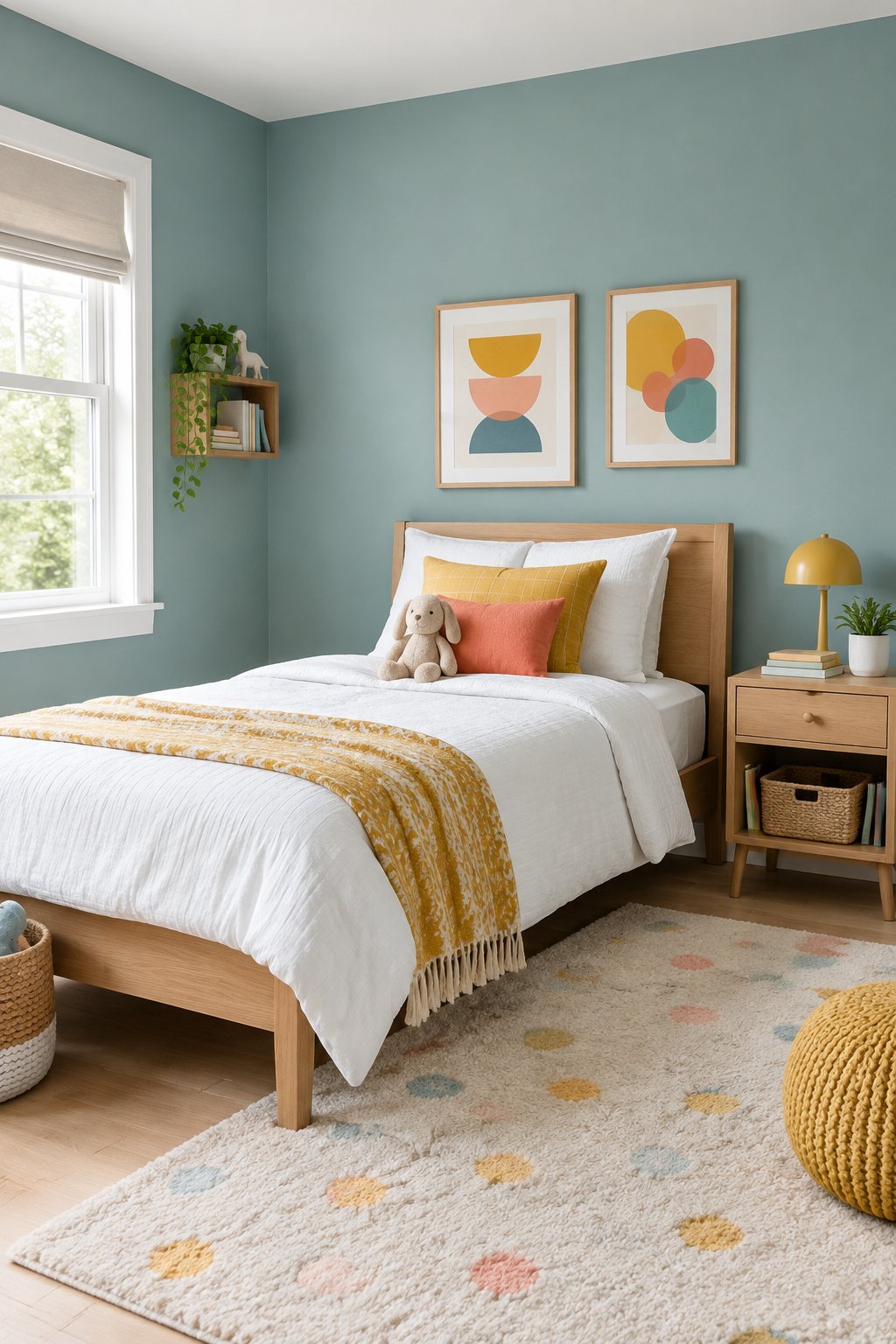
Muted aqua-teal adds color while keeping the room’s palette calm and balanced. A gray undertone softens the blue-green, making it easier to pair with white trim, warm wood, and patterned bedding. Use it across all four walls in a light-filled room, or paint one wall if the shade reads deep in a smaller space. It suits a range of ages without relying on themed decor.
3) Airy Sky Blue
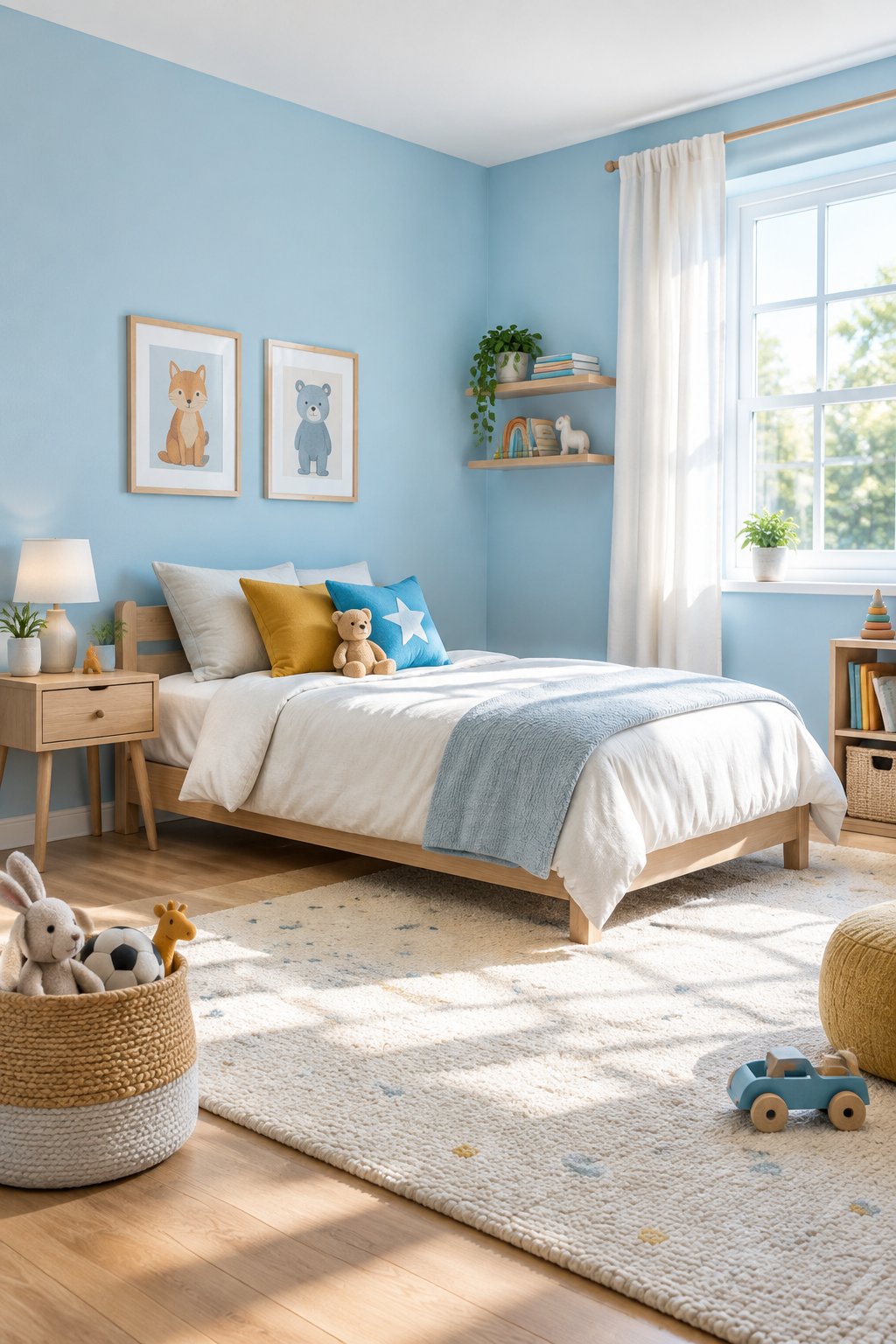
Airy sky blue gives a bedroom a fresh, open look, especially when paired with white or pale neutral trim. A light, slightly muted blue keeps the walls from feeling too bright and works with both playful accents and simpler teen-room decor. In a small bedroom, a pale version helps maintain a sense of space. Check the color in morning and evening light, since blue can look cooler as the sun fades.
4) Warm Terracotta or Blush
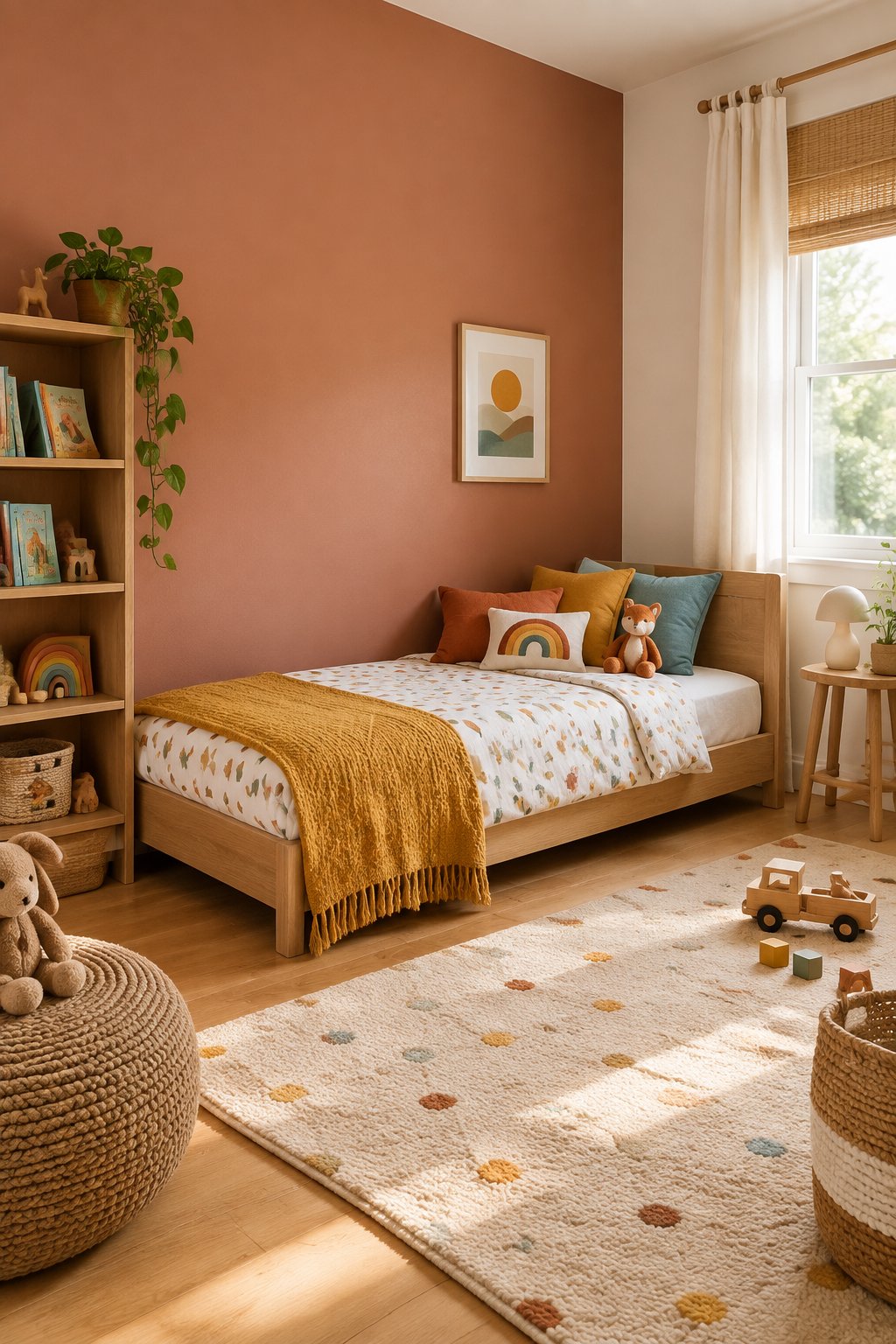
Warm terracotta or blush adds a welcoming, earthy note to a child’s room. A dusty, muted shade feels settled on the walls and pairs well with cream, tan, and natural wood. Use it on one wall for a measured pop of warmth, or choose a pale blush for a smaller bedroom. Simple bedding and flexible art help the color remain suitable as a child’s interests shift.
5) Deep Navy Accent Wall With White Trim
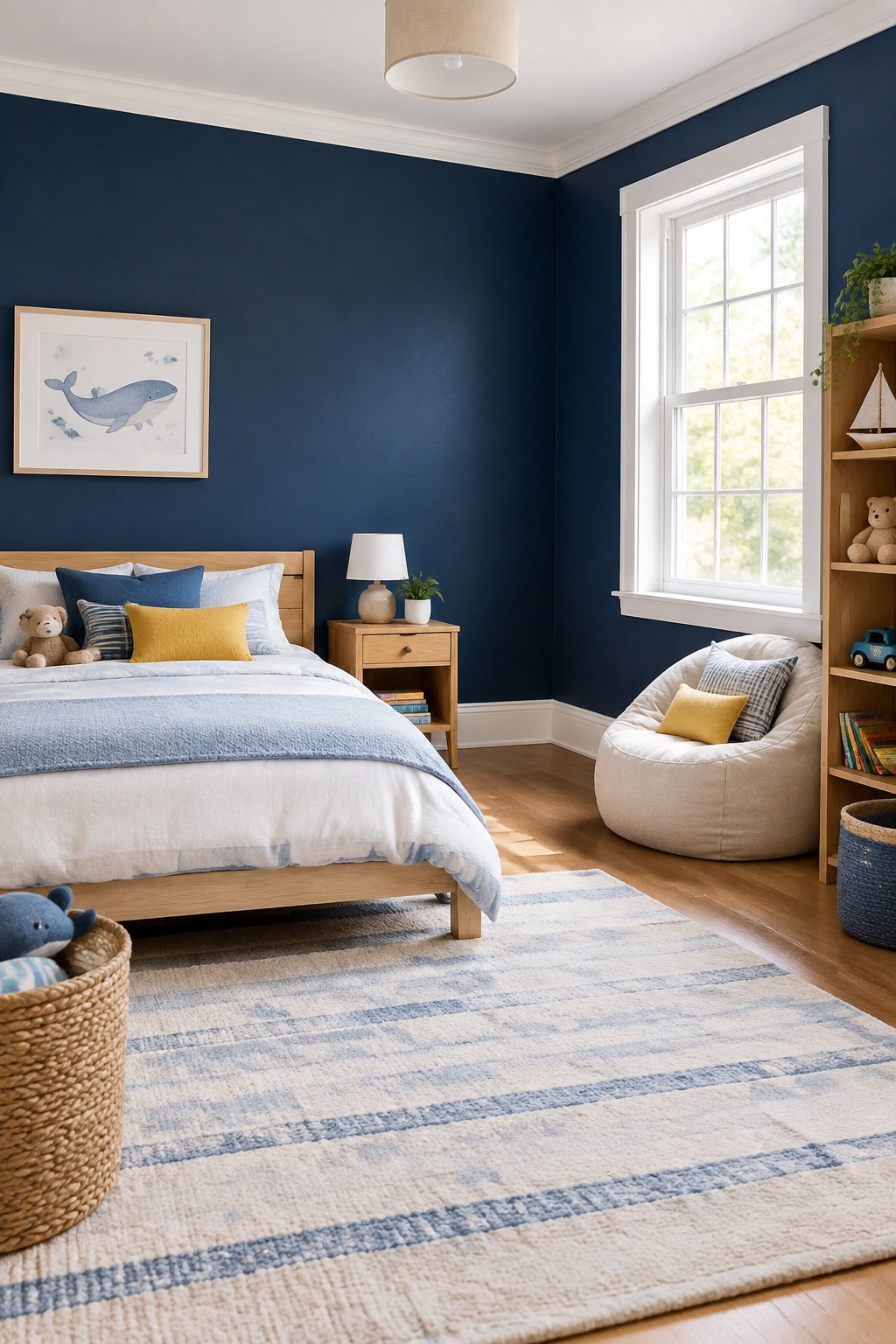
A deep navy accent wall creates a clear focal point while white trim keeps the edges crisp. Place the darker color behind the bed or on a wall with built-in shelves, then keep the other walls light to preserve brightness. Navy works with a wide range of bedding colors and can suit a child’s room through the teen years. In a dim room, test a sample before committing to a large area.
6) Warm Mushroom Brown
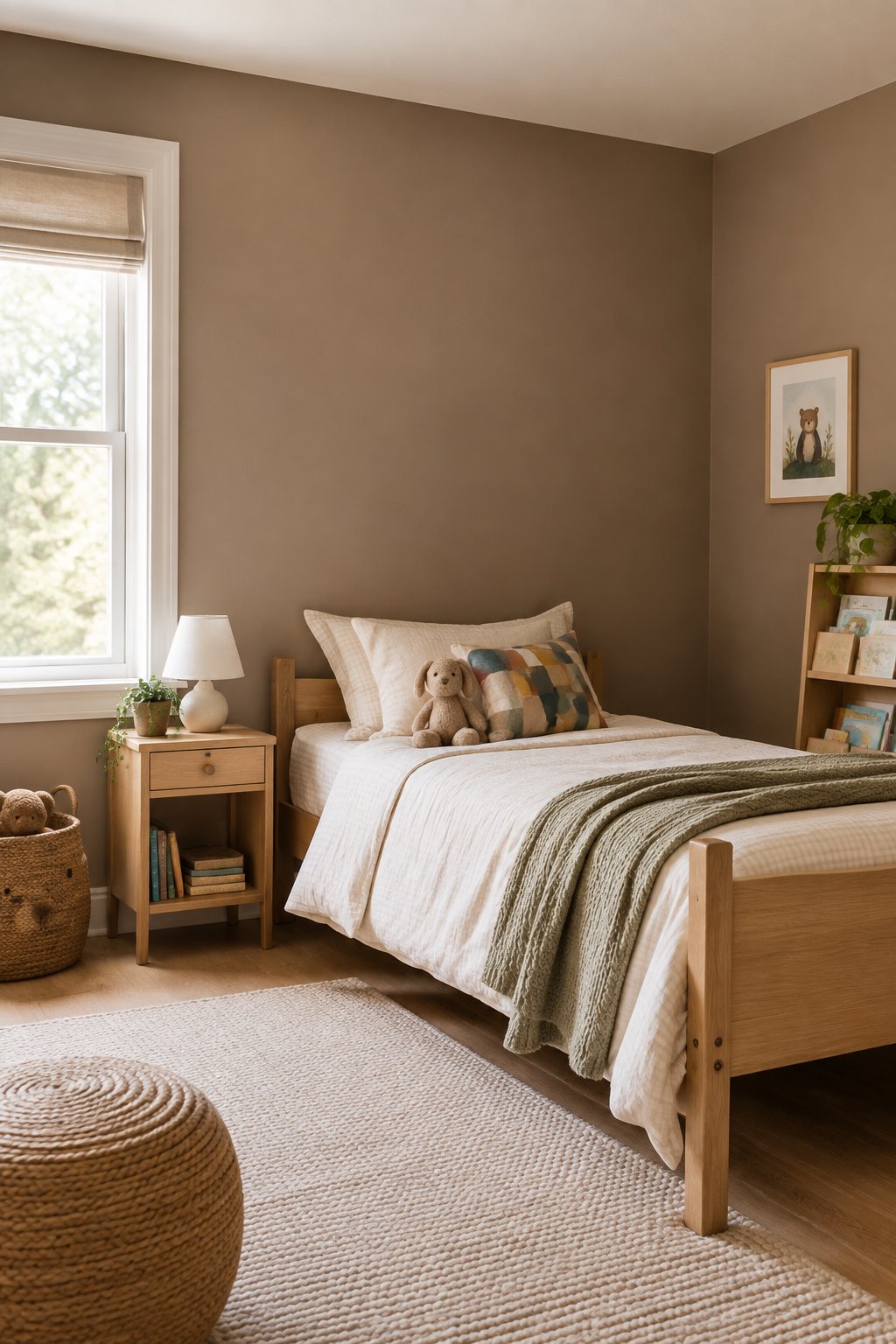
Warm mushroom brown brings a grounded, natural feel that pairs easily with wood and soft neutral fabrics. Look for a balanced taupe-brown with a gentle gray or beige base, since very dark shades can make a small bedroom feel enclosed. A mid-tone works well on a full wall in a bright room; a paler mushroom shade can cover more of a compact space. Colorful books and bedding add contrast without requiring a repaint.
7) Soft Yellow
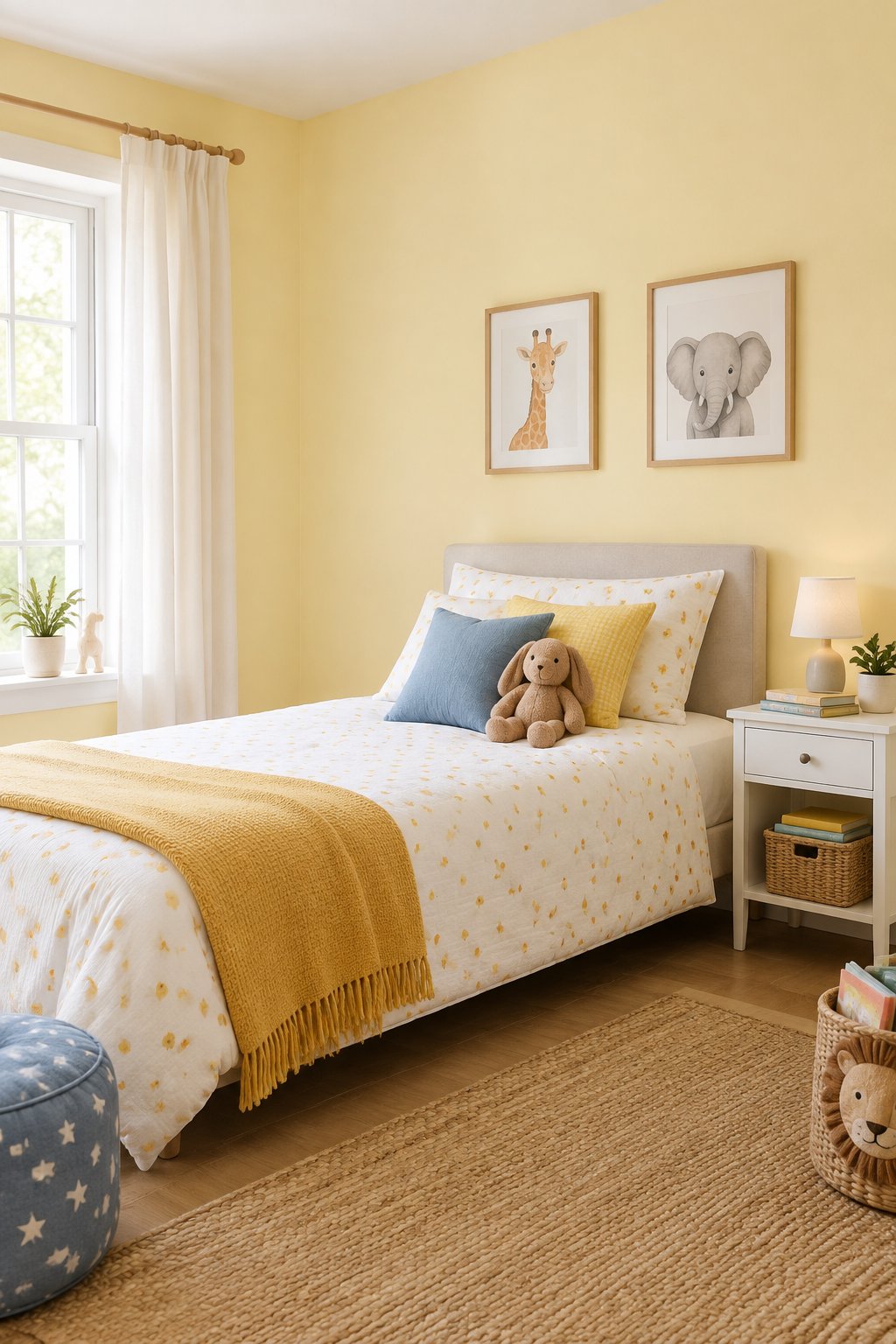
Soft yellow brings warmth and a cheerful note without needing a strong, saturated shade. Pale butter or creamy yellow pairs well with white trim and natural materials. In a sunny bedroom, check that the sample does not become too bright at midday; a muted yellow can feel more balanced across changing light. It also gives colorful bedding and artwork a simple backdrop as a child’s room evolves.
8) Two-Tone Wall With a Chair Rail
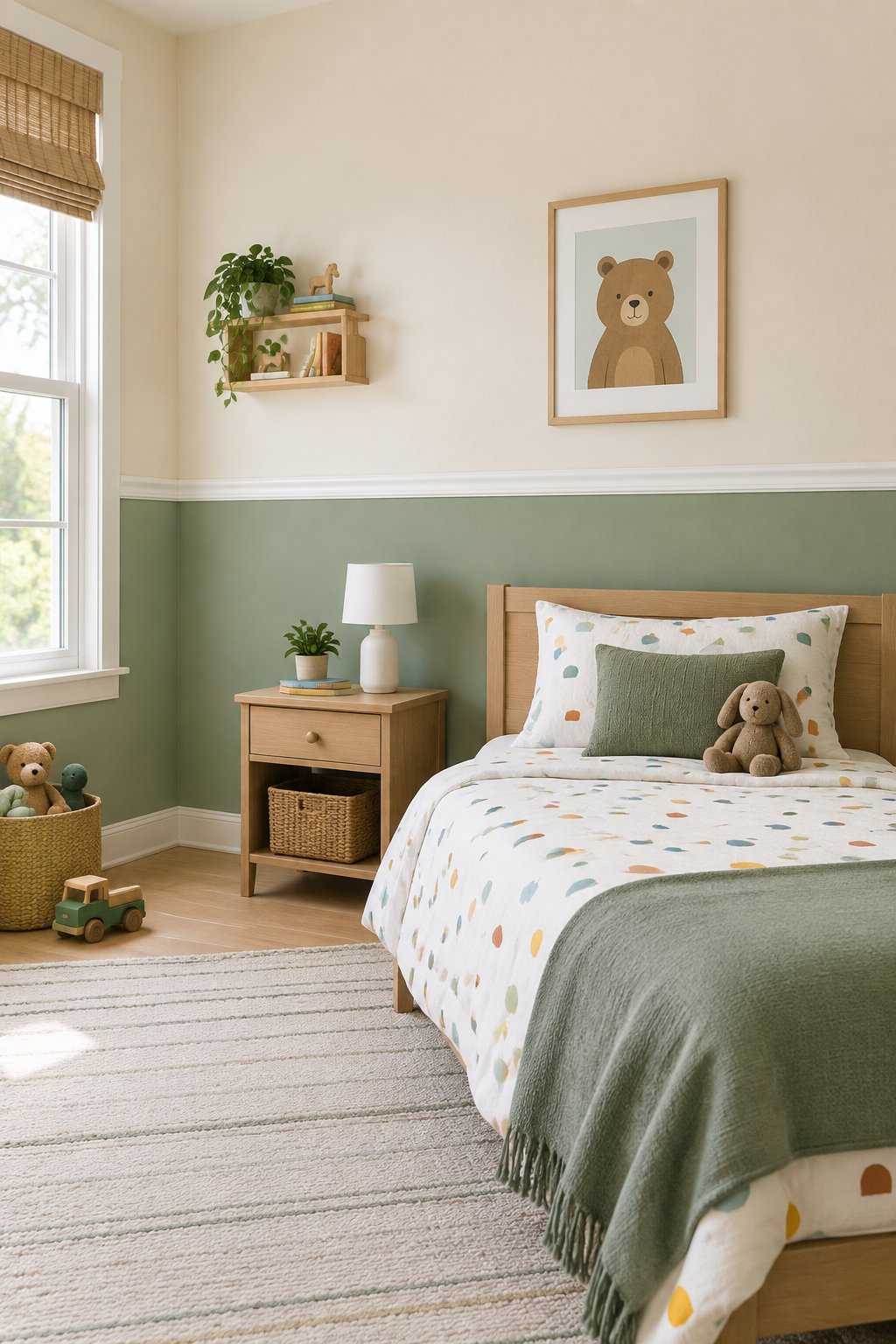
A two-tone wall adds definition while letting one color stay light across part of the room. A chair rail provides a clear division, with a soft neutral above and a deeper shade below for a practical, tailored look. The lower color can echo a favorite accent in the bedding or rug. For a modern version, use a clean horizontal line without molding and mark it carefully before painting.
9) Matte or Limewash Finish
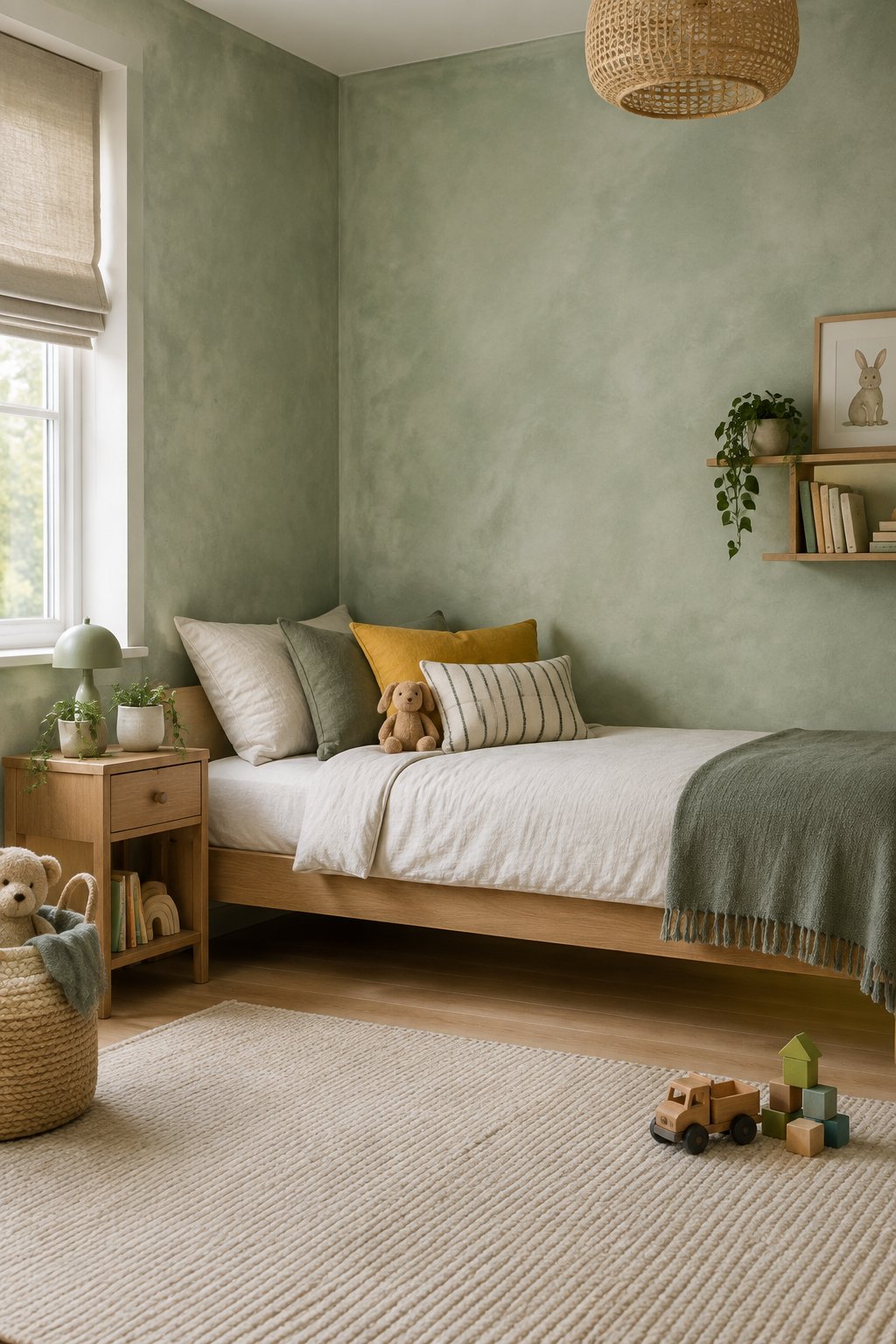
Matte paint or limewash gives a child’s bedroom a softer wall finish with less shine. Matte paint offers a smooth, quiet appearance; limewash creates a cloudy, mineral texture with subtle shifts in tone. Both work especially well with muted colors such as sage, warm white, or mushroom. Limewash has a distinctive, textured look, so a sample on the actual wall helps show how its movement will read in the room.
10) Neutral Base With One Bold Accent Wall
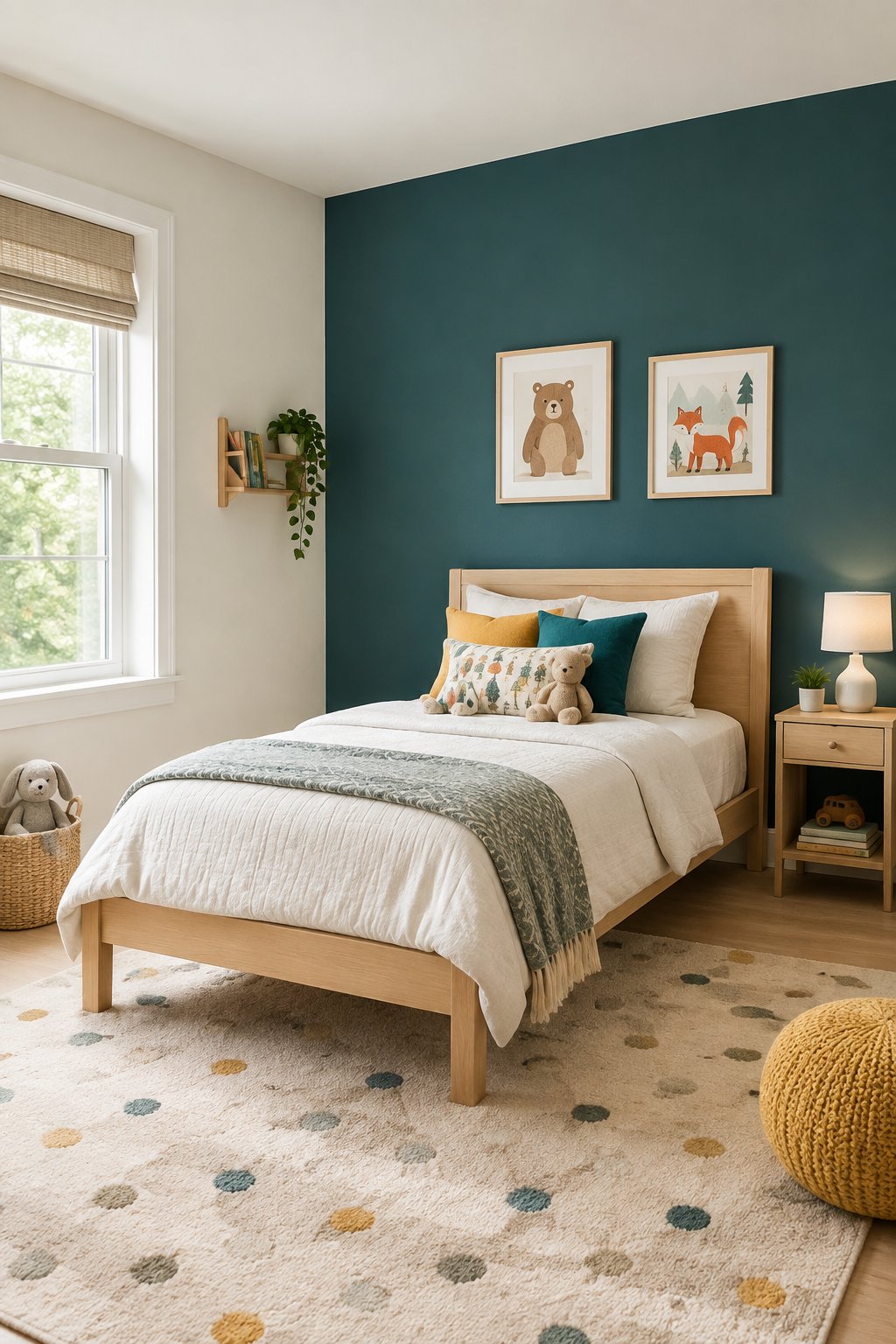
A neutral base with one bold accent wall gives a room personality while keeping most walls easy to refresh. Deep teal, forest green, or a rich blue can anchor the bed wall, while warm white or pale gray keeps the rest of the space bright. The accent can match a rug or a few decor details without turning the whole room into a theme. This layout also makes future color changes more manageable.
11) Dusty Lavender
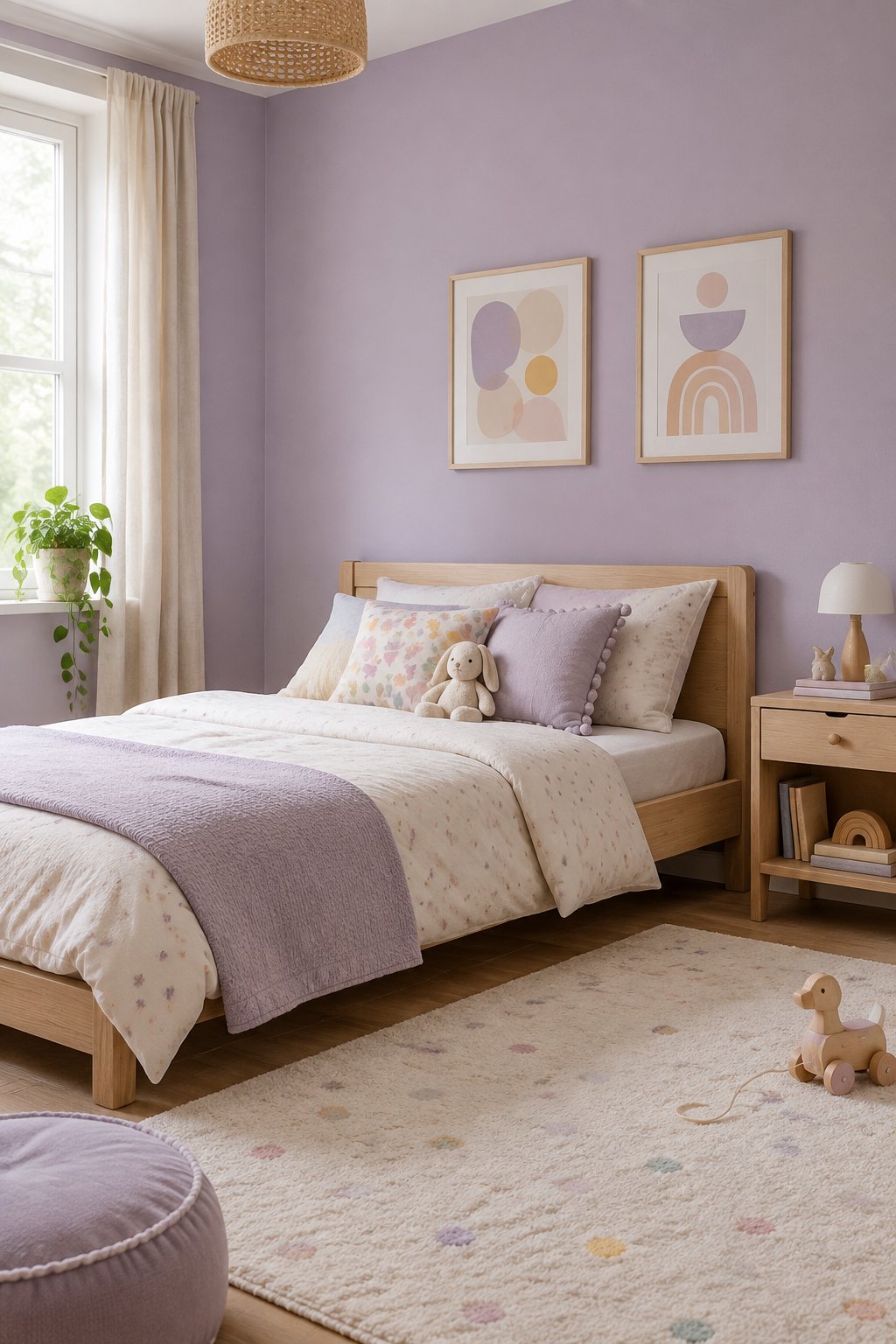
Dusty lavender offers a soft, distinctive color that feels calm when its gray undertone stays visible. Pair it with warm white, pale wood, or muted green for a balanced palette. A light lavender can work across all walls, while a deeper version is better suited to a single wall in a small room. Its gentle color story can grow with the child when paired with simple, changeable decor.
How to Choose Kids Bedroom Paint Colors
Choose a paint color by checking its undertone, light, and value in the room where it will be used. A color sample can look different beside carpet, flooring, or existing furniture, so test it near the main finishes. For a lasting scheme, keep large wall areas flexible and bring in a child’s current interests through bedding, art, or accessories.
How does natural light change the way a paint color looks?
Natural light shifts throughout the day, changing how a wall color appears. North-facing rooms tend to receive cooler light, while direct afternoon sun can make colors look warmer or brighter. Check a sample at different times and beside white trim before choosing the full-room shade.
What LRV works well in a small bedroom?
An LRV of 60–80 can help a small bedroom feel open by reflecting a substantial amount of light. LRV means Light Reflectance Value, measured on a scale from 0 (black) to 100 (white). A higher LRV does not guarantee a color will feel bright in a dim room, so check a large sample in the space.
How can you test a color before painting the whole room?
Paint a large sample on poster board or a small wall area, then view it in morning, afternoon, and evening light. Move the sample beside the bed, flooring, and trim to see how those finishes affect the color. A test area also reveals whether the undertone feels too cool, warm, or saturated.
Frequently Asked Questions
What are calming colors for kids’ bedrooms?
Muted sage, gray-green, dusty lavender, and pale blue are common choices for a calm-feeling palette. Softer, less saturated shades make it easier to add colorful bedding or toys without making the walls dominate the room.
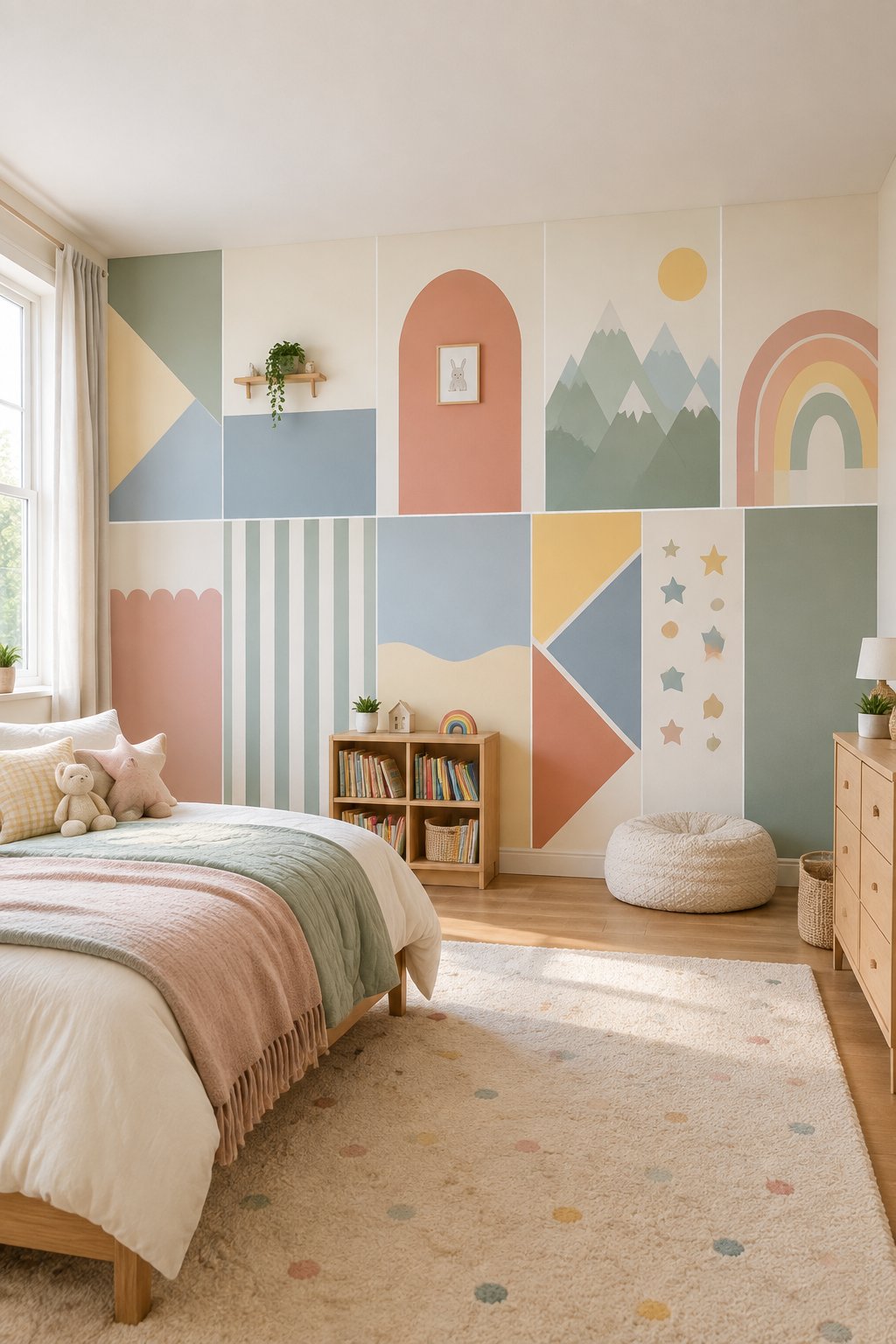
How can you add a creative paint design without overwhelming the room?
Keep the design to one wall or a clear area, such as a painted arch, color block, or simple border. A limited palette with one main color helps the room feel cohesive and leaves space for artwork and changing decor.
Are sage green and lavender good choices for a shared kids’ room?
Yes, sage green and dusty lavender can work in a shared room because both pair well with neutral bedding and wood furniture. Use one shade as the main wall color and bring in the other through accents, or divide the colors across separate areas for each child.