Your bedroom already has one job. Now it has three: it still needs to be a place you sleep, but somehow it also has to hold a desk for work calls and fit a bed for when your sister visits for the weekend. Most storage advice ignores that reality.
It tells you to buy nesting bins or hang a shelf, as if the real problem were clutter and not that one small room is standing in for three different rooms.
Multi-use room storage solves a different problem: not where to put more stuff, but how to make furniture do the job of two rooms without a screwdriver touching your landlord’s walls.
Every idea below is something you can move, fold, roll, or flip back the moment you need the room to be a bedroom again.
None of this asks you to shrink your desk down to a laptop stand or pretend a futon feels like a real bed.
These are pieces built to switch jobs on command, so your one small room can actually cover the three things you’re asking it to do.
1. A Leaning Ladder Desk Instead of a Wall-Mounted One
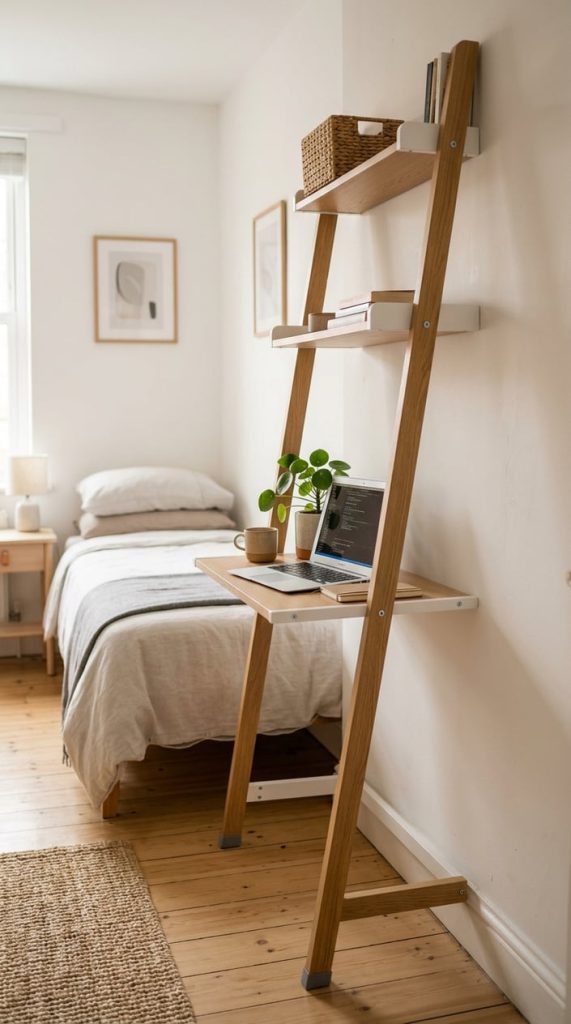
Skip the wall-mounted desk. A leaning ladder desk rests against the wall at its own angle, held up by two rubber feet, so there’s nothing to patch when you move out.
Two things decide whether it holds up:
- Weight rating built for laptops and monitors, not just books
- A base wide enough that it won’t tip when someone leans on it
Most fold flat in seconds, which matters on the one night a month you need that wall for a guest bed instead.
2. A Storage Bed Instead of Bins Wedged Under the Frame
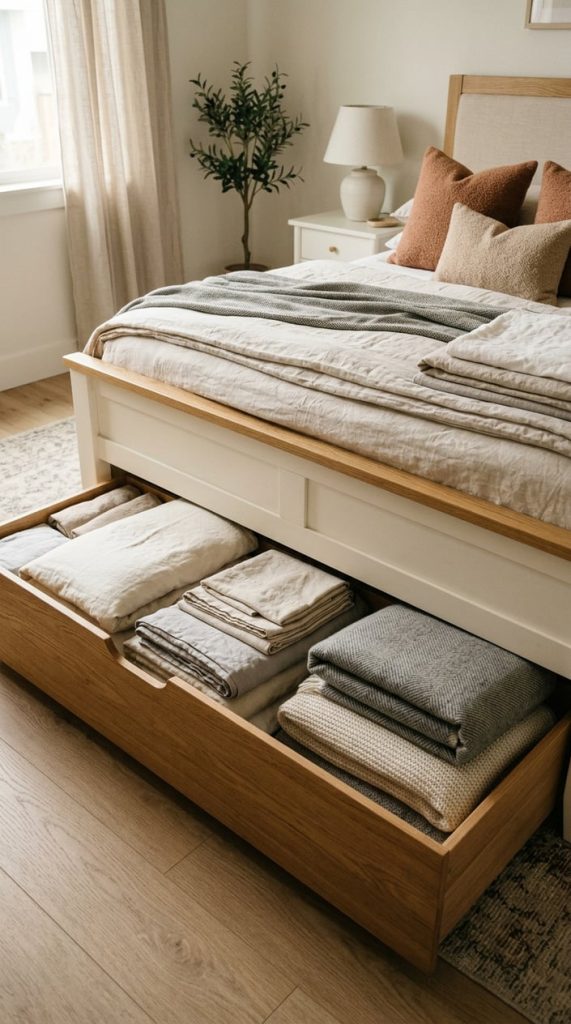
A bed shoved against the wall with three plastic bins wedged half under it, one lid never quite closing, is the default setup in almost every small bedroom. It works until you need to vacuum, or until a guest steps on a bin in the dark.
A storage bed swaps that setup for drawers built into the frame, deep enough for spare bedding or off-season clothes and flush enough that nothing pokes out. Bed risers with bins underneath cost less and require zero furniture shopping, but they eat into legroom and rarely stay level on carpet.
If your room doubles as a guest space, the storage bed wins. Drawers close, corners stay clean, and there’s nothing for a visitor to trip over at 2 a.m.
| Storage Bed | Risers + Bins |
|---|---|
| Drawers close flush, nothing visible | Bins peek out from under the frame |
| Higher upfront cost, one purchase | Cheap, but eats into legroom |
| Safe for guests walking around at night | Trip risk, especially in the dark |
3. A Trundle Daybed for Instant Guest Sleeping
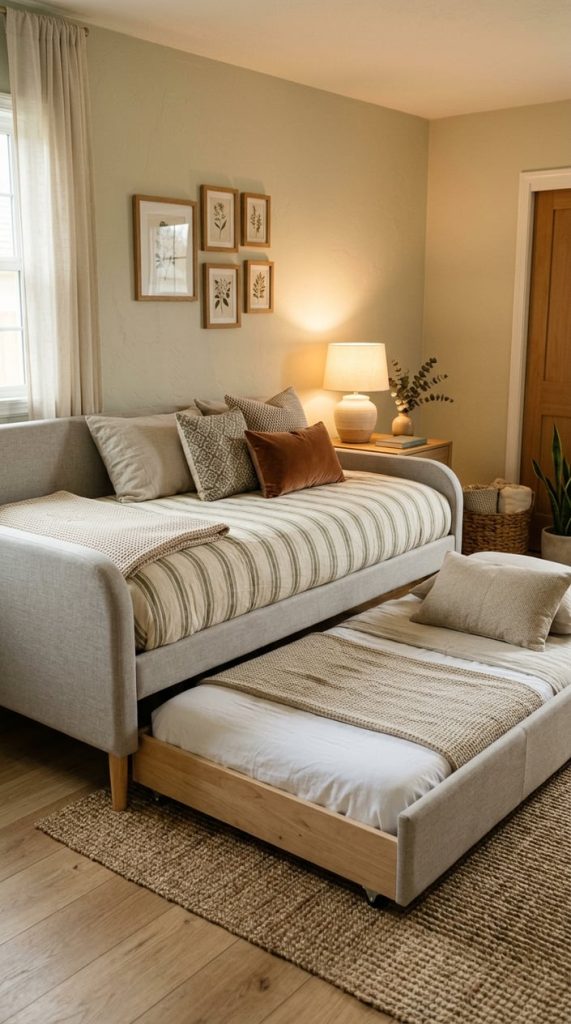
A trundle daybed turns your desk-and-dresser bedroom into an actual guest room in under a minute, no air mattress pump involved.
By day it reads as a low upholstered bed or sofa. Pull the lower frame out at night and it becomes a second, full-length mattress at the same height as the main one, not a foam pad on the floor. The detail that makes it feel intentional instead of thrown together is buying the top mattress and trundle mattress from the same line, so the height and firmness roughly match.
Guests get an actual bed. You get your floor back the next morning.
Digging the air mattress out of the closet and it’s flat by 3 a.m.
Trundle pulls out in one motion, same height as a real bed.
4. A Console Table That Unfolds Into a Real Desk
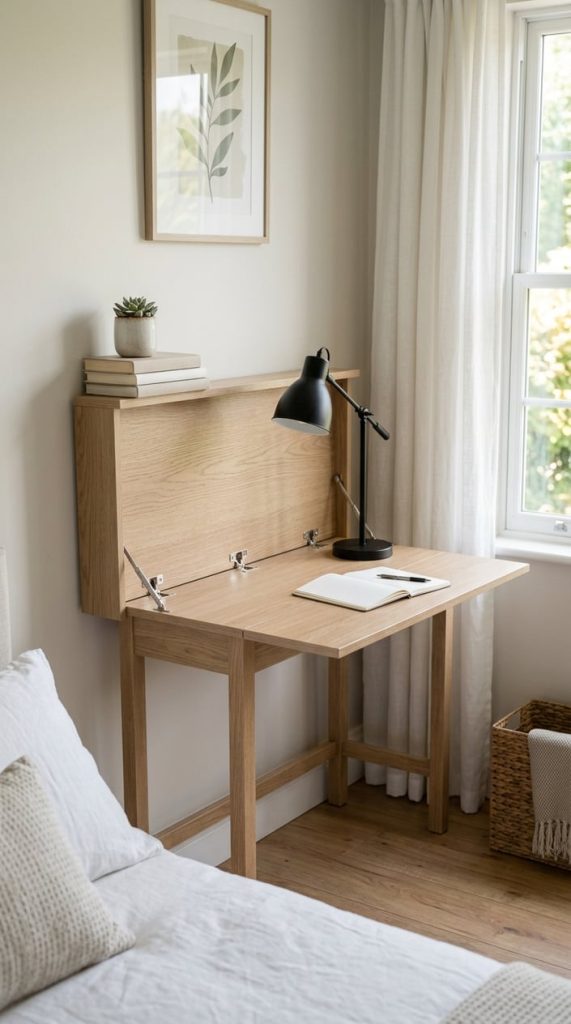
A console table only earns its spot in a multi-use bedroom if it can become a full desk in three moves, not ten.
Here’s what that actually looks like:
- Flip the top panel open, it’s hinged to double the surface width
- Pull out the leg or bracket underneath to support the new half
- Slide your chair in, the whole thing locks flat again in reverse
Anything with more steps than that turns into a table that stays “open” permanently, which defeats the point of buying a convertible piece in the first place.
Flip the hinged top panel open to double the surface.
Pull out the hidden leg or bracket to support the new half.
Slide your chair in. Reverse it flat when you’re done.
5. A Storage Ottoman That Doubles as Overnight Seating
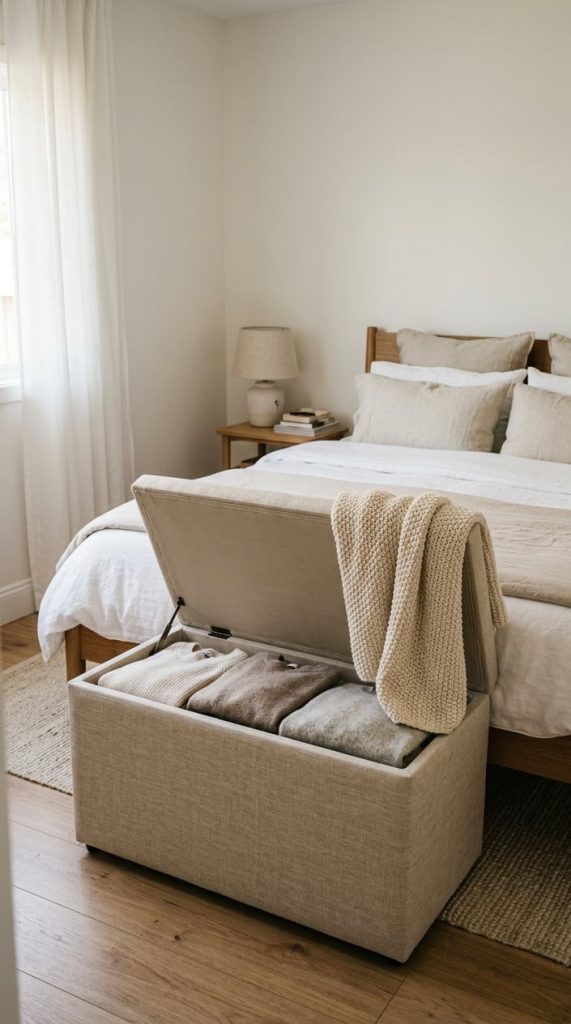
The mistake most people make with a storage ottoman is buying one built for looks, then finding out the lid sags the moment someone actually sits on it.
A storage ottoman doing double duty needs a rigid, weight-rated lid, not soft tufted foam that dips in the middle. Test it before buying, if you can, by pressing down hard in the center. If it flexes noticeably, it won’t hold up as overnight seating for a guest, only as a place to stash off-season sweaters.
Check the lid holds weight without dipping in the middle.
Pick a hinge that stays propped open on its own.
Soft tufted lids with no support underneath.
Anything under a 250 lb weight rating.
6. A Leaning Bookshelf as the Wall Between Sleep and Work
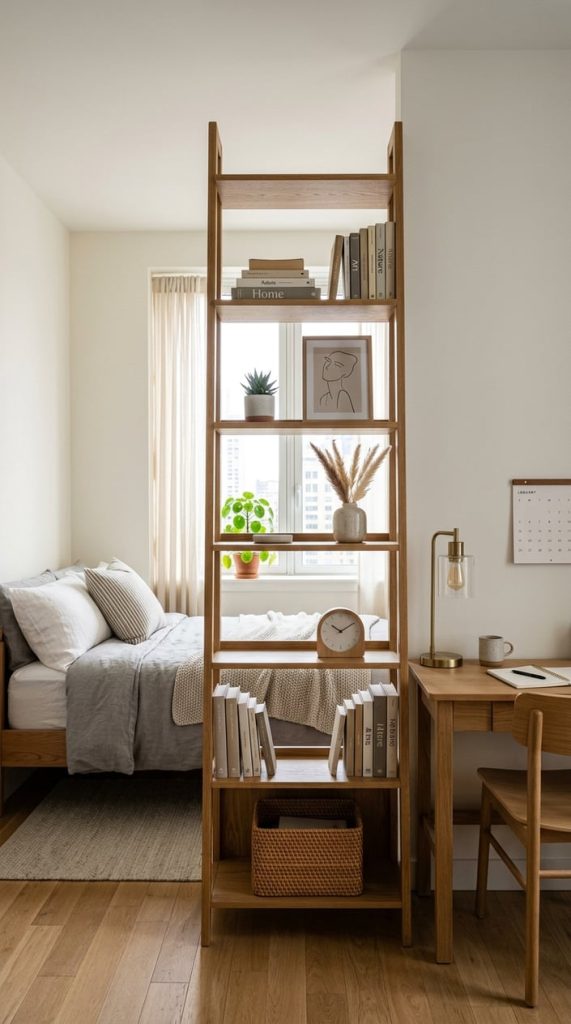
A leaning bookshelf can do something a nightstand can’t: stand tall enough to visually split the room into two zones without ever touching a wall stud.
Position it perpendicular to the bed, open-backed side facing the desk area, and it reads less like a bookcase and more like a room divider that happens to hold books. Because it leans rather than bolts on, it comes down just as easily as it went up, which matters the day your lease ends.
The height is what does the real work here. Anything under five feet still lets the eye travel straight from bed to desk, so the “zones” never quite feel separate.
7. Rolling Bins for the Stuff You Only Need Twice a Year
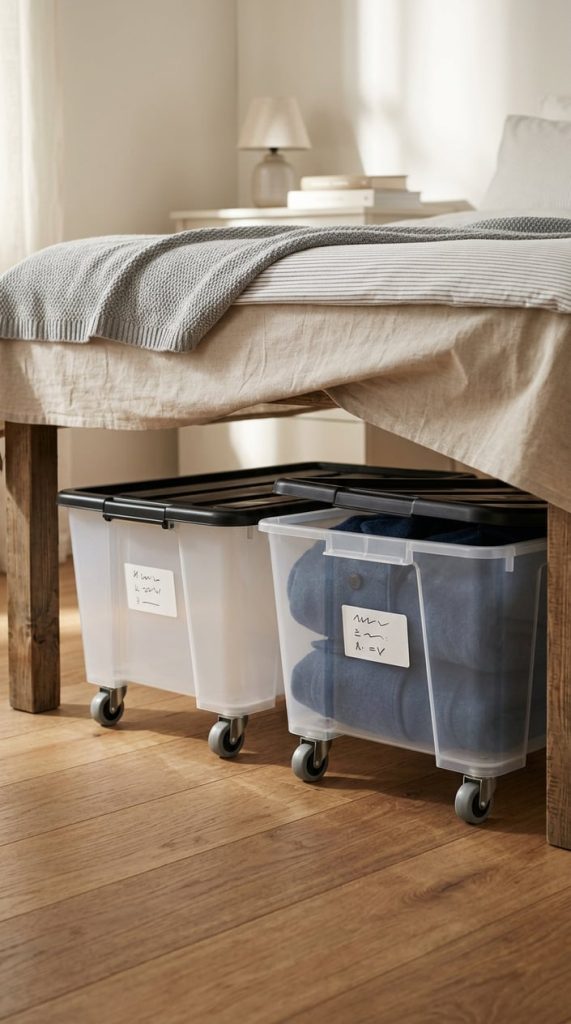
Not everything under the bed needs to be reachable every day. Rolling bins are for the things you touch twice a year: winter coats in July, a spare set of sheets for guests, the folder of tax documents you forget about until April.
Look for bins with locking caster wheels, not the cheap swivel kind that drift when you push them, and label the short end facing out so you’re not pulling three bins to find the one you need.
Keep the bins you use weekly out of this system entirely. This one’s for things you can afford to forget about for months at a time.
8. Nesting Stools That Split Into Guest Seating or a Laptop Stand
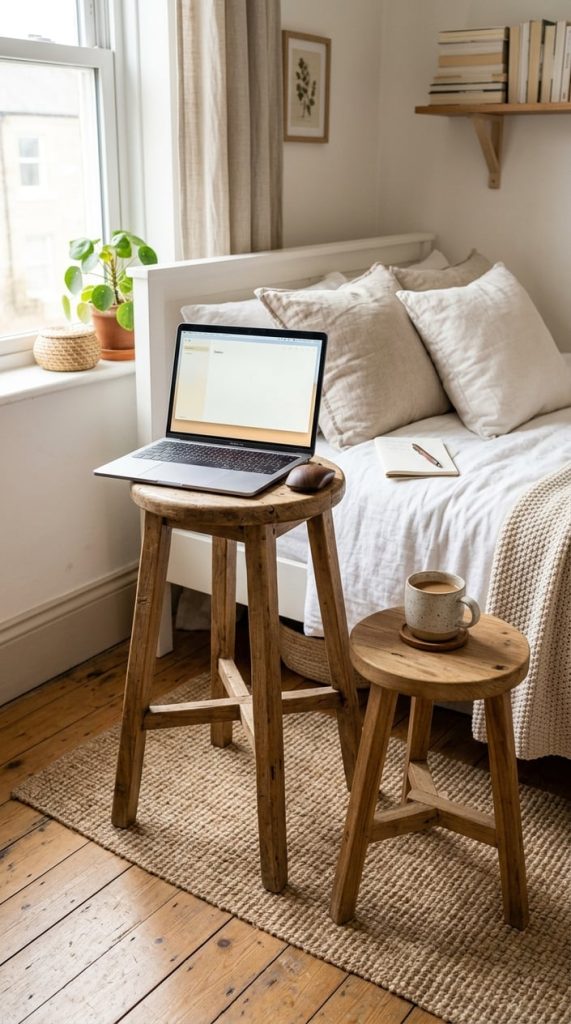
A set of nesting stools stacks down to almost nothing against a wall, but pulled apart, they solve two different problems depending on the day.
Stacked, they take up less floor space than a single nightstand. Pulled apart, the taller one works as extra seating for a guest, and the shorter one doubles as a stand to prop a laptop above desk height, which actually helps your neck during long video calls.
Buy a set with mismatched heights on purpose. Identical stools look tidier stacked, but a matched set gives you fewer real uses once they’re separated.
9. A Futon Versus a Trundle, and Which One Actually Fits Your Room
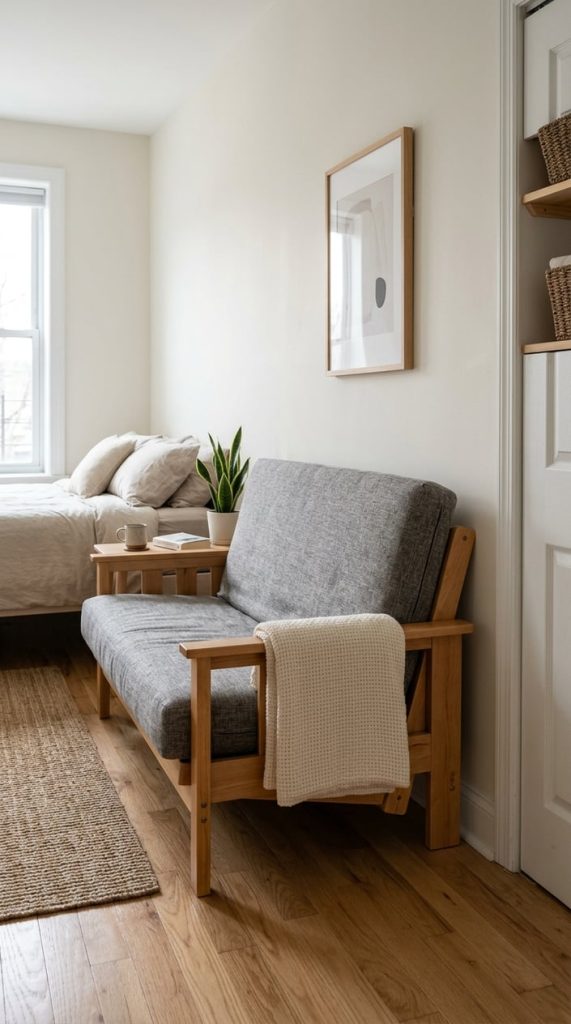
A futon folds flat from couch to bed and back, using the same floor footprint either way. A trundle needs extra floor space to pull the second mattress out, but it gives your guest an actual flat bed instead of a couch cushion arrangement.
If your room is narrow, the futon wins because it never demands more square footage than it already occupies. If you have a few feet of clearance beside the bed, the trundle wins on comfort, since nobody sleeps as well folded into a couch frame.
Measure the clear floor space beside your bed before deciding. That number settles this one, not preference.
10. A Tension-Rod Closet System for Supplies and Spare Linens
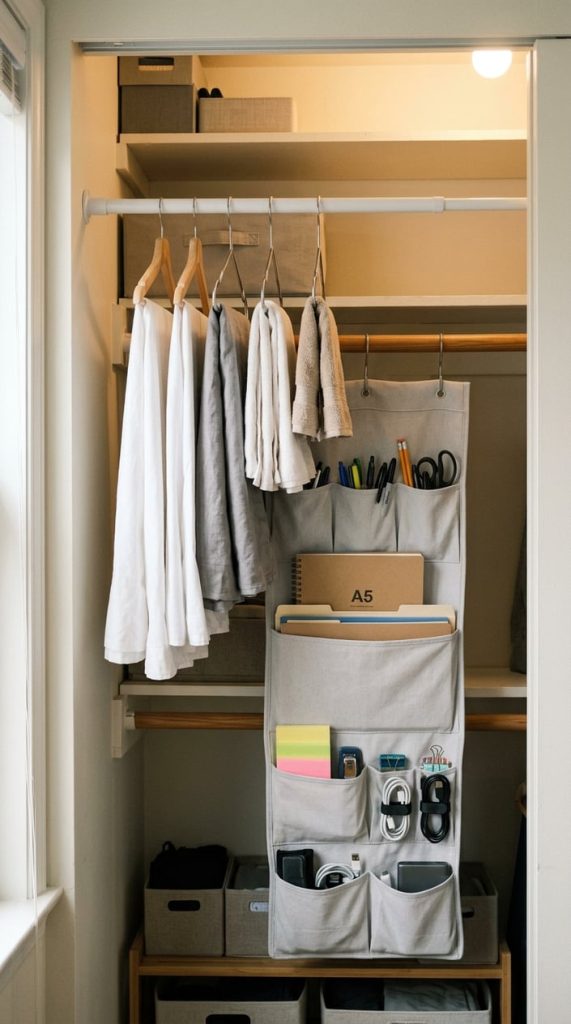
A tension rod wedged into a closet, alcove, or even the gap beside a dresser adds a full hanging layer with zero screws, and it comes down clean when you move.
Use the top rod for guest linens folded over hangers, so they don’t wrinkle in a drawer, and a second lower rod for a hanging shoe organizer repurposed to hold office supplies: cables, notebooks, the stapler that always goes missing.
Check the weight rating before loading it up. A rod rated for light curtains will bow under a stack of folded blankets within a week.
11. A Wall-Bed Cabinet You Fold Away in the Morning
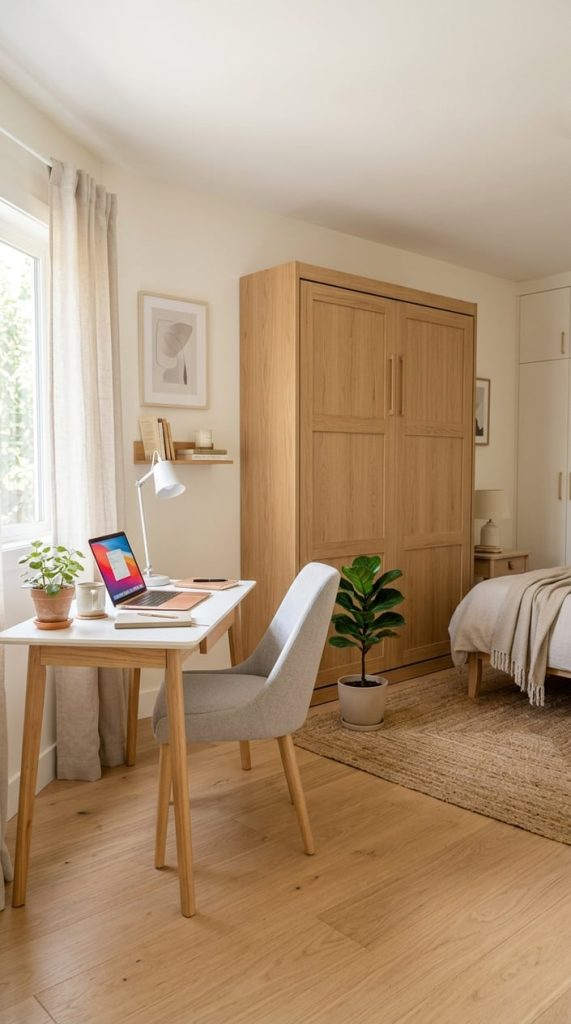
A wall-bed cabinet holds a full mattress upright inside a slim cabinet frame, then folds down flat against the wall when you’re not sleeping in it. Fold it up in the morning and the floor space it was using becomes open room for a desk chair to roll around in.
The version worth buying comes with a built-in gas-lift or spring mechanism, so lifting it doesn’t take real effort. Skip anything that relies purely on a manual latch with no assist, since lifting a full mattress by hand every morning gets old by week two.
This is the biggest floor-space payoff on this list, but it’s also the most expensive and the one renters should check against their lease before installing.
12. Stackable Cubes That Rearrange Depending on the Day
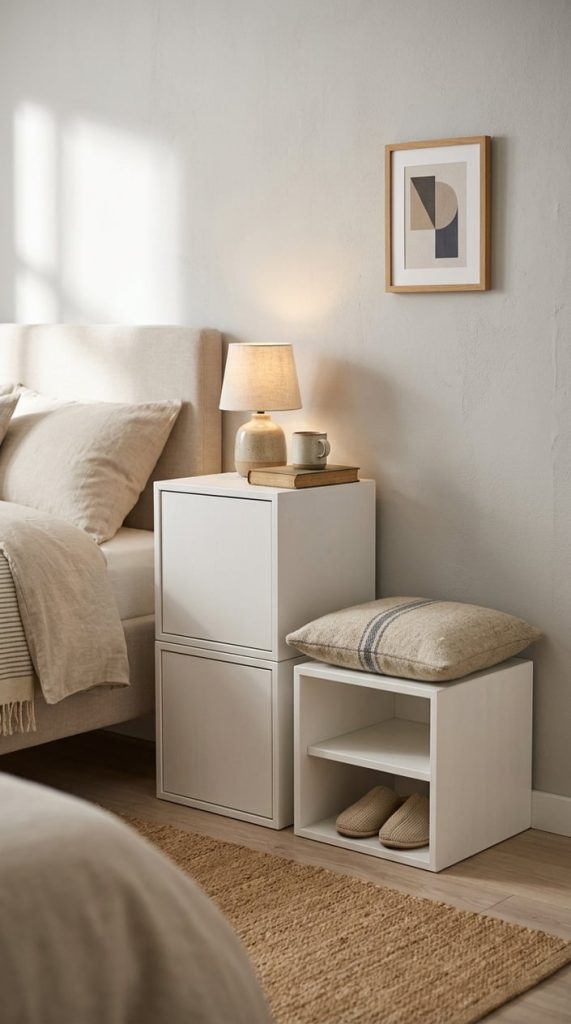
A set of stackable storage cubes isn’t one piece of furniture, it’s three or four, depending on how you arrange them. Stack two side by side and you get a nightstand. Flip one on its side with a cushion on top and it’s extra guest seating. Line three in a row and you have a low shelf under the window.
The trick is buying cubes with finished backs and tops, not just finished fronts, since you’ll be rotating which side faces out. Cheaper sets only look good from one angle, which becomes obvious the moment you rearrange them.
Keep the arrangement loose. The whole point is that it changes, not that you find one setup and leave it there for good.
13. A Bar Cart Repurposed as a Rolling Desk
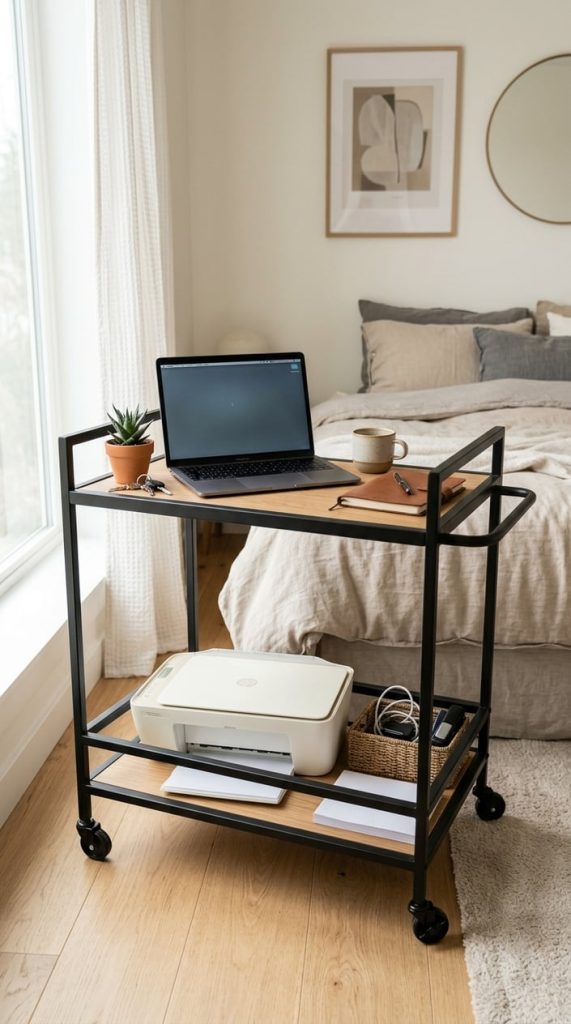
A bar cart with two tiers and wheels makes a surprisingly solid rolling desk, and it tucks into a corner at night instead of sitting out as a permanent workstation.
Use the top shelf for your laptop and the bottom for a printer or a stack of files. Look for locking caster wheels, the same detail that matters for rolling storage bins, so it doesn’t drift while you’re typing. Skip carts with a raised metal rail around the top shelf unless you want your mouse fighting the edge of it all day.
It also solves the guest problem sideways: roll it out of the room entirely when someone’s staying over, and the space it was taking up disappears with it.
14. An Over-the-Door Caddy for Supplies and Spare Bedding
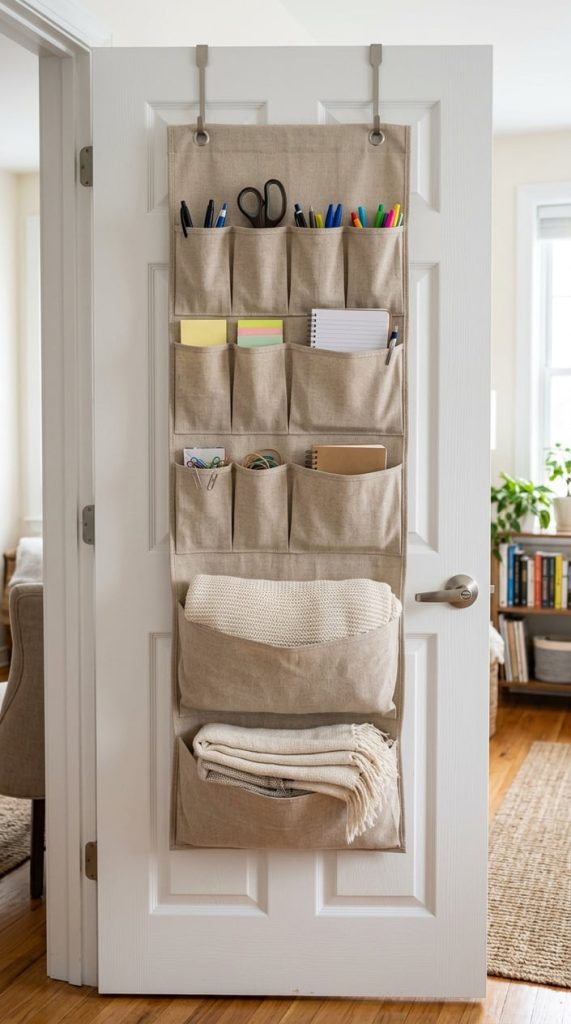
An over-the-door caddy hangs on the closet door itself, no drilling, no adhesive strips that peel the paint when you take them down.
Split it by function rather than by category: office supplies in the top pockets where you reach for them daily, spare pillowcases or a folded guest blanket in the bottom pockets you only open when someone’s staying over. Watch out for models with pockets sized for shoes. They fit tall items poorly and leave notebooks and folders sticking out.
It’s not glamorous, but it’s the one item on this list you can install and remove in under two minutes, which matters if you’re not sure how long you’ll be in this apartment.
15. A Daybed With Built-In Storage Drawers Underneath
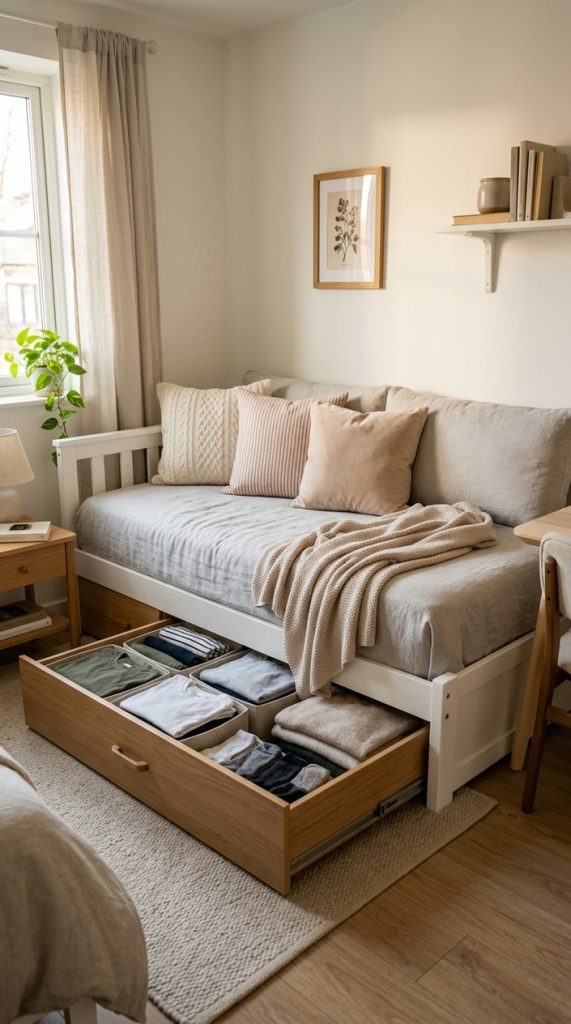
A daybed frame with drawers built into its base gets you three things a regular bed can’t: a couch-like silhouette during the day, sleeping space for a guest at night, and drawer storage that doesn’t need a separate dresser.
Choose drawers that pull from the front rather than the side, since side-pull drawers usually get blocked once the daybed is pushed against a wall, which is exactly where it’ll end up in a small room. Measure your doorway width before ordering. Daybeds with a fixed frame don’t disassemble the way a regular bed frame does, and that’s the detail people forget until moving day.
Conclusion
A small bedroom that also works as an office and a guest room doesn’t need less stuff in it, it needs furniture willing to change jobs. A desk that leans instead of mounts, a bed that hides drawers or folds flat, a shelf tall enough to split the room without a wall in between: none of it requires touching the lease-breaking list of things your landlord doesn’t allow.
The pieces that make this work share one trait. They give the room back its floor space the moment you’re done using them for their second job. That’s the difference between a bedroom that feels cramped by everything it has to hold, and one that just quietly does three jobs without looking like it.
Save this list for the next time your one room needs to pull double duty.