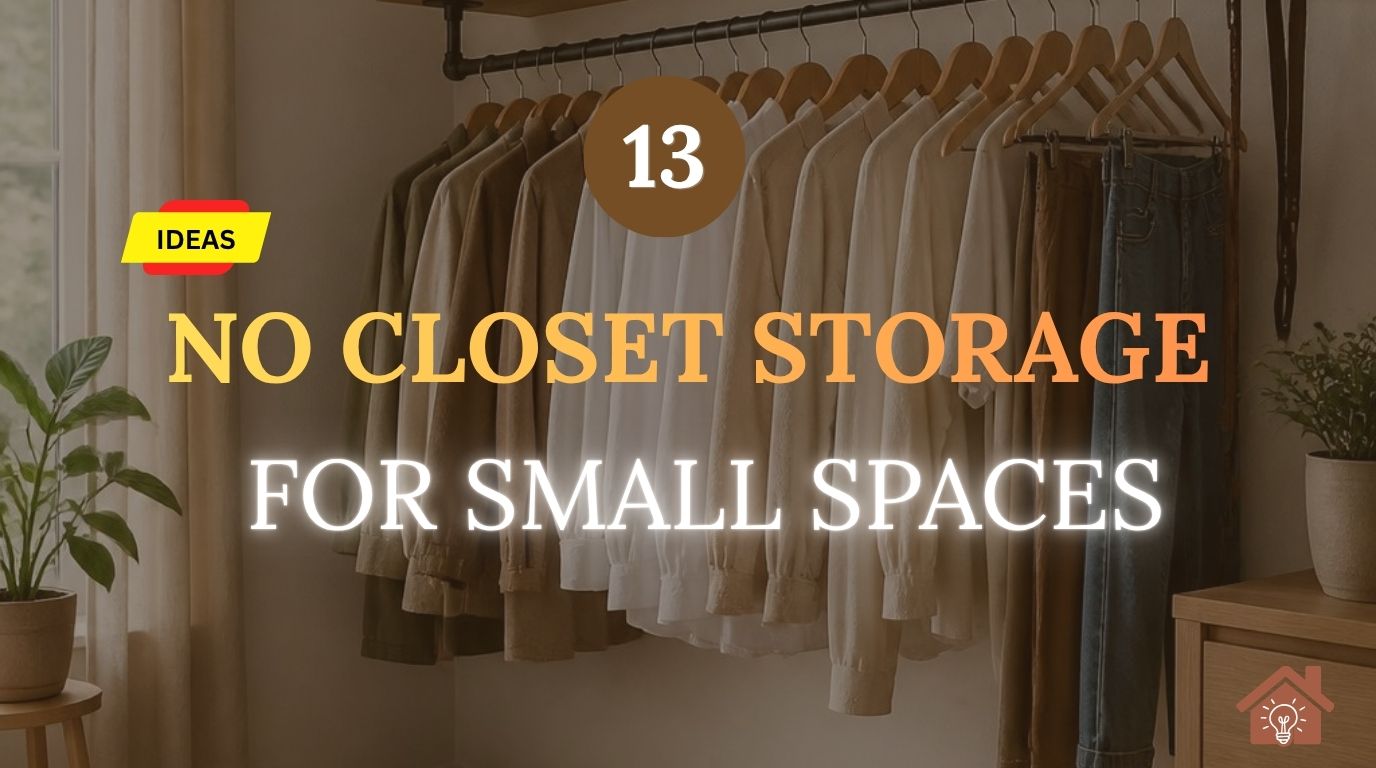
A bedroom without a built-in closet needs a storage plan that uses every available zone. The strongest setup combines high-capacity furniture with vertical storage, hidden compartments, and a few carefully edited display areas.
A platform bed with drawers, a furniture-style wardrobe, and wall-mounted storage can hold daily clothing without crowding a small room. Renters can rely on freestanding pieces, tension systems, and over-the-door organizers, while homeowners can add anchored shelves or a full wardrobe wall.
No Closet? Start With These Storage Essentials
- Use the bed: Platform beds with drawers transform unused floor space into hidden clothing storage.
- Add vertical storage: Shelves, rails, and wall systems keep belongings organised without taking floor space.
- Choose furniture storage: Freestanding wardrobes and tall dressers replace missing closet capacity.
- Hide daily clutter: Baskets, bins, and closed cabinets keep small bedrooms visually calm.
1) Platform Bed With Integrated Under-Bed Drawers
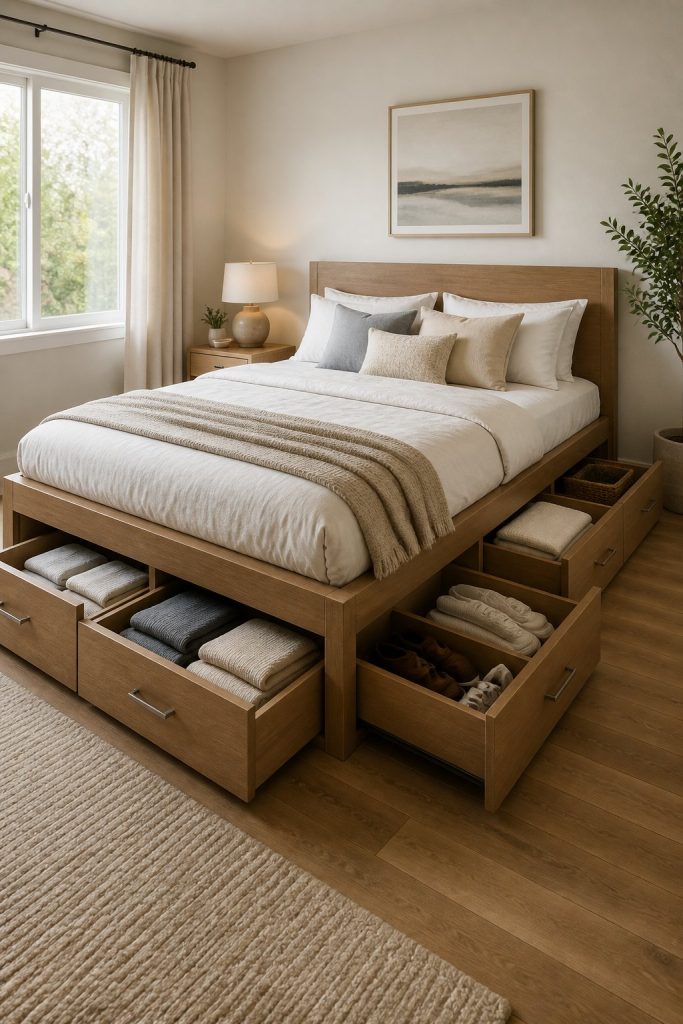
A platform bed with integrated drawers turns the largest unused footprint in the room into closed clothing storage. Deep drawers work well for jeans, sweaters, pajamas, extra bedding, and seasonal items.
Choose drawers that open from the sides with enough clearance for the nightstand. Label each drawer by category, and use shallow dividers for smaller pieces. Smooth drawer tracks make daily access easier than loose bins.
Dust collects under low furniture, so sealed drawers offer an advantage over open containers. Renters can add a bed skirt and rolling storage bins when a new bed frame is outside the budget.
2) Freestanding Wardrobe Styled as Bedroom Furniture
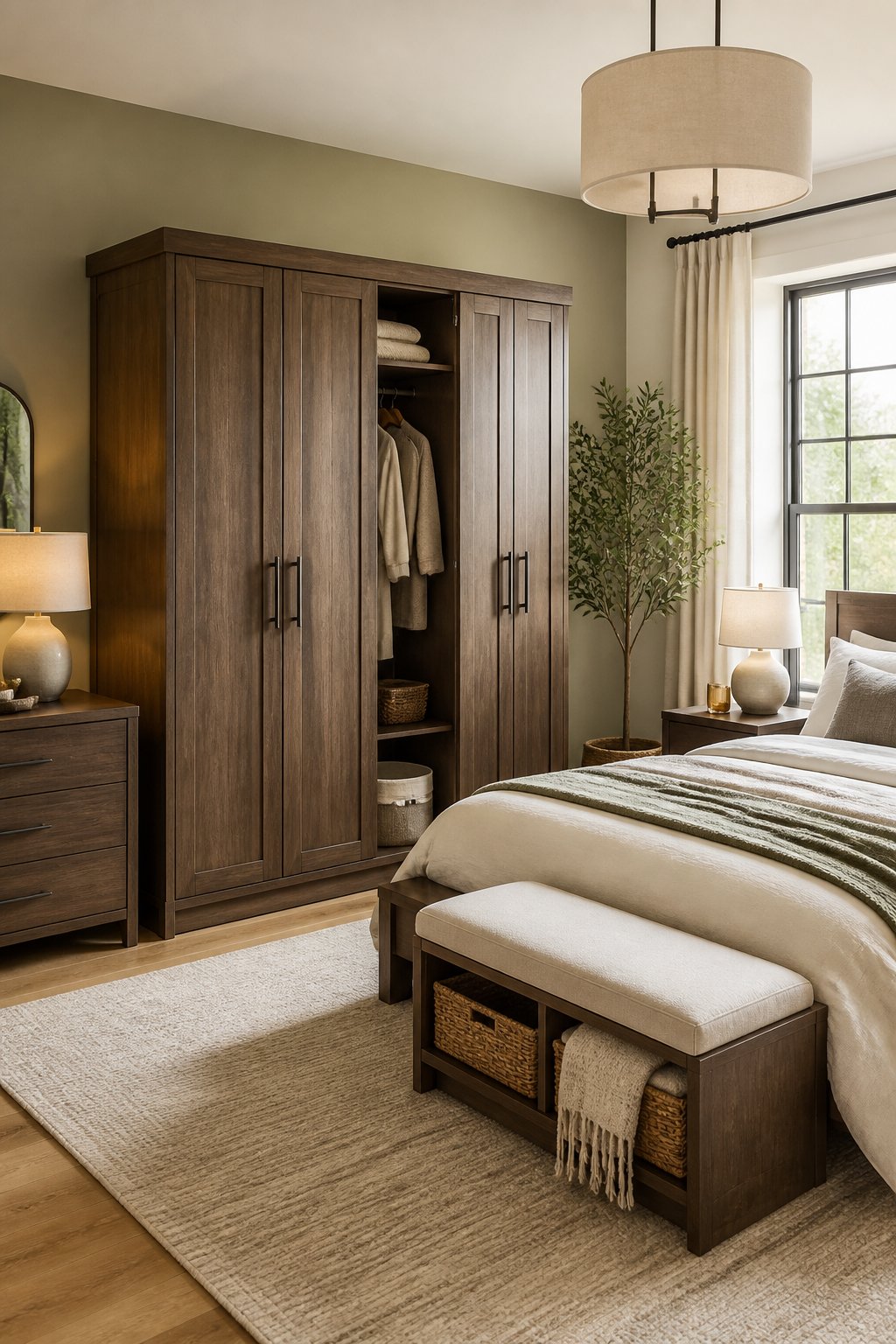
A freestanding wardrobe supplies the closest substitute for a built-in closet while adding a finished furniture look. Select a model with hanging space, adjustable shelves, and doors that conceal visual clutter.
Match its finish to the bed frame or dresser so the piece belongs to the room. Leave several inches above the wardrobe for airflow, and secure a tall unit to a stud or approved anti-tip hardware.
Quick Storage Planning Checklist
Measure available wall, floor, and door clearance before adding furniture.
Keep daily clothing accessible and move seasonal items into hidden storage.
Combine closed storage with open shelves to avoid visual clutter.
Use matching colours and materials to make storage look intentional.
Use matching hangers, keep the rail below two-thirds full, and place folded clothing on shelves. A woven basket on top can hold infrequently used accessories without disrupting the sightline.
3) Wall-Mounted Open Clothing Rail With a Top Shelf
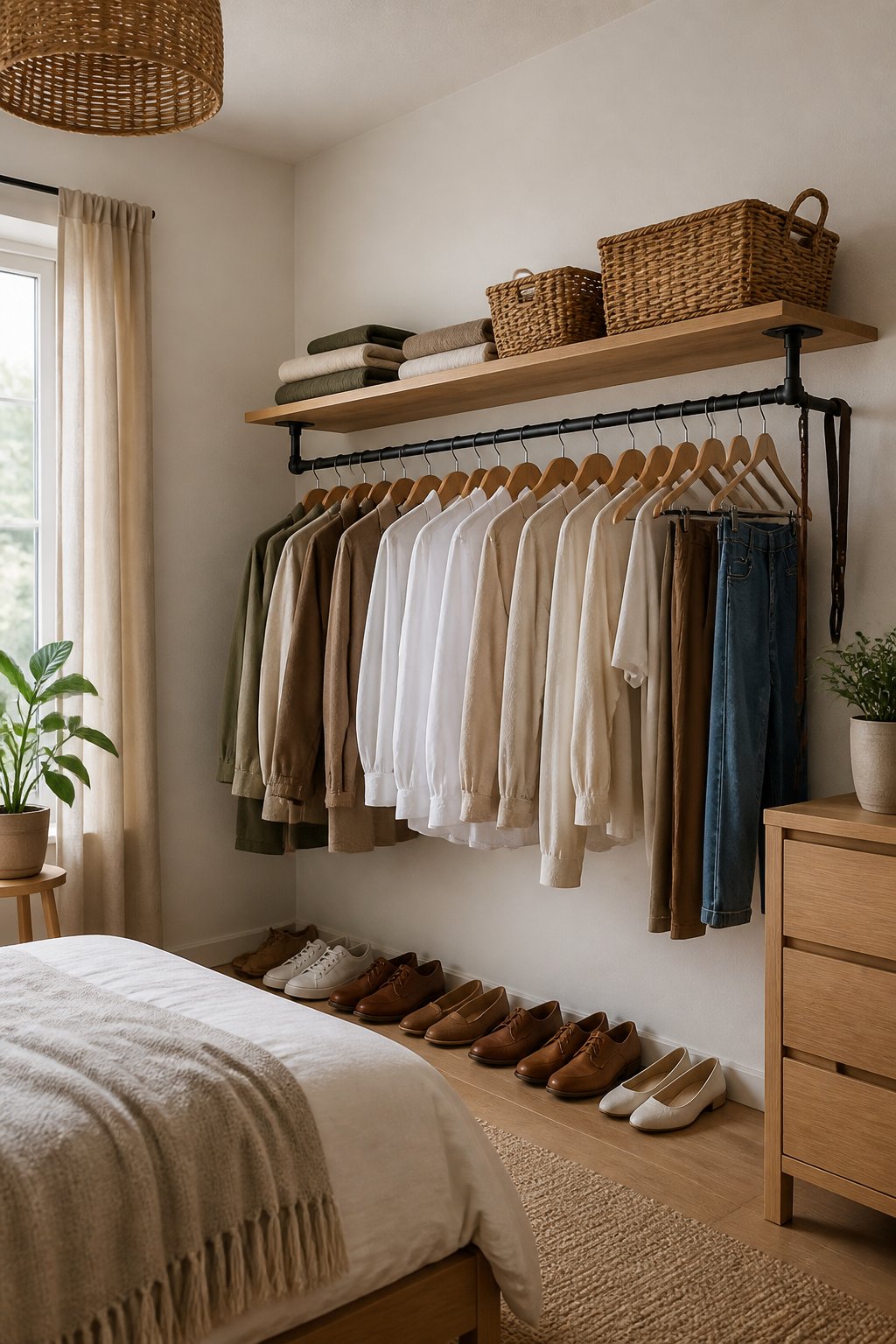
A wall-mounted clothing rail saves floor space by using vertical wall area for daily garments. The top shelf stores hats, folded sweaters, or labeled fabric boxes.
Keep only frequently worn clothing on the rail. Arrange pieces by color or garment type, use identical slim hangers, and leave visible space between groups. This treatment makes the rail read as a deliberate display.
Check wall type and weight limits before drilling. Renters can use a freestanding version or a tension-mounted system where allowed, with heavier seasonal clothing stored under the bed.
4) IKEA PAX Wardrobe System Along One Wall
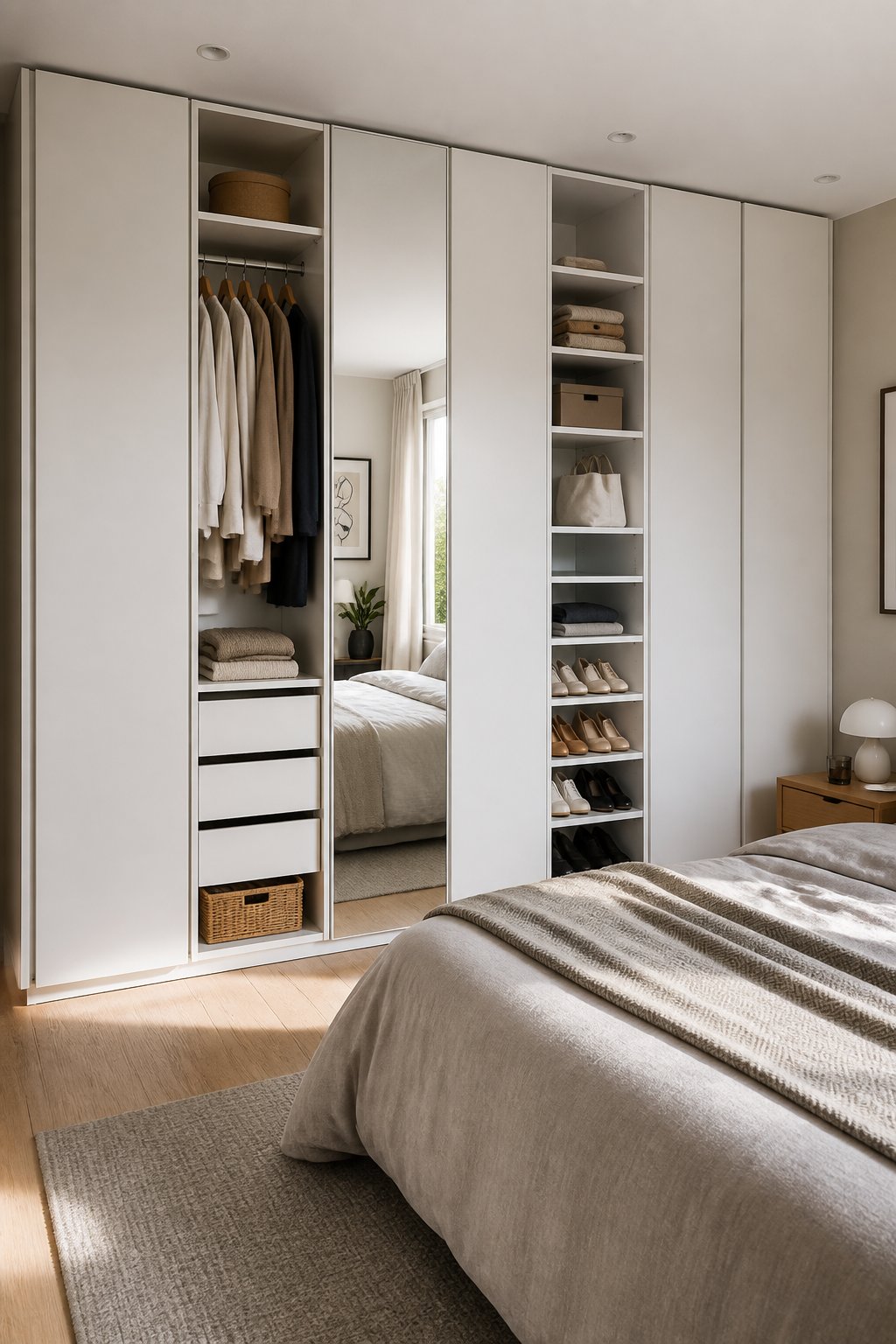
An IKEA PAX Wardrobe System creates a full storage wall with configurable drawers, shelves, hanging rails, and interior organizers. Its modular width helps small bedrooms use one long wall efficiently.
Plan the footprint with painter’s tape before purchasing. Reserve lower drawers for daily items, mid-level rails for shirts and dresses, and upper shelves for luggage or seasonal clothing.
Tall units need secure anchoring, especially in apartments with children or pets. Door panels provide closed storage, while interior pullout trays improve access in narrow rooms.
5) Curtained Closet Alcove With a Ceiling-Mounted Track
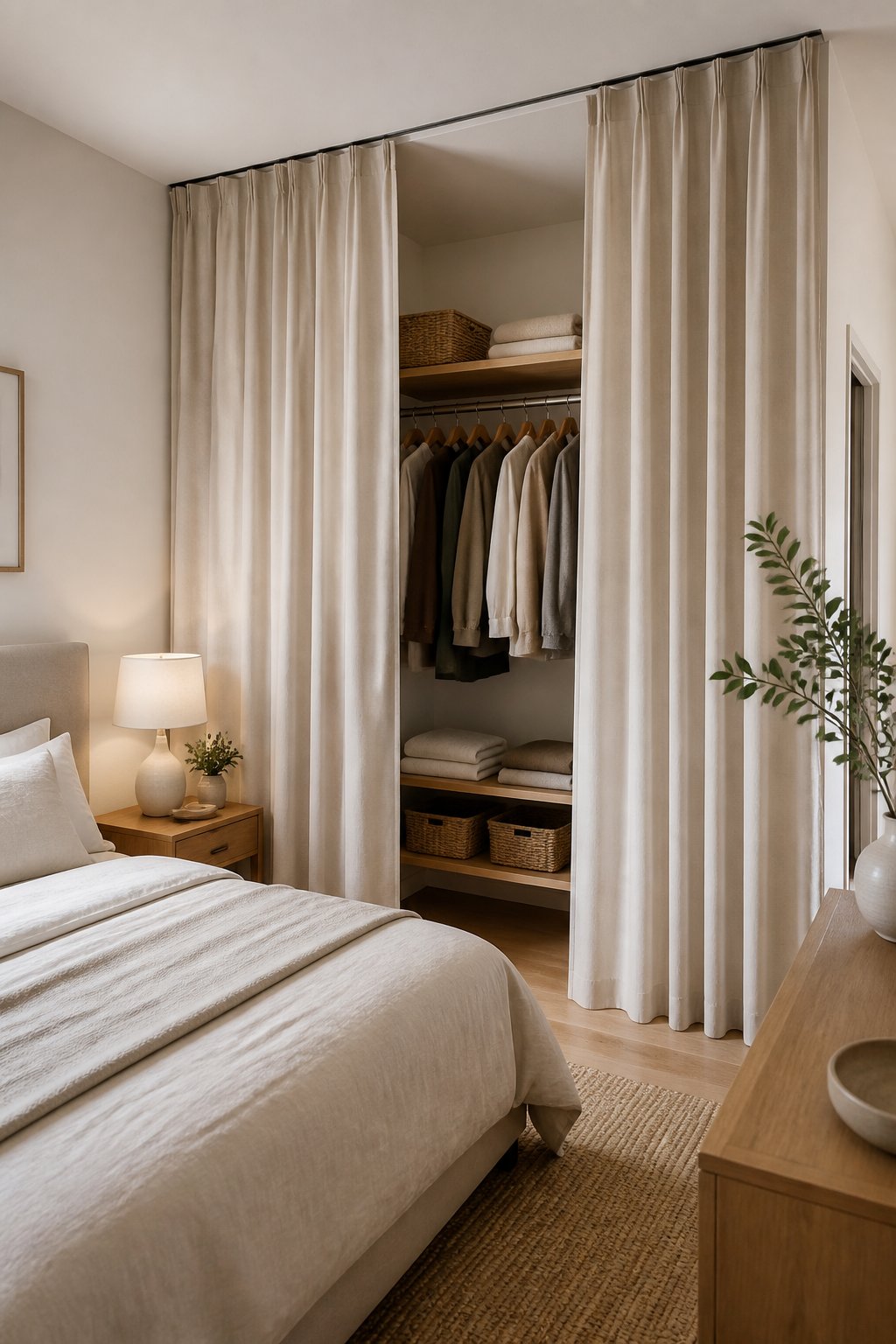
A curtained closet alcove converts an unused corner into concealed garment storage. Install a hanging rod inside the alcove, then cover it with ceiling-mounted curtains that reach the floor.
Choose linen or cotton panels that coordinate with the bedding. A continuous fabric line creates a calm sightline and hides mixed hangers, shelves, and storage bins.
Use a tension rod for a renter-friendly setup when the walls support it. Keep the alcove deep enough for hangers to move freely, and avoid placing the curtains where a heater or door needs clearance.
6) Tall Dresser With Drawer Dividers
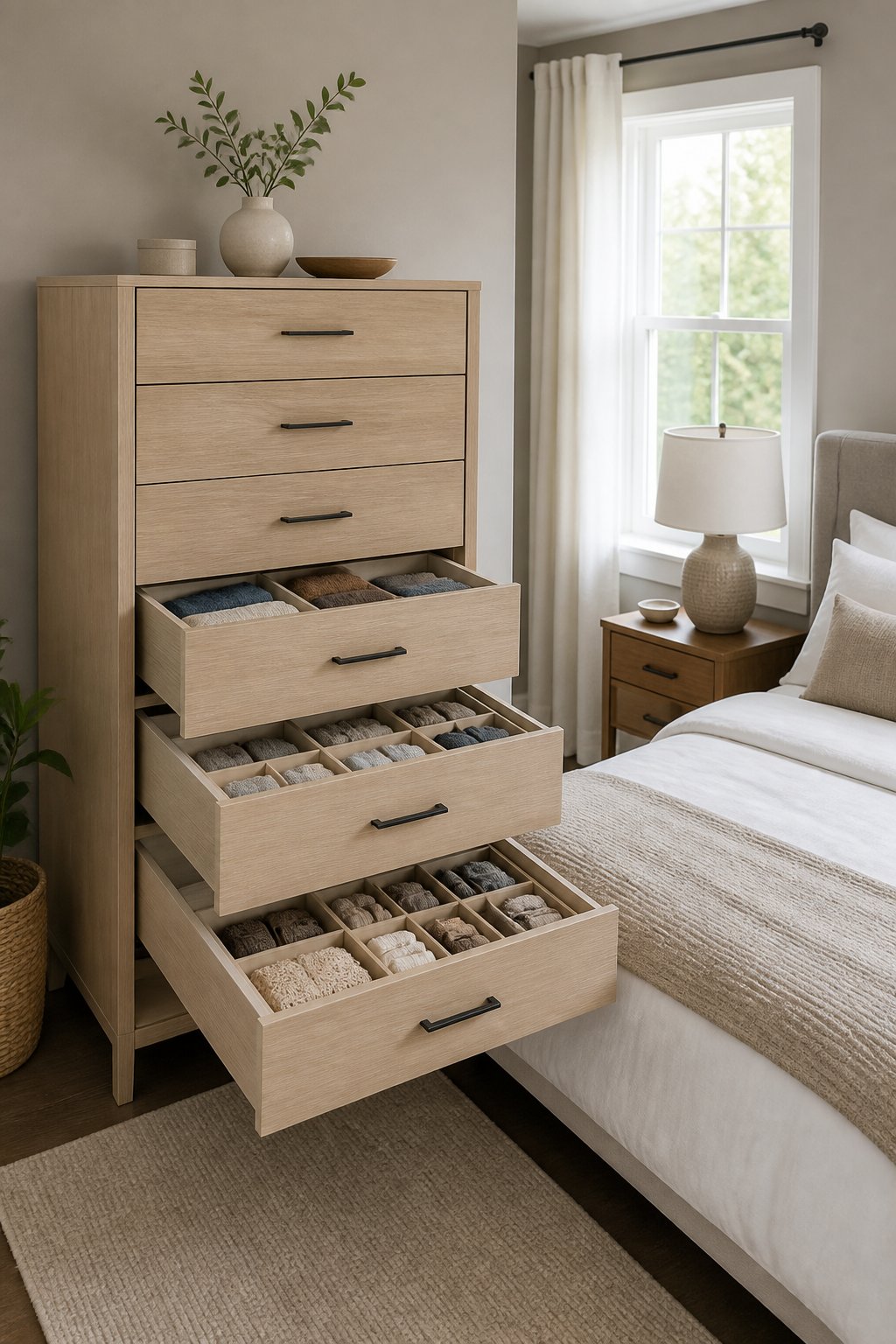
A tall dresser provides high-capacity folded storage with a small floor footprint. Place it beside the bed so the top can serve as a nightstand surface.
Assign each drawer one category, such as underwear, shirts, workout clothing, or sleepwear. Fold items vertically inside dividers so every piece remains visible.
Choose a dresser with stable, smooth-running drawers and anchor it securely. Keep the top surface limited to a lamp, a small tray, and one useful object to protect the room’s visual calm.
7) Floating Shelves Above the Bed for Folded Clothes
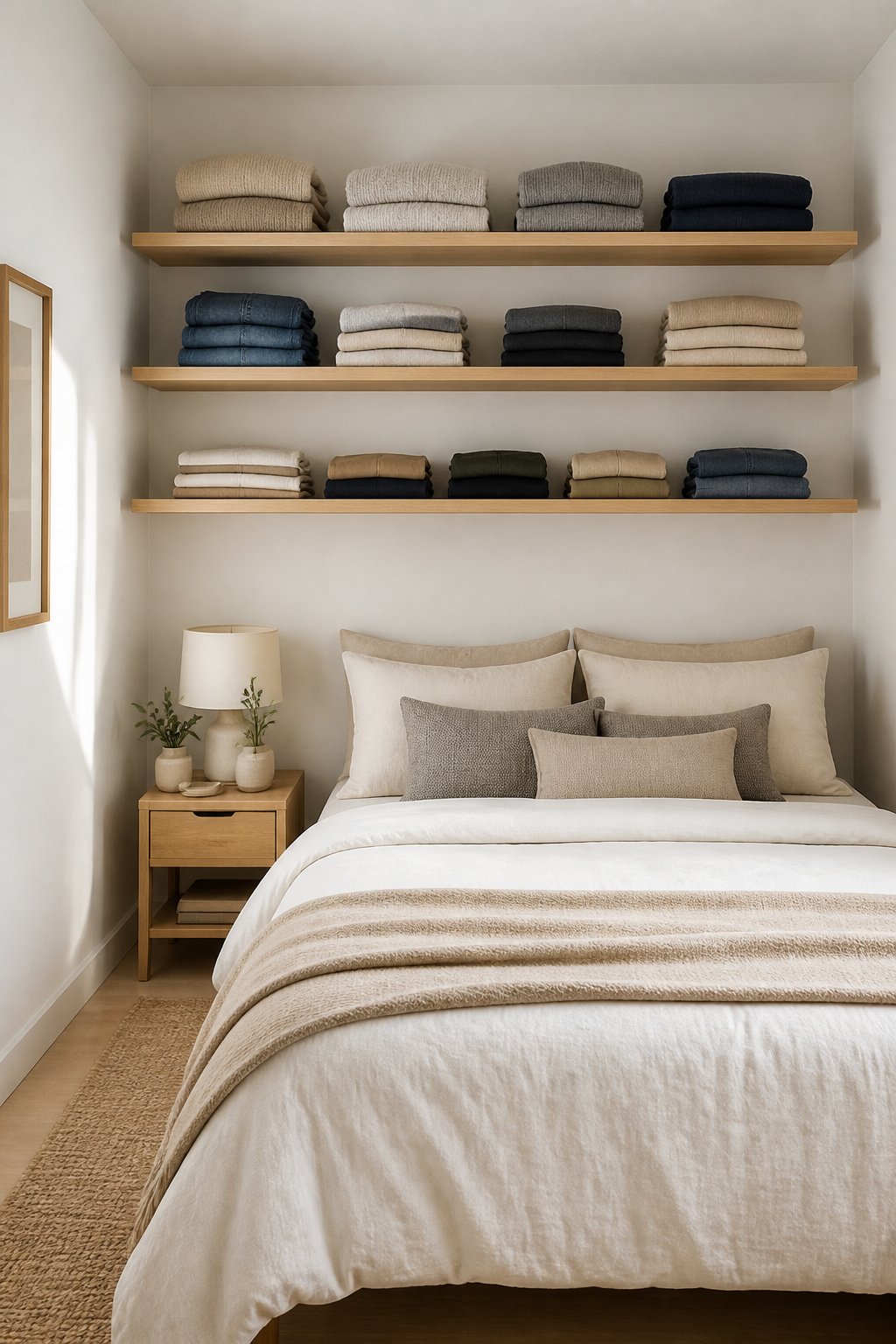
Floating shelves add folded-clothing storage without taking floor space. Install them above the queen bed only when the wall and mounting hardware can support the load securely.
Shelves with 10 to 12 inches of depth hold folded jeans, shirts, and sweaters. Keep stacks low, place small items in matching bins, and leave enough space above the headboard for comfort.
A wood finish adds warmth, while white shelves blend into the wall. Store lightweight clothing above the bed and place heavier items in drawers or lower cabinets.
8) Over-the-Door Organizer for Shoes and Accessories
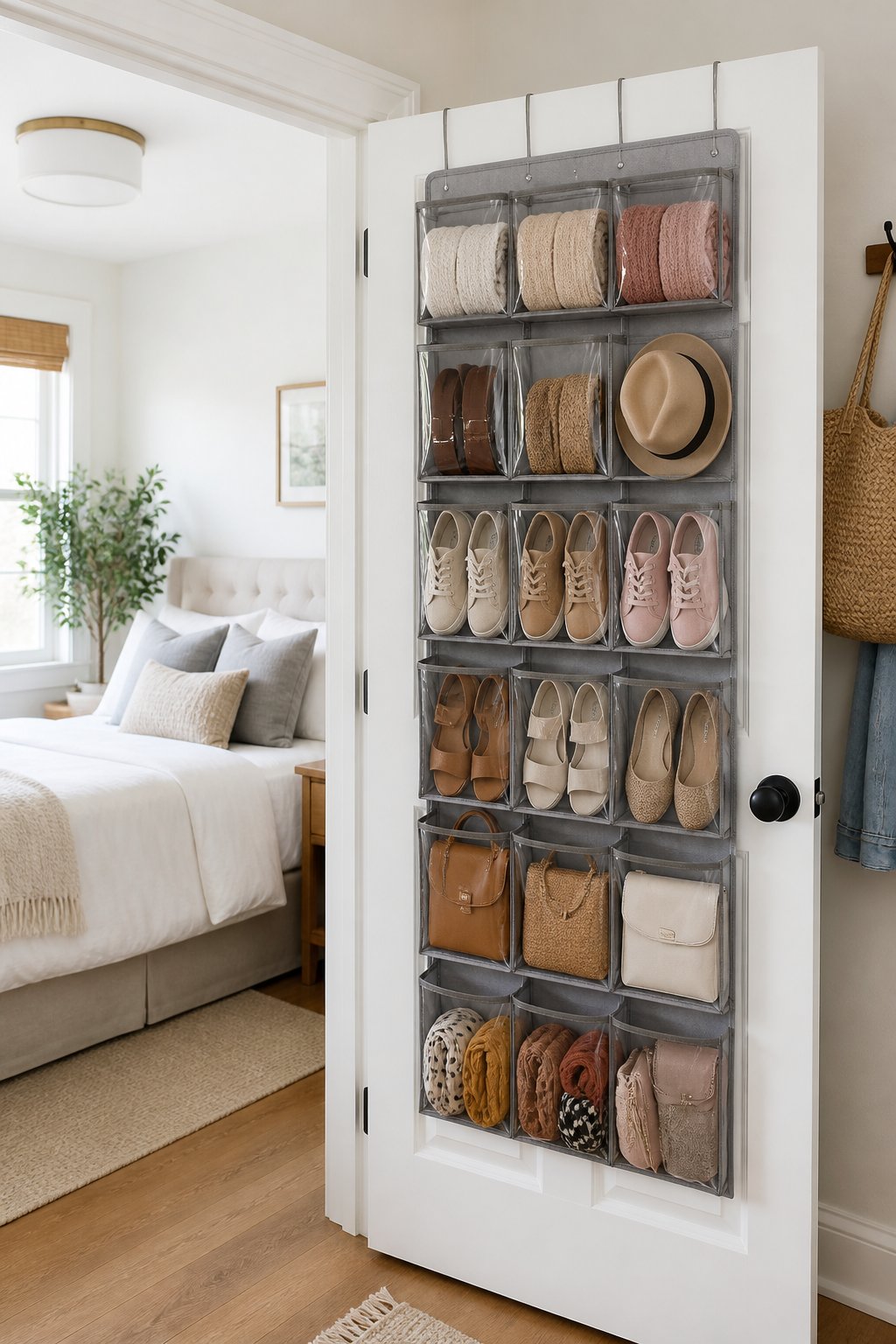
An over-the-door organizer turns the bedroom door into storage for shoes, belts, scarves, and small accessories. It keeps these items off the floor without using wall or closet space.
Select deep fabric pockets for shoes and structured compartments for bags. Group pairs together, place daily accessories at eye level, and reserve lower pockets for occasional items.
Check the door’s clearance before installing it. A slim canvas organizer reduces noise and protects the door finish better than a bulky metal rack.
9) Storage Ottoman or Lift-Top Bench at the Foot of the Bed
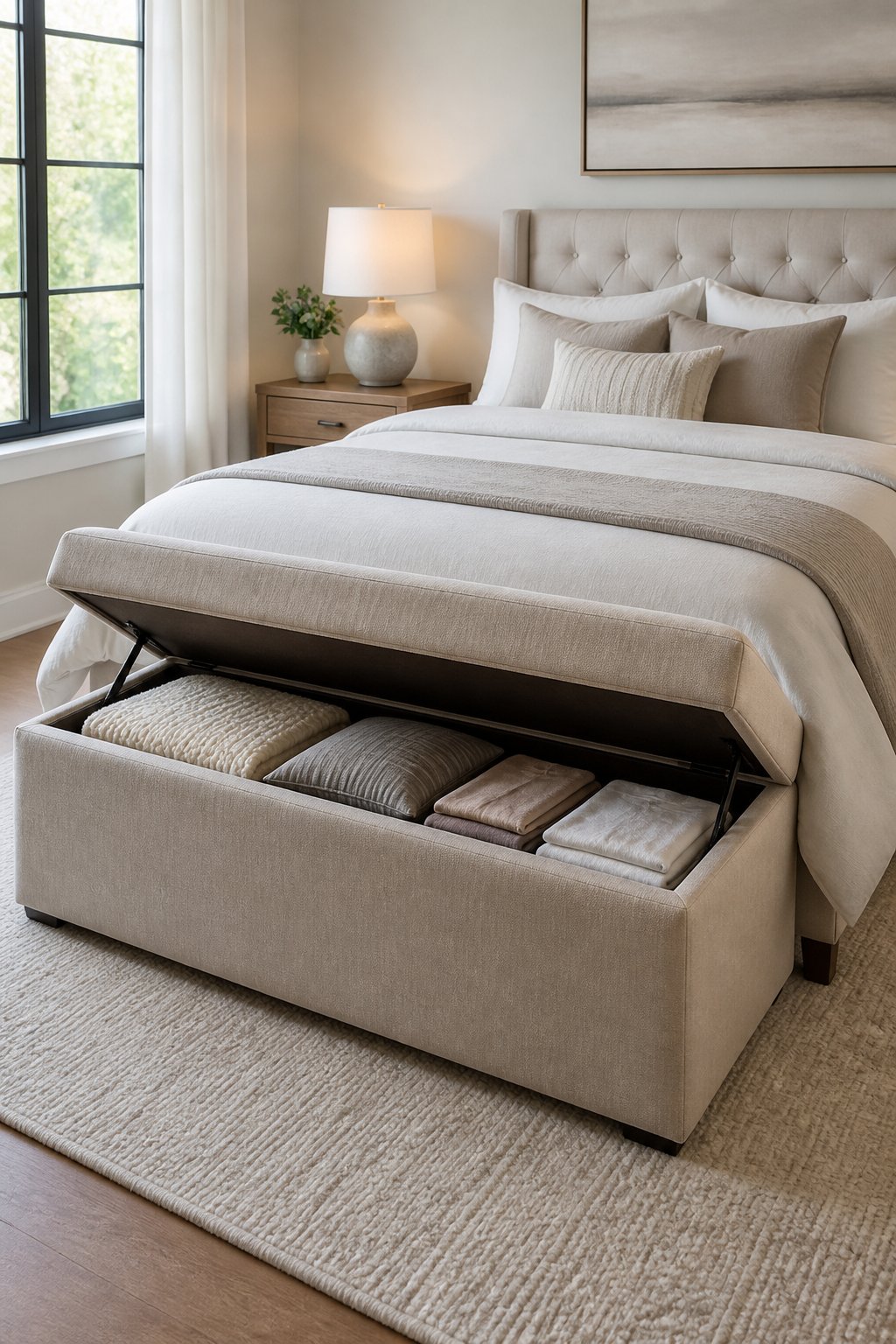
A storage ottoman or lift-top bench adds hidden capacity and a useful place to sit while dressing. Its position at the foot of the bed uses space that would otherwise remain open.
Store blankets, handbags, extra pillows, or low-use clothing inside. Choose a bench that leaves enough walkway clearance for drawers and doors to open fully.
A slim upholstered design works well in a narrow bedroom. A hinged lid gives quick access, while a lift mechanism requires clearance above the bench.
10) Pegboard Wall for Bags, Hats, and Jewelry
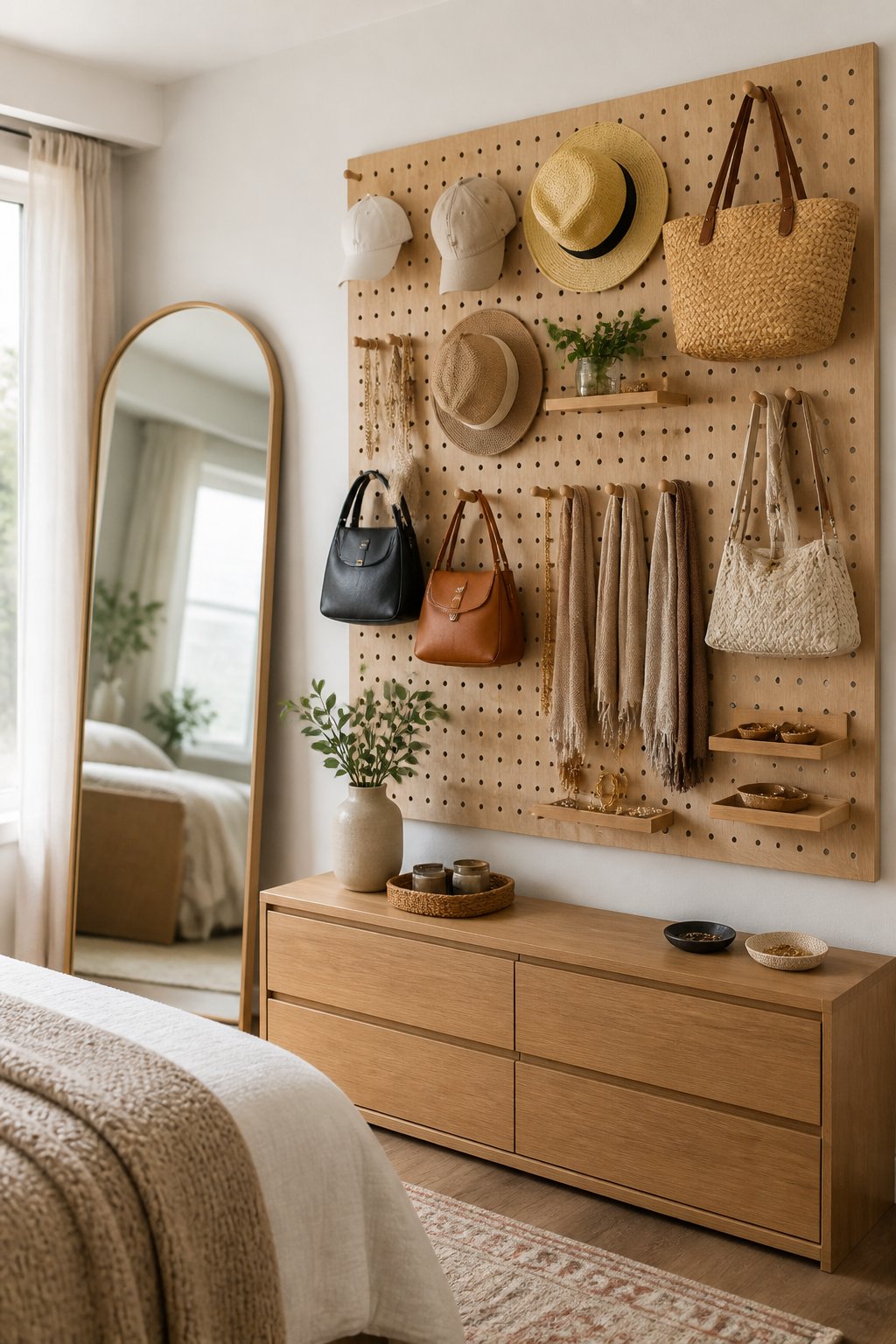
A pegboard organizes accessories on vertical wall space and keeps daily-use items easy to reach. Hooks, shelves, and small baskets can shift as storage needs change.
Group handbags by size, hang hats along the upper edge, and place jewelry on a small tray or dedicated hook. Keep the display within one color family so it looks composed.
Mount the board into studs or use renter-approved anchors for lighter loads. Leave clear space around the board to prevent the display from reading as crowded.
11) Rolling Garment Rack With a Lower Shoe Shelf
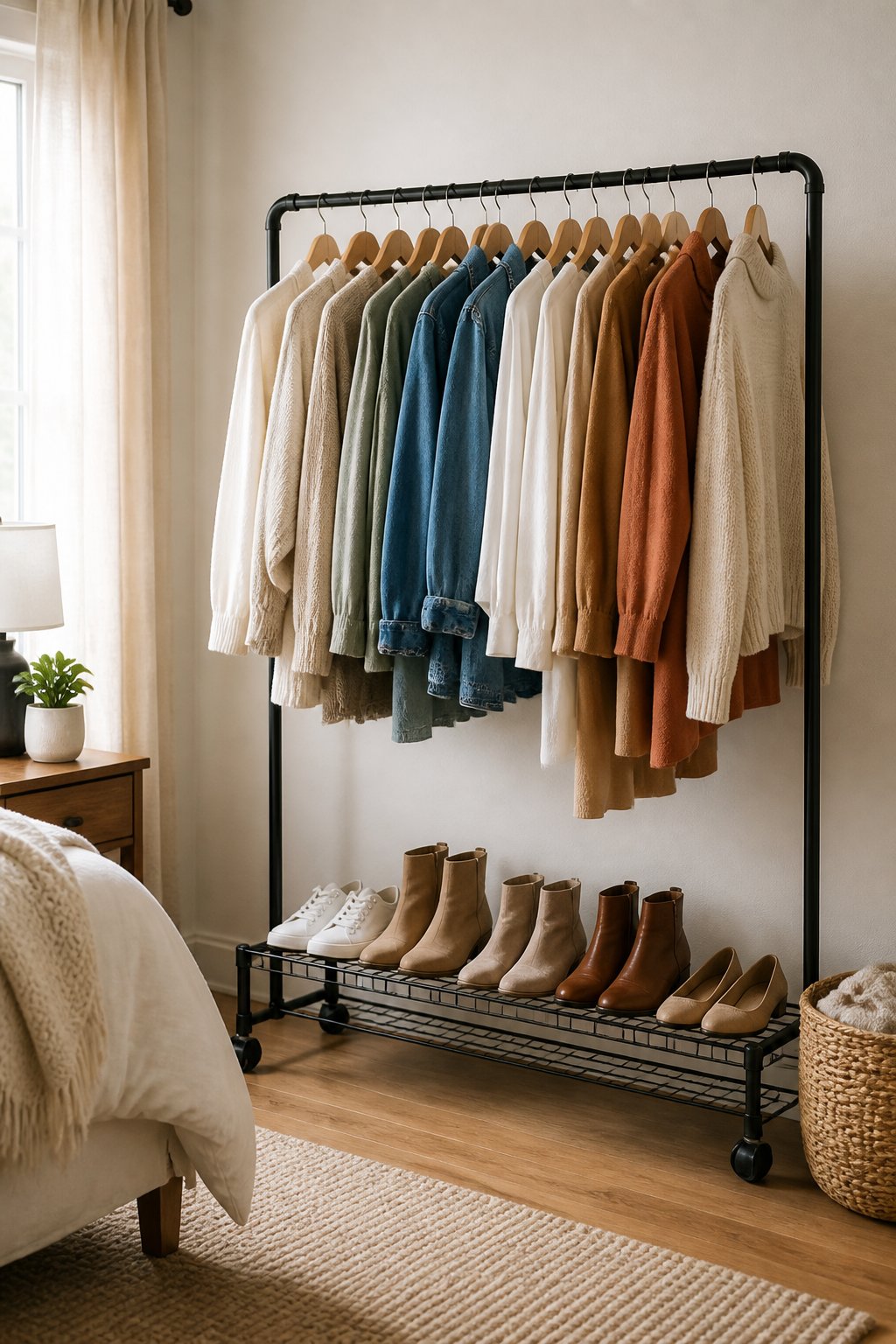
A rolling garment rack gives flexible hanging storage for daily outfits and moves easily during cleaning or room rearrangement. The lower shelf holds shoes, folded jeans, or a labeled basket.
Limit the rack to a curated weekly wardrobe. Use matching hangers and organize clothes from light to dark for a consistent visual line.
Choose locking casters and a stable metal frame. A cover helps with dust during longer storage periods, while open access suits clothing worn every day.
12) Cube Storage Bookcase With Fabric Bins
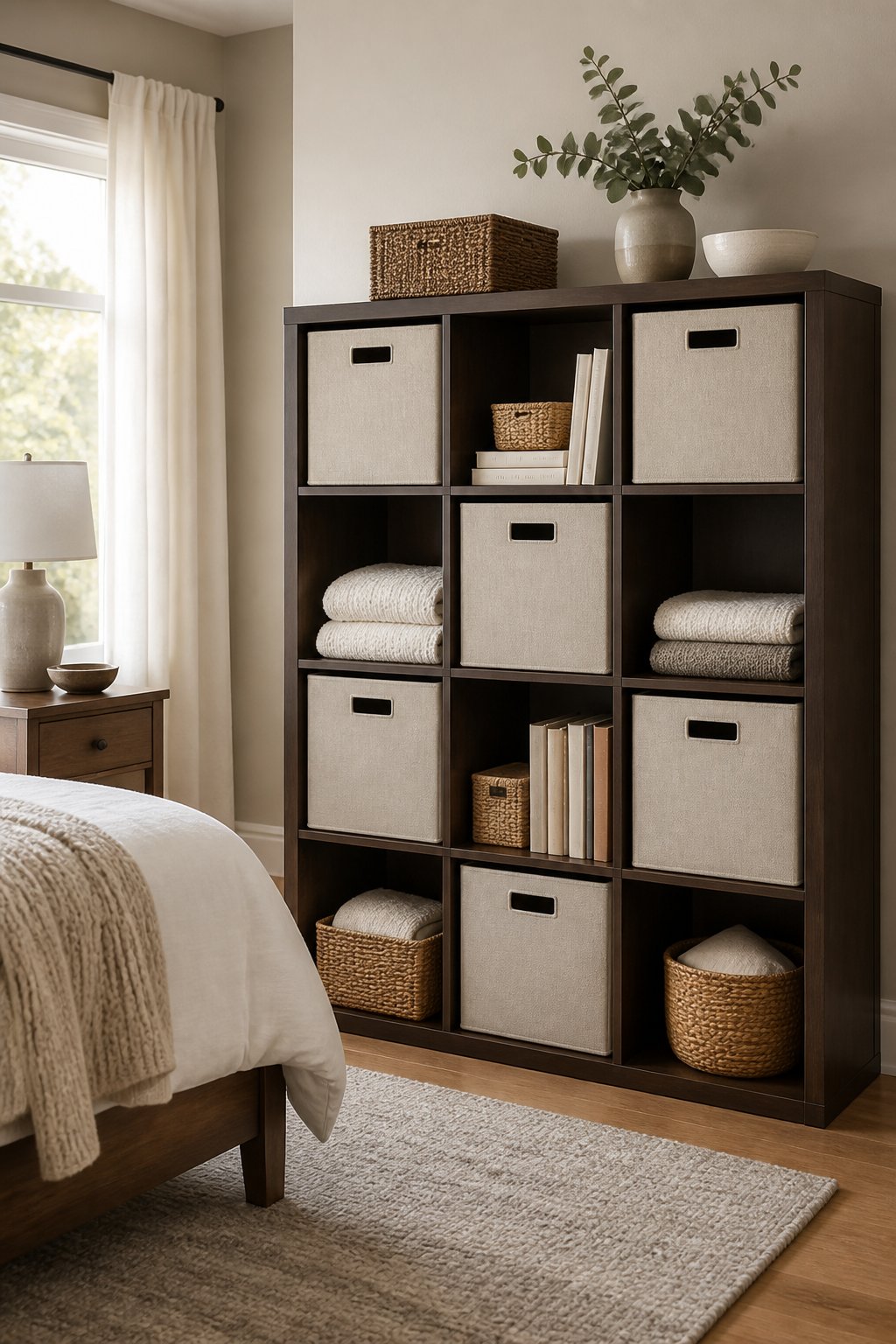
A cube storage bookcase combines open shelving with soft closed storage. Fabric bins hide socks, accessories, folded clothing, and items that do not need display.
Use the lower cubes for heavy bins and the upper cubes for lighter items. Label each bin by category, then leave one or two cubes open for shoes or neatly folded sweaters.
Anchor the bookcase to the wall, especially when it stands beside the bed. Choose bins in one material and color to make the storage wall feel unified.
13) Wall Hooks and a Narrow Entry Shelf Behind the Door
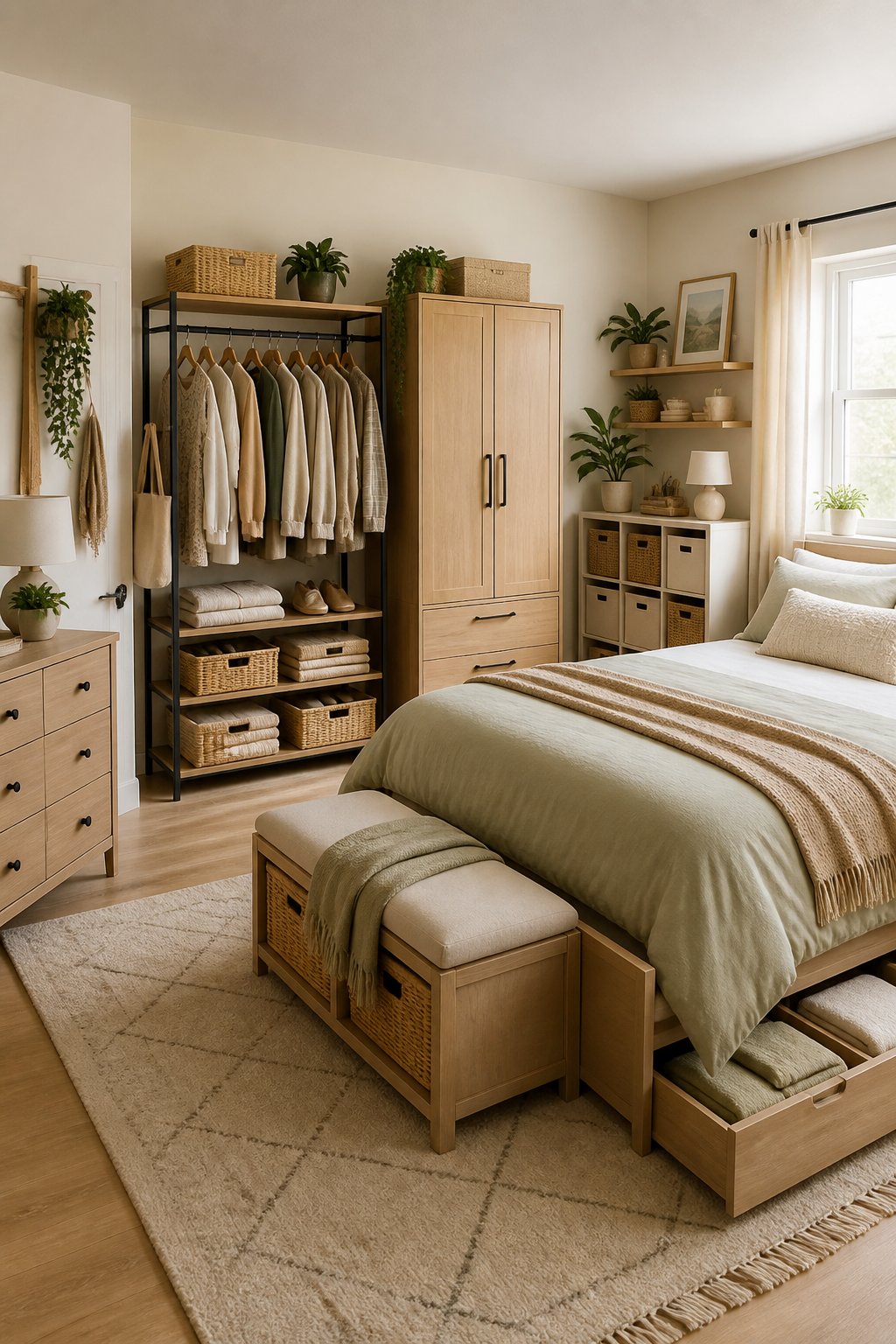
Wall hooks and a narrow shelf behind the door create a compact drop zone for bags, hats, scarves, and daily clothing accessories. The unused door-side wall handles small items while larger furniture serves garments.
Install hooks at staggered heights and place the shelf above eye level for hats or folded pieces. Keep the area limited to current-use items so the door opens without catching anything.
Adhesive hooks suit light loads and rental walls. For heavier bags, use properly anchored hardware and check the door swing before mounting the shelf.
| Storage Solution | Main Benefit | Best For |
|---|---|---|
| Platform Bed With Drawers | Uses unused bed space for hidden storage | Clothes, bedding, seasonal items |
| Freestanding Wardrobe | Replaces built-in closet function | Hanging clothes and shelves |
| Wall-Mounted Clothing Rail | Saves floor space using vertical areas | Daily outfits and accessories |
| Floating Shelves | Adds storage without furniture footprint | Folded clothes and baskets |
| Over-Door Organizer | Uses overlooked storage zones | Shoes and small accessories |
| Rolling Garment Rack | Provides flexible movable storage | Frequently used clothing |
How to Make Open Storage Look Intentional
Open storage looks intentional when it follows a limited color palette, controlled density, and consistent spacing. The goal is to make useful items easy to reach while giving the eye quiet areas to rest.
How can you prevent an open clothing rack from looking cluttered?
Keep the rail below two-thirds full and display the clothing worn most during the current season. Matching hangers, color grouping, and one basket on the lower shelf create visual order.
Move bulky coats, laundry, and off-season pieces into closed storage. Leave a small gap between clothing groups so the rack keeps a clear shape.
Which colors and materials make visible storage feel calmer?
Warm wood, matte white, black metal, linen, and woven fibers create a cohesive storage palette. Two main materials plus one accent finish are enough for most small bedrooms.
Match bins to the wall or bedding, and repeat one wood tone across shelves and furniture. Glossy mixed plastics and many bright colors draw attention to every stored item.
What should stay on display versus go in closed storage?
Display daily-use clothing, attractive shoes, favorite bags, and neatly folded pieces. Place laundry, underwear, bulky sweaters, spare linens, and seasonal items inside drawers, bins, or doors.
Use sightline height as a guide. Items visible from the bed and doorway deserve the cleanest arrangement, while deep shelves and lower bins can hold less attractive necessities.
Frequently Asked Questions
What are the best IKEA solutions for a bedroom without a closet?
The IKEA PAX Wardrobe System provides the most complete clothing-storage plan, with rails, drawers, shelves, and doors in one wall-mounted layout. KALLAX-style cube storage and MALM dressers also help with folded clothing and accessories when the room needs smaller pieces.
How do I organize shoes and accessories without closet space?
Use an over-the-door organizer for small accessories, a pegboard for bags and jewelry, and the lower shelf of a garment rack for shoes. Keep daily pairs accessible and store seasonal footwear in labeled under-bed bins to protect the floor area.