
Small Bedroom Decor Ideas: 22 Ways to Add Style Without Adding Clutter
Decorating a small bedroom is less about finding enough things to fill it and more about deciding which things deserve the limited visual space you have.
When the bed, dresser, window, walls, and walking paths are all close together, every choice has more impact. A lamp that is slightly too large can crowd a nightstand. Too many tiny prints can make a wall feel busy. A rug that is too small can visually chop up the floor instead of pulling the room together.
The best small bedroom decor ideas work with those limitations rather than ignoring them.
You can make a small room feel warmer, more personal, and more finished without replacing all the furniture or covering every empty surface. Start with the biggest visual areas, repeat a few colors and materials, and leave enough breathing room for the room to still feel small in a good way—not cramped.
If the whole room needs more than decorating, start with our small bedroom makeover on a budget before buying finishing pieces.
1. Choose a Simple Three-Part Color Palette

Before deciding which decor to buy, decide which colors are allowed into the room.
A useful starting formula is:
- one light or neutral base
- one main accent color
- one darker or natural supporting tone
For example, warm white bedding could sit with muted terracotta accents and medium wood. Soft beige could work with sage green and charcoal. Cream could pair with dusty blue and natural rattan.
This does not mean every item has to match. The palette is mainly a filter. When you see another pillow, vase, poster, or throw you like, you can ask whether it belongs in the direction you already chose.
That is particularly helpful in a small room because unrelated colors are physically much closer together.
2. Let the Bed Carry the Biggest Decor Change
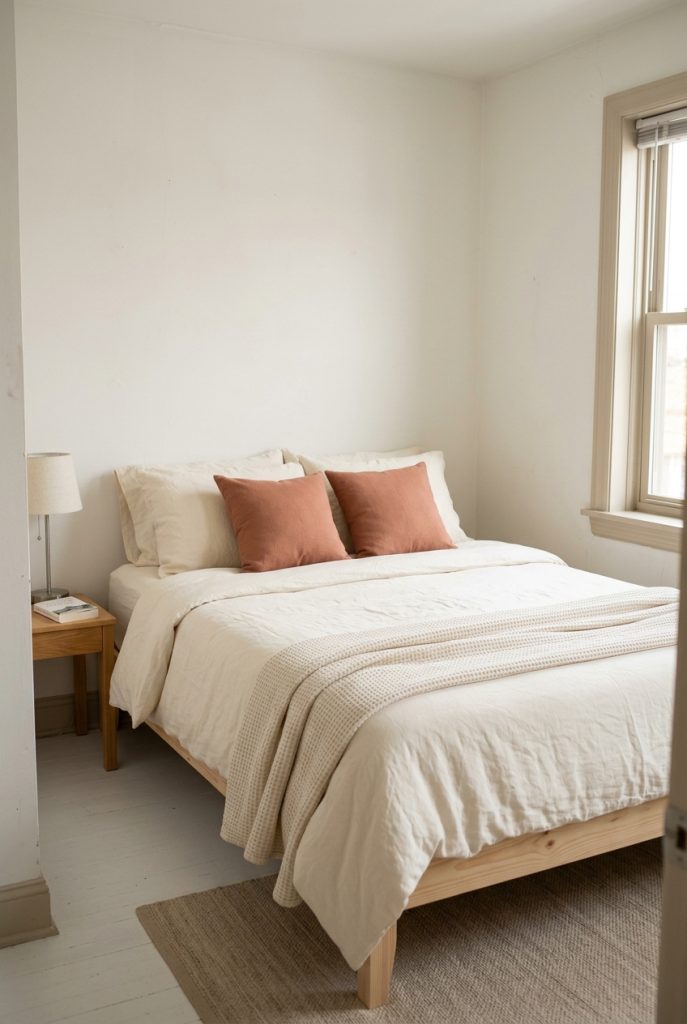
The bed usually occupies more visual space than anything else in the room. That makes bedding one of the strongest places to establish the decorating direction.
You do not need ten throw pillows or several blankets.
A cleaner combination might be:
- simple duvet or comforter
- sleeping pillows
- one or two accent pillows
- one lightweight throw if needed
For a room that already contains several colors, plain bedding can calm everything down. In a very neutral bedroom, the bed can carry your strongest accent.
If your duvet insert still works, changing only the cover can alter a large portion of the room without replacing the entire bedding setup.
Affiliate pick: Bedsure White Queen Duvet Cover Set

3. Repeat One Accent Color Three Times

A small room often looks more coordinated when a color repeats rather than appearing once.
If you choose muted terracotta, for example, you might repeat it in:
- one pillow
- part of the wall art
- one small vase
Those three items do not need to be identical shades.
The repetition is enough to help the eye connect different areas of the room.
This is also an inexpensive way to change a bedroom seasonally. Keep the larger neutral pieces and change only a few accent points.
4. Add One Compact Bedside Light
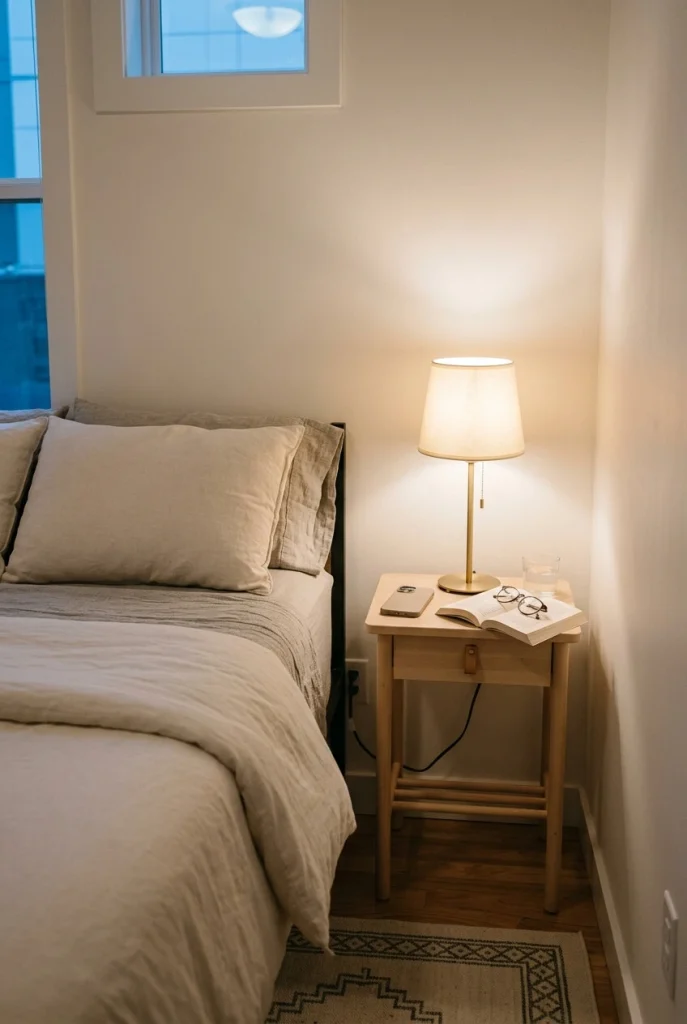
A bedside lamp does more than decorate the nightstand. It changes how the whole room looks after sunset.
In a small bedroom, choose lighting that earns the space it occupies. A large sculptural lamp may look beautiful but leave nowhere for a phone or glass of water.
Look for a lamp with a modest base and a shade that does not extend far beyond the nightstand.
If one fixture can also handle charging, that may reduce the number of objects and cables sitting beside the bed.

5. Give One Wall a Clear Job
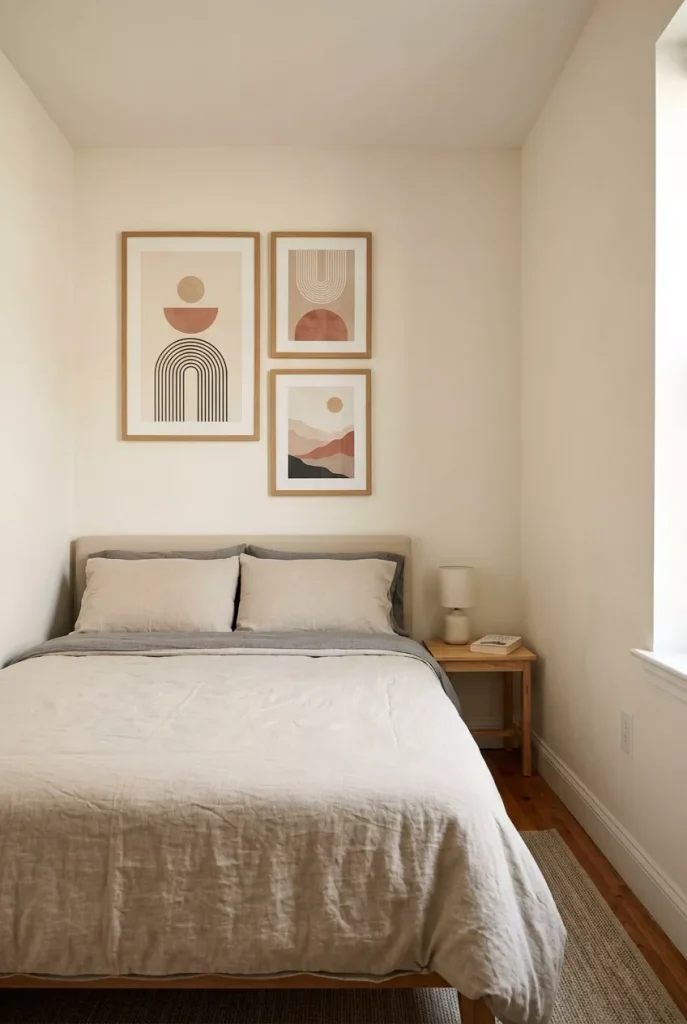
Trying to decorate every wall can make a small bedroom feel crowded surprisingly quickly.
Instead, decide which wall will carry most of the personality.
Often that is the wall behind the bed.
It could hold:
- one larger print
- three coordinated frames
- a compact gallery grouping
- removable decor
- a narrow picture ledge
Then let the surrounding walls stay quieter.
A focused wall also photographs better for Pinterest because the room has a clear visual center rather than dozens of competing details.
A future <u>small bedroom wall decor ideas</u> guide can go much deeper into arrangements and sizing.

6. Leave One Zone Deliberately Quiet
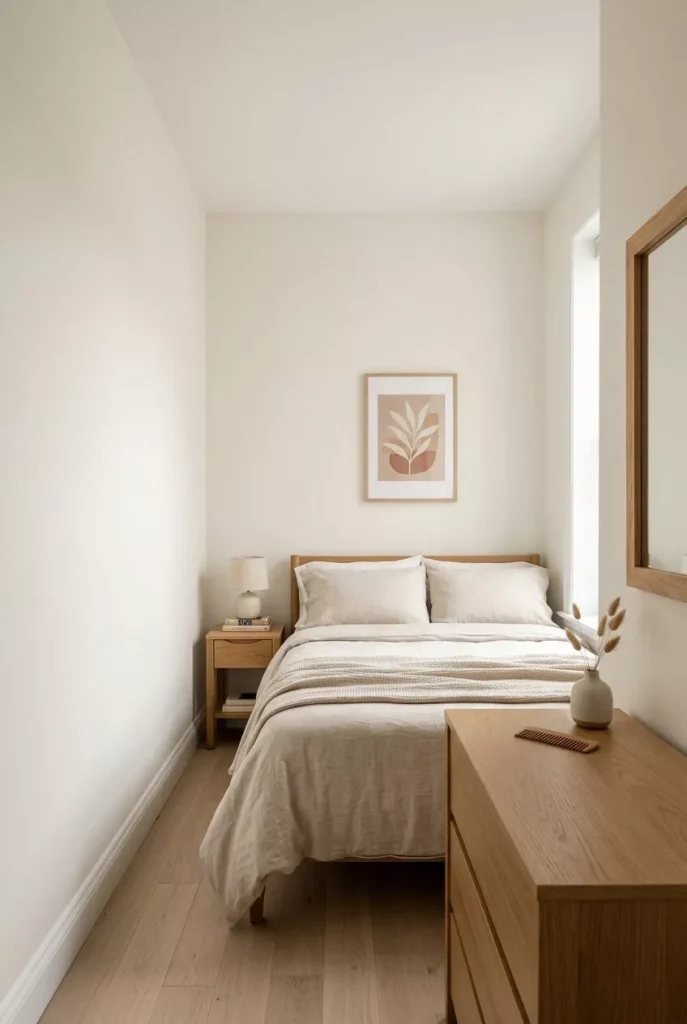
Not every blank wall is a decorating problem.
If your bed wall already has art and the dresser holds a few objects, an empty corner can actually help.
This matters more in a small room because there is less physical distance between visual elements.
Try stepping into the doorway and asking where your eye naturally rests.
If it has nowhere to rest, removing something may improve the room more than adding something.
This principle works particularly well with <u>minimalist small bedroom ideas</u>, but you do not need a minimalist room to use it.
7. Make the Window Feel Taller and Lighter

Curtains occupy a surprisingly large amount of visual space.
In a small bedroom, very heavy fabric or panels that stop awkwardly at the window can make the wall feel shorter.
When the room allows it, mounting the rod slightly above the window and letting the curtains fall closer to the floor can visually lengthen the wall.
Light-filtering neutral curtains are useful when you want softness and daylight rather than complete blackout.
Privacy and sleep requirements still come first, so do not choose sheer fabric only because it photographs well.

8. Use a Rug to Connect the Bed Zone
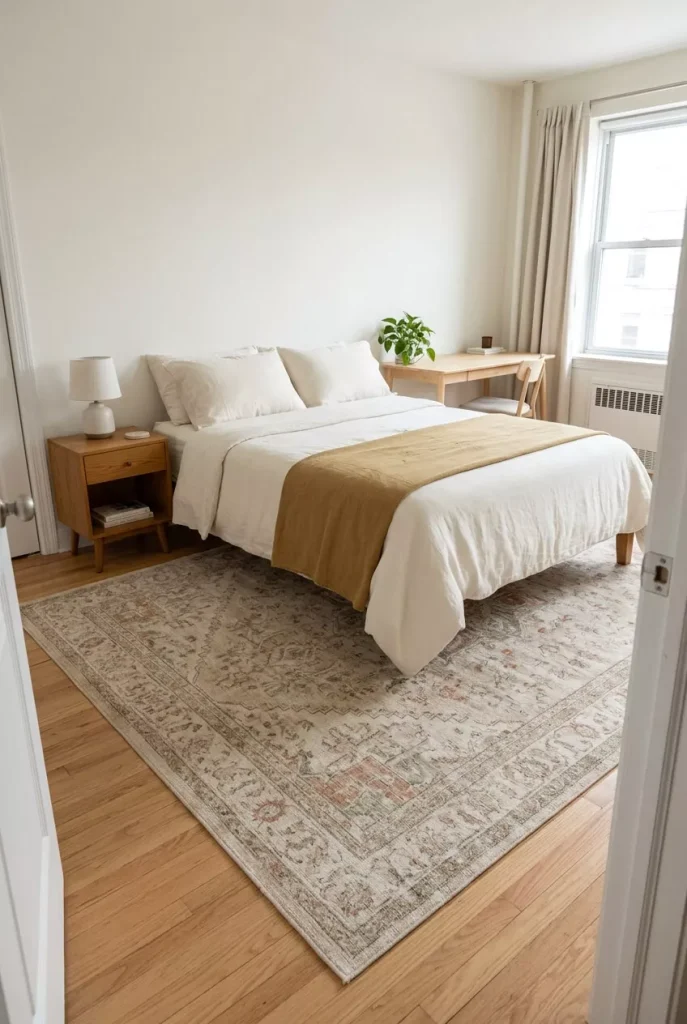
A rug can make a small bedroom feel more complete, but only when its scale supports the furniture.
One tiny rug floating at the foot of the bed usually creates another isolated rectangle on an already limited floor.
Instead, the rug should visually connect to the bed or another meaningful furniture grouping.
Before shopping, mark the rug dimensions on the floor with painter’s tape.
You may discover you need a different size—or that the existing flooring already looks better without a rug.
For more detailed placement later, use <u>small bedroom rug ideas</u>.

9. Give the Nightstand a Three-Item Limit
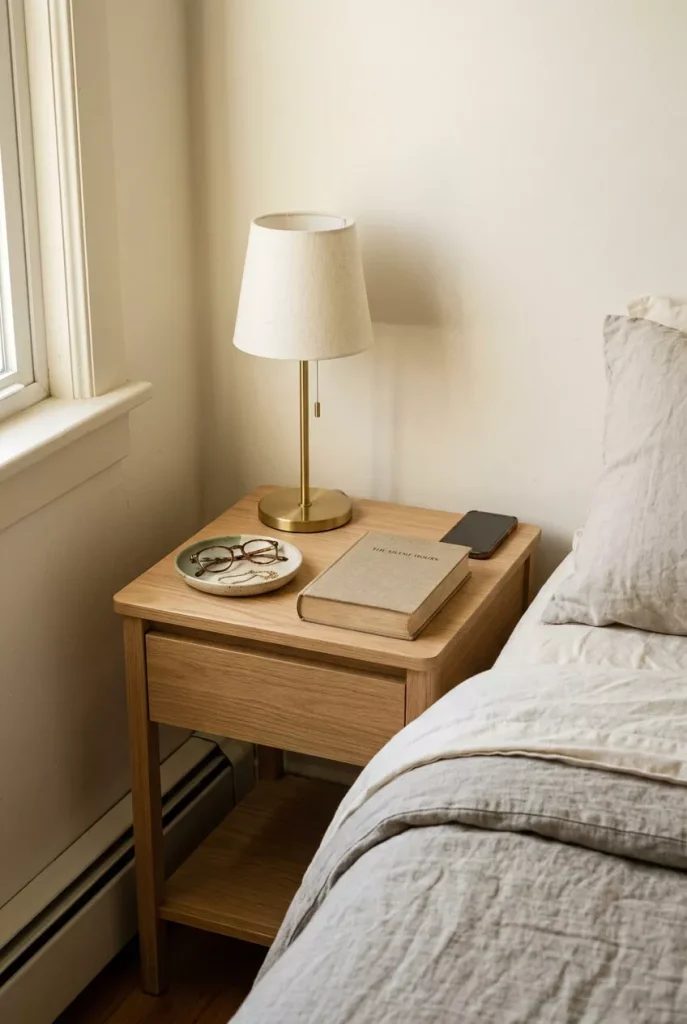
The bedside surface is usually too small to become a display shelf.
Start with the things you genuinely use.
For many people, three visible categories are enough:
- lamp
- one nighttime essential
- one personal or decorative detail
Charging cables can disappear behind the table where possible.
Books can stay stacked only if you are actually reading them.
This keeps one of the most visible surfaces in the bedroom from becoming a collection point for everything you carried into the room that day.
10. Add Texture Before Adding Another Color

If a neutral bedroom feels flat, the problem may not be the color palette.
Try changing texture first.
A room with cream bedding, beige walls and wood furniture can still have depth through:
- linen-look curtains
- woven basket
- chunky throw
- matte ceramic
- wood grain
- slightly nubby pillow cover
Because the tones stay related, the room gains interest without becoming visually louder.
This is especially useful if you like <u>cozy small bedroom ideas</u> but do not want the room overloaded with pillows and blankets.
11. Use Fewer, Larger Pieces of Wall Art
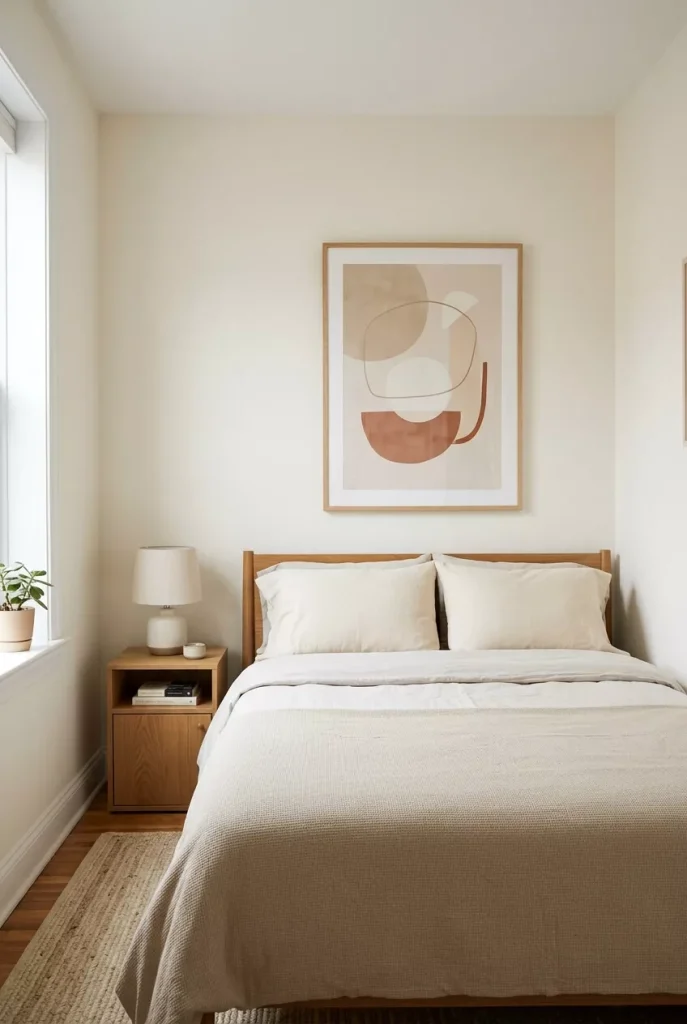
Small room does not automatically mean tiny art.
A wall filled with many little frames creates more edges, gaps and visual stops than one moderately sized piece.
Above the bed, consider whether one larger print or a compact three-piece arrangement could do the job of six or seven smaller objects.
Before hanging anything, make a paper template in the approximate dimensions and tape it to the wall.
You can test the scale without spending money or making holes.
Lighting
Window treatment
Correctly sized rug
One useful mirror
Tiny tabletop decor
Decorative trays
Trend-only signs
Objects bought only to fill gaps
12. Put a Full-Length Mirror Where It Has Two Jobs
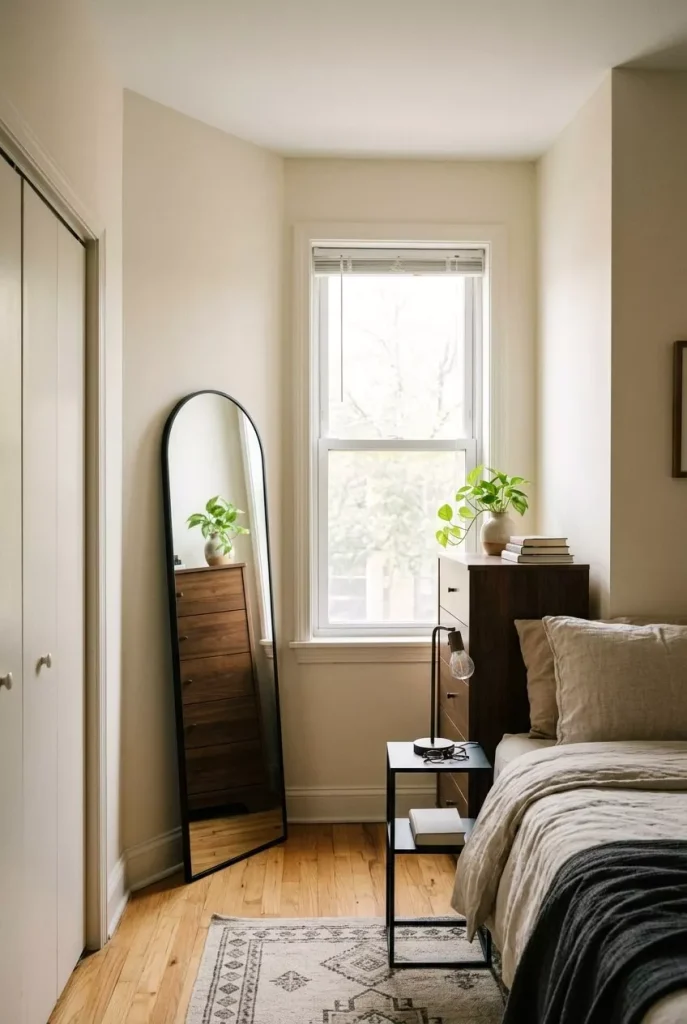
A mirror deserves space when it is both useful and visually helpful.
Instead of placing one wherever there is an empty wall, look for a location where it can:
- provide a full dressing view
- reflect some natural light
- visually extend the room from a useful angle
Avoid positioning it where it mainly reflects clutter or the back of a door.
Floor mirrors also need enough clearance that they do not tighten an already narrow walking path.

13. Keep Dresser Styling Low and Wide
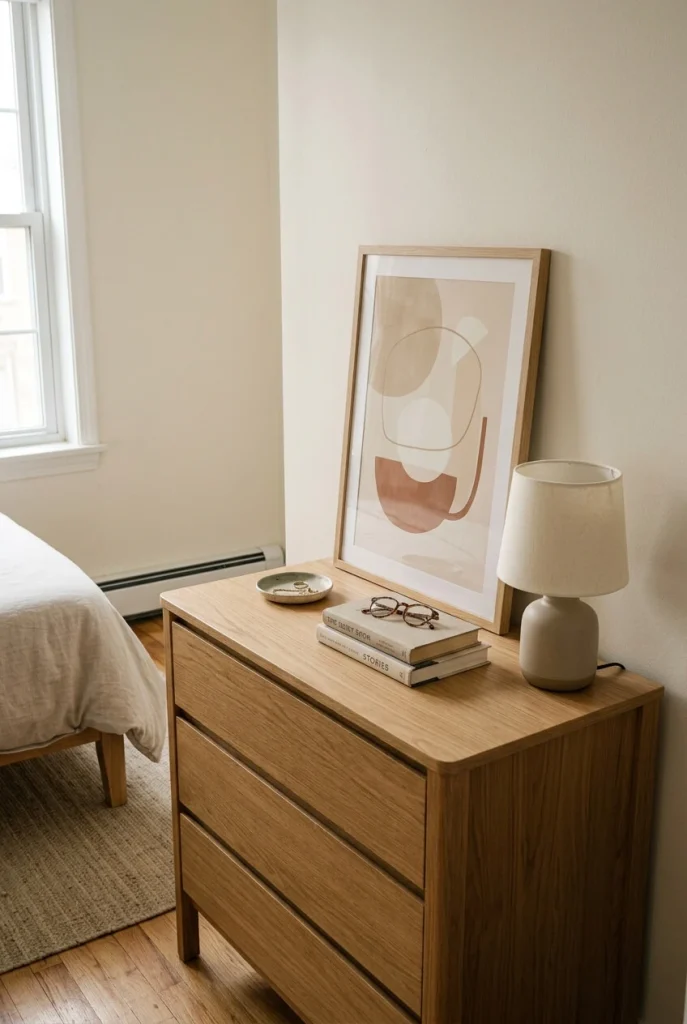
A dresser is one of the easiest places to overdecorate because it looks like a large empty surface.
Try composing it horizontally instead.
For example:
- lamp or vase on one side
- low stack of books or tray near the middle
- framed art or mirror behind the arrangement
Leave the other part of the dresser clear.
The goal is not to fill the entire top.
You also need enough working room for the dresser to function as furniture rather than a shelf you are afraid to touch.
14. Get Charging Cables Out of the Visual Field
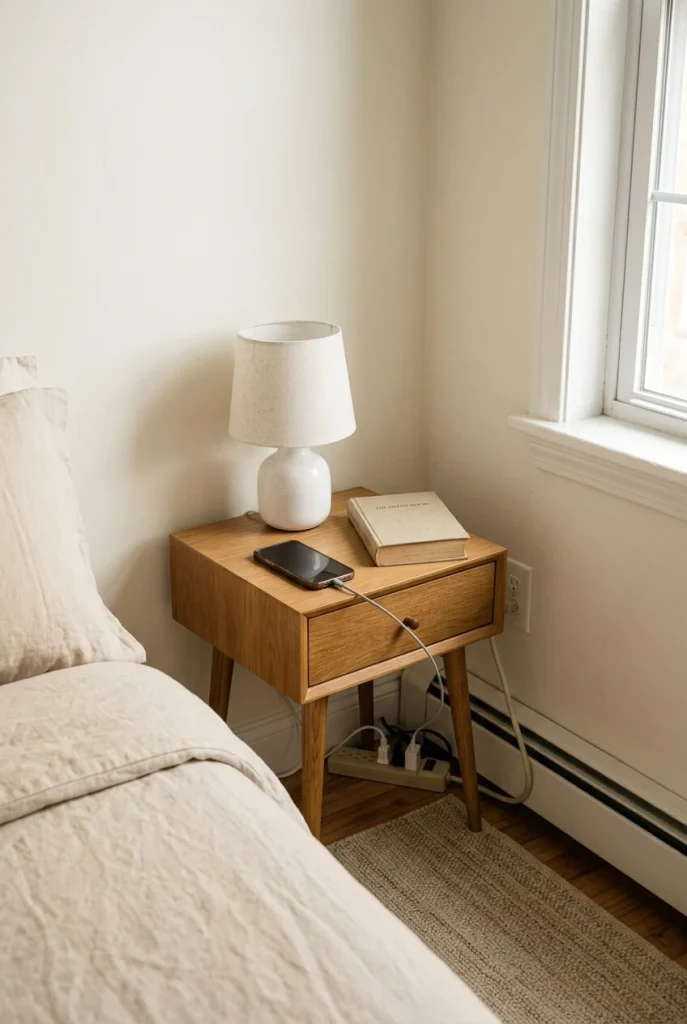
Phone chargers, lamp cords, extension cables and device wires can make a decorated bedroom look cluttered even when the room is otherwise tidy.
Start by deciding which devices genuinely need to charge beside the bed.
Then route those cords together behind furniture rather than letting several lines cross the floor or nightstand.
This is a tiny change, but photographs make the difference obvious.
The same applies to bulky power strips. If they can sit safely behind furniture while remaining ventilated and accessible, they do not need to become part of the decor.
15. Add One Living or Natural Element
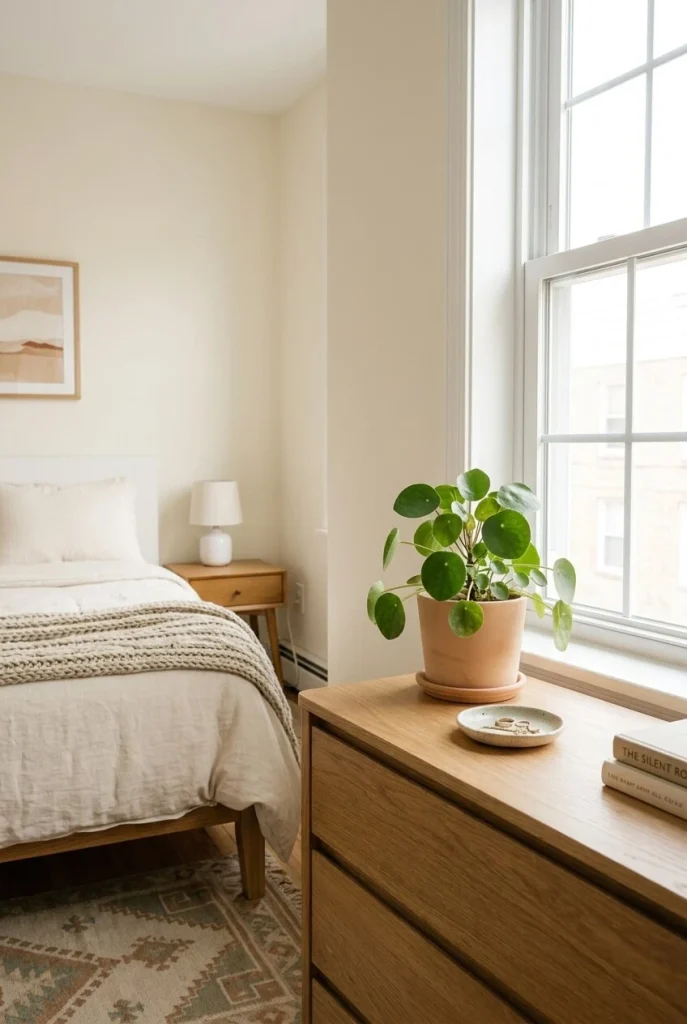
A small plant can break up a room full of straight furniture lines and fabric.
But you do not need to turn every ledge into a plant shelf.
One plant on a dresser, a trailing plant near a bright window, or a simple branch in a vase can be enough.
Choose the plant based on the actual light conditions and your willingness to care for it—not because it appeared in an inspiration photo.
A future <u>small bedroom decor ideas with plants</u> article can handle plant placement in much more detail.
16. Use One Shallow Wall Shelf Where Floor Decor Will Not Fit
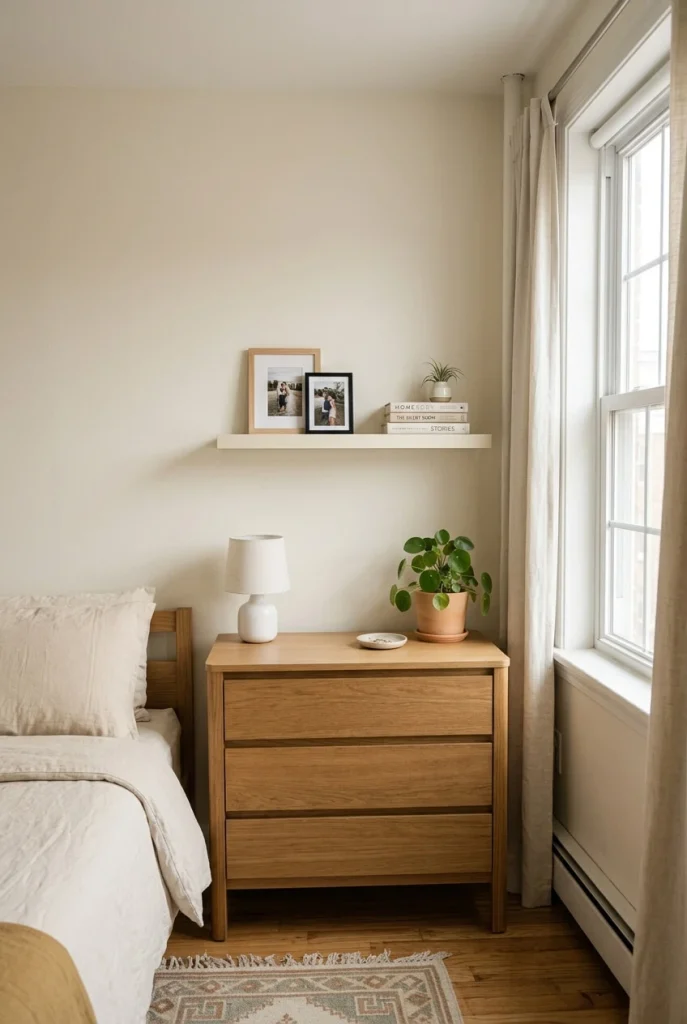
Wall space can provide a display area without requiring another cabinet or console.
But shelves work best when there is a specific reason for them.
A single shallow shelf might hold:
- two framed photos
- a few books
- one small plant
- a useful everyday object
Avoid installing several shelves and then buying items purely to fill them.
For renters, wall-mounted shelves may require permission or repair at move-out, so check the lease before installing them. A full <u>small bedroom ideas for renters</u> article will cover more reversible options.

17. Repeat One Material Across the Room
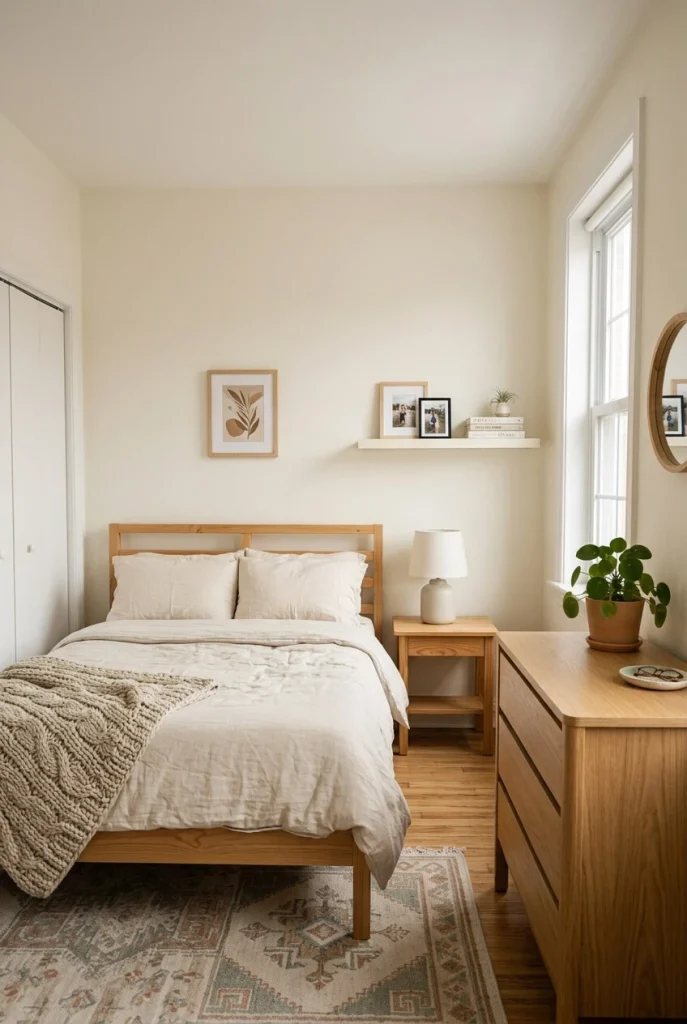
Color is not the only way to make a room feel connected.
You can repeat a material instead.
If the bed frame is light wood, repeat wood in:
- a small frame
- lamp base
- dresser tray
If you use black metal, repeat it in a curtain rod, picture frame and lamp.
The repeated material makes separate objects look as though they were chosen together, even when they came from different stores or different years.
This is one of the easiest ways to make secondhand pieces feel intentional.
18. Add One Dark Accent to a Very Light Bedroom
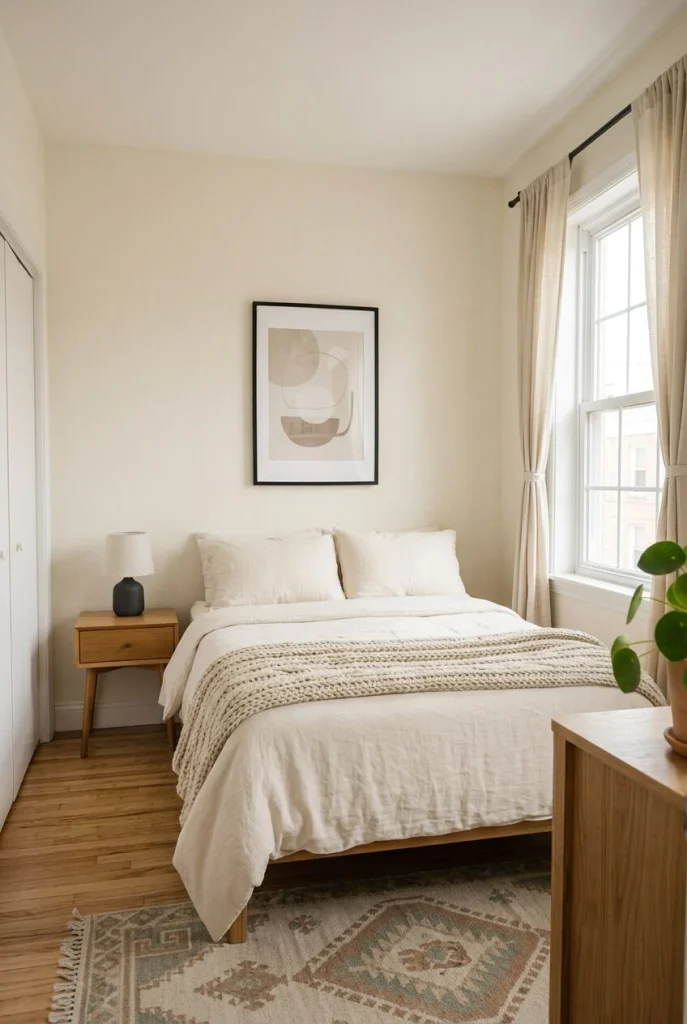
An entirely cream, beige or white bedroom can sometimes lose definition.
A small amount of contrast helps.
That does not mean adding a black accent wall.
Try one or two restrained dark elements:
- charcoal lamp base
- thin black frame
- dark curtain rod
- small dark vase
- patterned pillow with a little charcoal
The contrast creates edges and gives the lighter elements something to sit against.
19. Handle an Awkward Corner Vertically
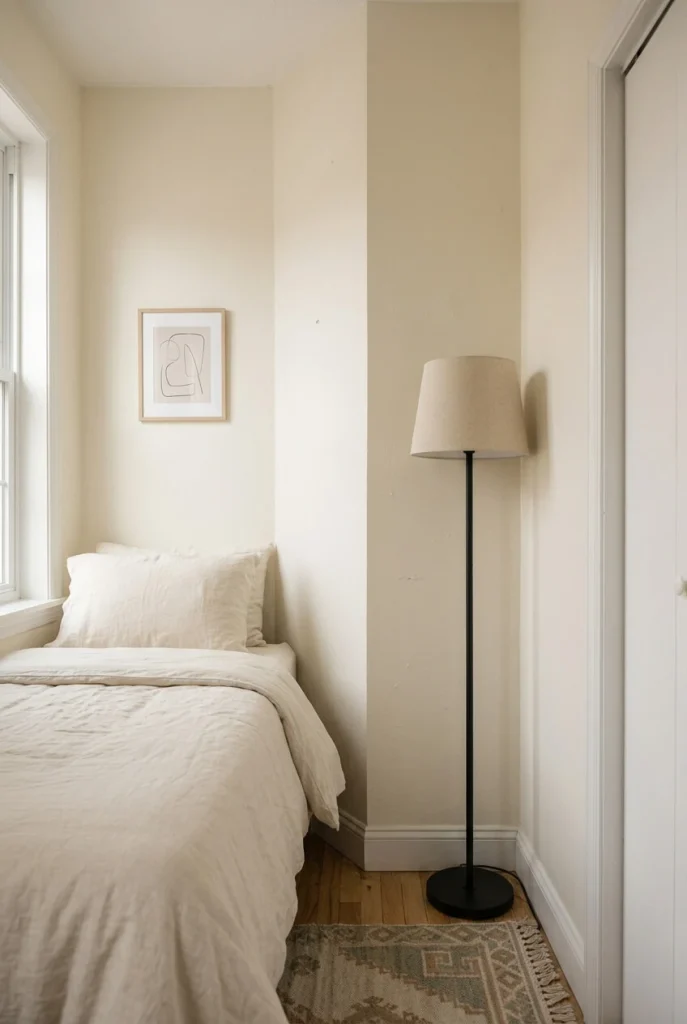
A narrow corner does not automatically need a chair or side table.
When floor space is tight, a vertical element may make more sense:
- tall mirror
- slim floor lamp
- narrow plant
- framed print
- tall basket if it serves an actual storage need
Avoid forcing furniture into a corner solely because it is empty.
Empty corners often make a small bedroom easier to move through.
20. Let Useful Objects Become Part of the Decor
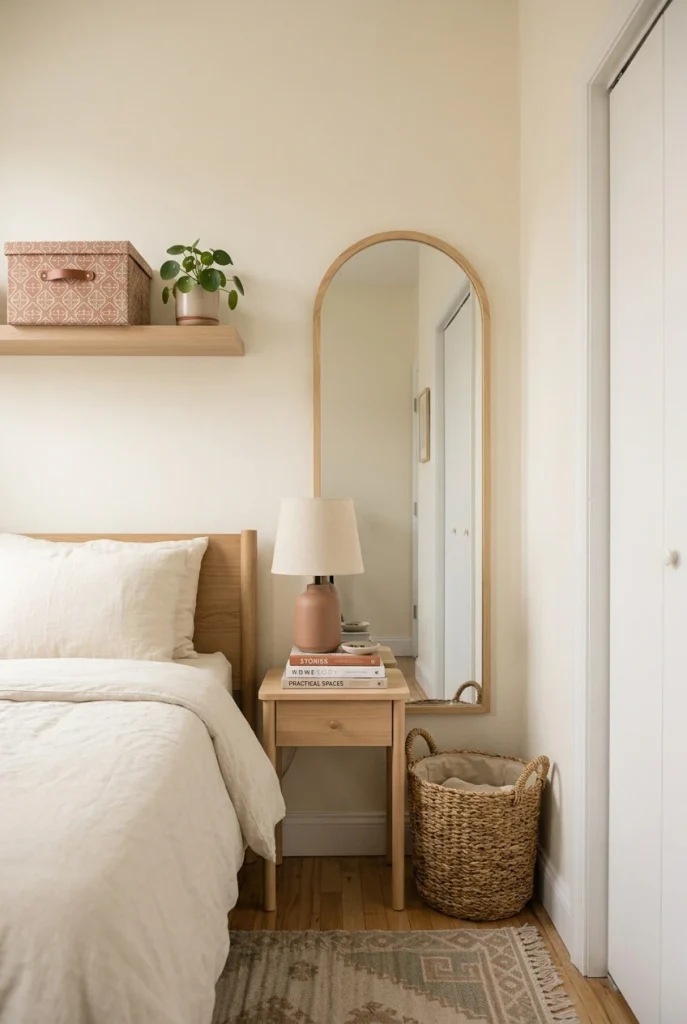
Some of the best small-bedroom decor is already needed.
A bedside lamp can provide shape and color.
A woven laundry basket adds texture.
A stack of books can create height.
A mirror can become a wall feature.
A nice-looking storage box can contain something you genuinely use.
This approach reduces the number of objects that exist only for appearance.
It is particularly valuable in rooms where storage and decor are competing for the same few surfaces.
21. Keep the Floor Edges Visible
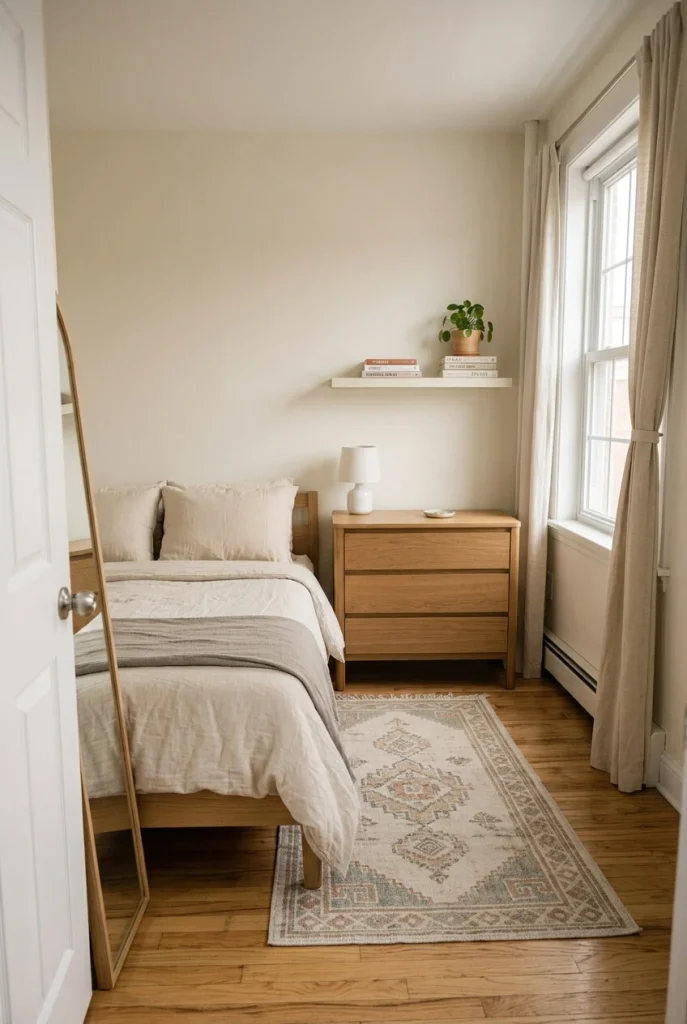
This is more subtle than buying a new accessory, but it can make a noticeable difference.
When baskets, plants, stools, shoes and decor line every edge of the room, the visible floor becomes fragmented.
Try removing small floor objects that do not need to be there.
Seeing an uninterrupted stretch of baseboard or flooring gives the eye a clearer boundary and can make the room feel less packed.
This is why good <u>small bedroom layout with storage</u> decisions matter even when the article itself is about decor.
22. Remove One-Third of the Accessories Before You Finish
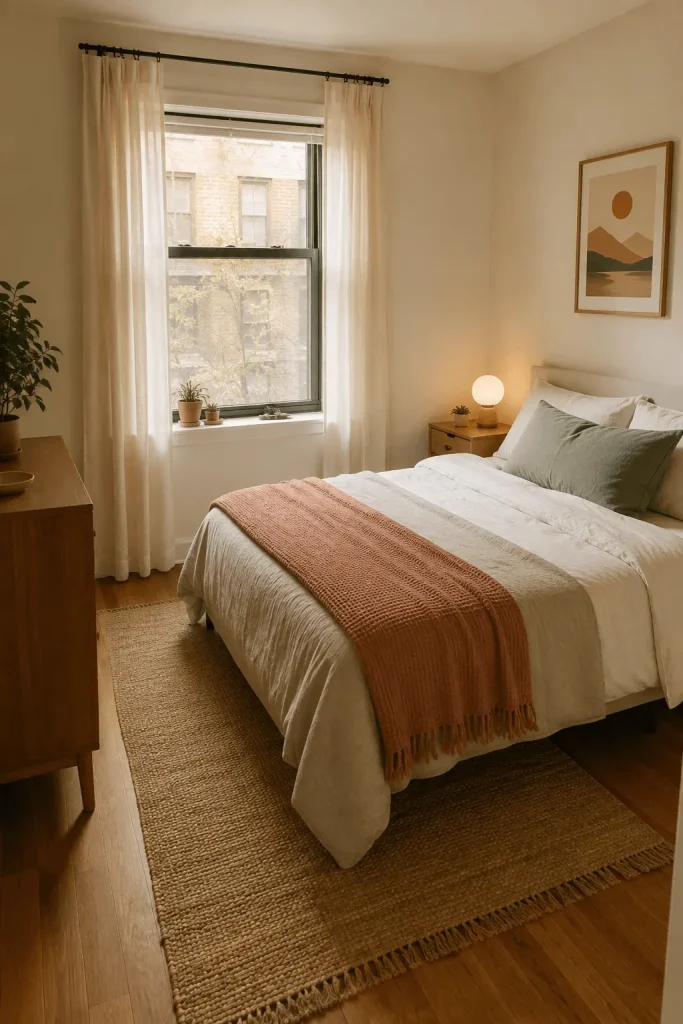
Once the room looks finished, try one final edit.
Take out a few accessories and photograph the bedroom again.
Compare the two versions.
Often the room looks better with fewer things because the bed, artwork, lighting and materials become easier to notice.
You can always put something back.
This is especially useful after shopping because new purchases can make it tempting to display everything at once.
The goal is not minimalism.
It is giving the things you actually like enough visual space to matter.
When a small bedroom feels unfinished, ask what is missing. When it feels crowded, ask what can leave. Those are two different decorating problems.
Small Bedroom Decor FAQ
How can I decorate a small bedroom without making it cluttered?
Decorate the largest visual areas first and limit small accessories. Bedding, lighting, window treatments, one wall, and possibly a rug can establish most of the room’s style. Leave open space on dressers, nightstands, floors, and some walls.
What should I decorate first in a small bedroom?
Start with the bed because it is usually the largest visible surface. Then consider lighting, the main wall, and the window. Smaller accessories should come after the major surfaces already work together.
What colors make a small bedroom look good?
There is no single color that every small bedroom needs. Light neutrals can keep the room visually calm, while deeper colors can work when they are intentional. More important than using only light colors is keeping the palette controlled and repeating a few tones throughout the room.
How can I decorate my small bedroom on a low budget?
Start by rearranging and removing clutter, then shop your home for frames, lamps, baskets, books, textiles and decor that can move into the bedroom. Spend on the areas that affect a large portion of the room before buying small accessories.
How much decor should a small bedroom have?
There is no useful fixed number. Instead, look at whether each major surface has breathing room. If the dresser, nightstand, walls and floor all contain several decorative objects, removing some will often improve the room more than adding another piece.
A Small Bedroom Does Not Need to Look Empty to Feel Spacious
Good small-bedroom decorating is not about making the room look larger at all costs.
It is about using the limited space intentionally.
Choose a clear palette. Let the bed establish the direction. Repeat a few colors and materials. Use lighting, mirrors, curtains and art where they serve a purpose. Leave some surfaces quiet.
Most importantly, do not measure a successful bedroom by how many decor ideas you managed to fit into it.
The room should still be easy to walk through, easy to maintain, and comfortable to live in after the photo is taken.