A small bedroom makeover does not have to start with new furniture, a full paint job, or a weekend spent replacing everything you own. In a compact room, a few connected changes can alter the whole impression because the bed, walls, window, lighting, and furniture all sit close enough to affect one another.
The most useful small bedroom makeover ideas begin by identifying what feels wrong in the current room. Maybe the bed disappears into the background, the lighting makes every color look flat, the furniture feels collected rather than coordinated, or every wall is competing for attention. Once you know the main problem, you can change a small group of related elements instead of buying random decor and hoping the room comes together.
If spending is the main constraint, start with our small bedroom makeover on a budget guide. It focuses on what to change first, what to reuse, and where your money has the most impact. If you are mainly looking for individual styling changes rather than a whole-room refresh, our small bedroom decor ideas guide goes deeper into bedding, art, mirrors, rugs, lighting, and finishing details.
Start by Finding the Biggest Visual Problem
Before changing anything, stand in the doorway and look at the room as a whole. The first thing that bothers you is often more useful than a shopping list.
Find the Biggest Visual Problem First
A bedroom can feel unfinished for several different reasons. If the bed looks flat, changing wall art will not fully fix the room. If the window feels dark and heavy, adding decorative pillows may add more detail without improving the atmosphere. If every surface is crowded, another storage basket can become part of the problem rather than the solution.
Use this quick test before planning your makeover:
Once you know which problem dominates, the rest of the makeover becomes much easier to prioritize.
1. Turn the Bed Into the Makeover Anchor
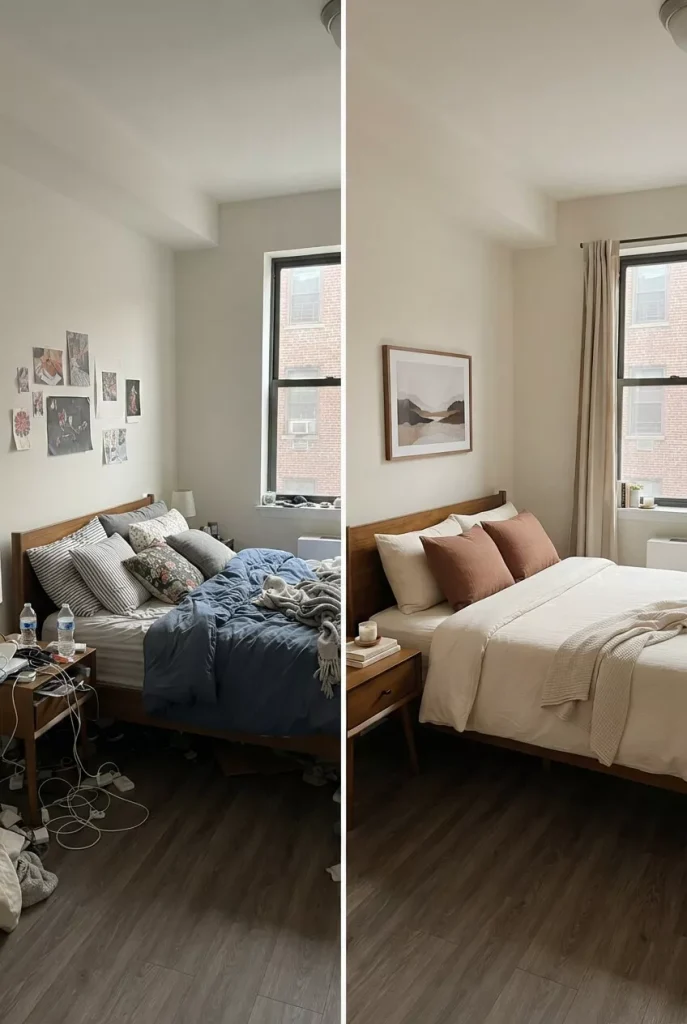
In most small bedrooms, the bed is too visually dominant to treat as an afterthought. If the current bedding is mismatched, the pillows have accumulated over time, and the wall behind the bed has no clear direction, the whole room can feel unfinished even when the furniture is perfectly usable.
Instead of changing several unrelated areas, build the first makeover around the bed. Keep the mattress, frame, and other pieces that still work, then create one deliberate composition with simpler bedding, a restrained accent color, bedside lighting, and one element on the wall behind it.
A practical sequence is:
- Remove extra decorative pillows and blankets.
- Choose one main bedding color or quiet pattern.
- Repeat one accent color once or twice elsewhere near the bed.
- Add one clear wall element rather than several competing pieces.
- Make sure the bedside area stays functional after styling.
Pro tip: Photograph the bed straight on before buying anything. Photos make mismatched pillow heights, uneven art, and excessive accessories much easier to notice.
This makeover works particularly well when the rest of the room already functions but still looks as though it was assembled piece by piece.
2. Change a Dim Bedroom by Fixing the Light, Not Adding More Decor
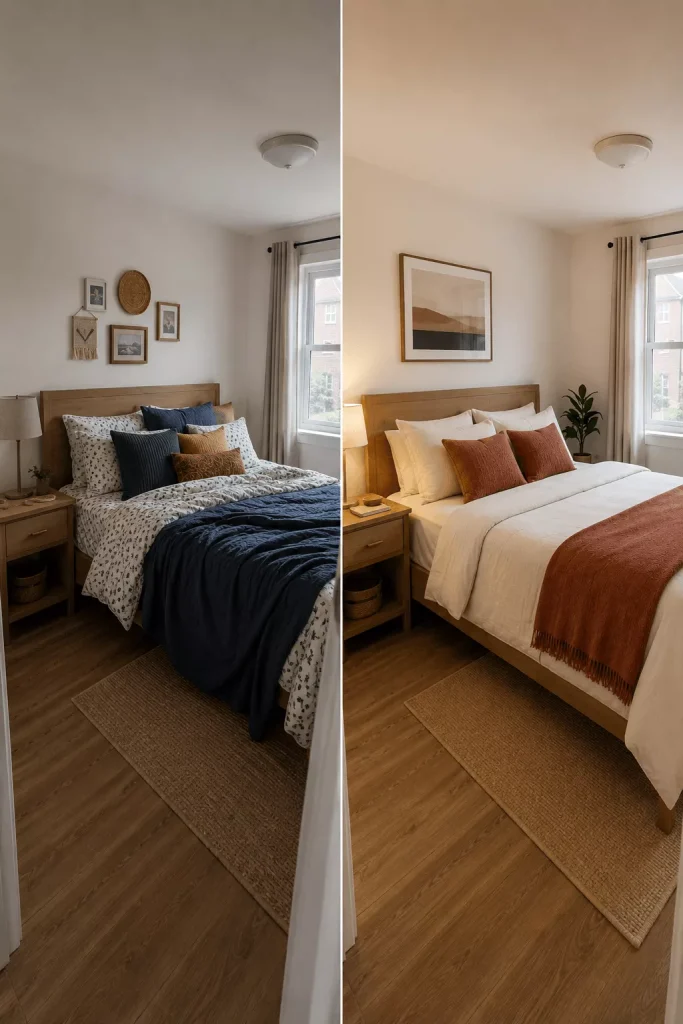
A bedroom can have attractive furniture and still look flat when the lighting is doing it no favors. One harsh ceiling fixture, heavy curtains, and dark objects clustered around the window can make every other decorating choice harder to appreciate.
For this makeover, focus on the room’s light sources as one connected project. Clear the window area first, then look at the artificial lighting. You may find that the bedroom needs very little additional decor once the light is distributed more evenly.
Try the makeover in this order:
- Open or simplify anything that blocks useful daylight.
- Move tall objects away from the brightest part of the window where practical.
- Use a bedside or dresser lamp to create a second light source.
- Keep bulbs within a similar warm or neutral color direction so the room does not look visually split.
- Photograph the room once in daylight and once at night before deciding whether it still needs more accessories.
What to avoid: Do not solve a dim room by filling it with pale decorative objects. If the window treatment or lighting is the real issue, more decor only creates another layer to manage.
If you’re renting, keep permanent fixture changes for the more specific <u>small bedroom ideas for renters</u> guide. Portable lamps can often do most of the visual work without turning a decorating refresh into an electrical project.
3. Make Mismatched Furniture Look Deliberate Instead of Replacing It
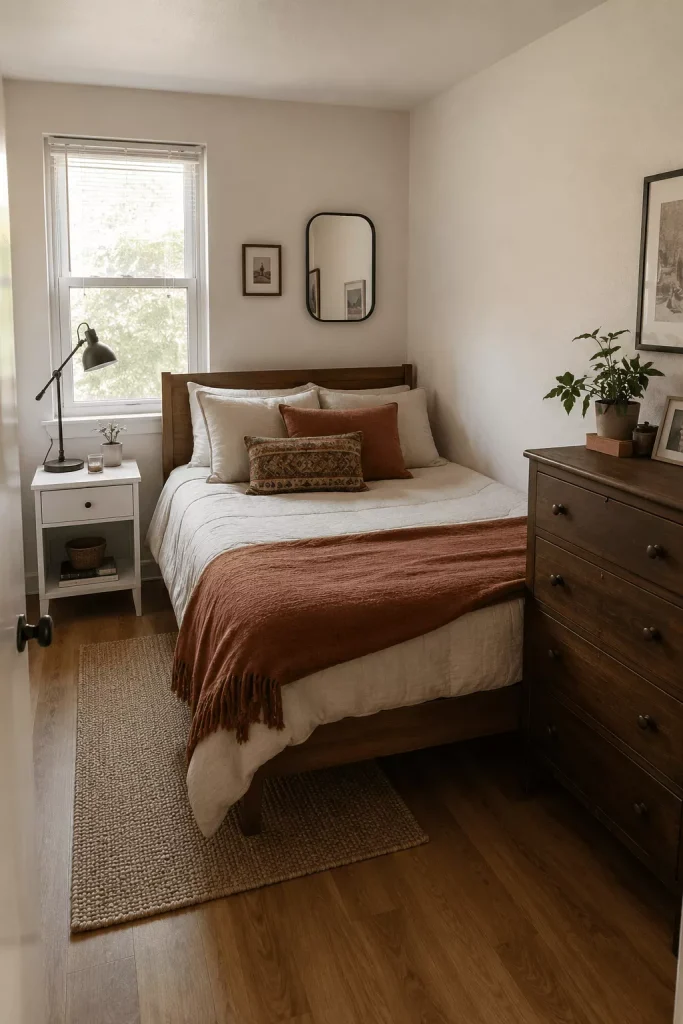
Small bedrooms often contain furniture acquired at different times: a wood dresser, a white nightstand, a black lamp, and a bed frame in another finish. Replacing everything with a matching set can be expensive, and matching sets are not necessary for a room to feel coordinated.
The better makeover is to create repetition between the pieces you already have. Pick one or two visual details that can appear in different parts of the room. A black lamp can connect with black picture frames. A medium wood bed frame can relate to a small wood tray or mirror frame. Warm brass hardware can appear again in a light fixture or drawer pull.
Use this comparison as a guide:
| Instead of | Try |
|---|---|
| Replacing every furniture piece | Repeat one existing finish elsewhere |
| Painting everything the same color | Connect pieces through two or three shared details |
| Buying a full matching bedroom set | Keep different pieces with similar visual weight |
| Adding more decor to distract from mismatching | Reduce unrelated finishes first |
Note: A room usually starts looking disjointed when too many unrelated finishes compete at once, not because every furniture piece has a different manufacturer.
This approach is especially useful for thrifted furniture and older pieces that still fit the room well.
4. Replace a Busy Wall With One Strong Focal Point
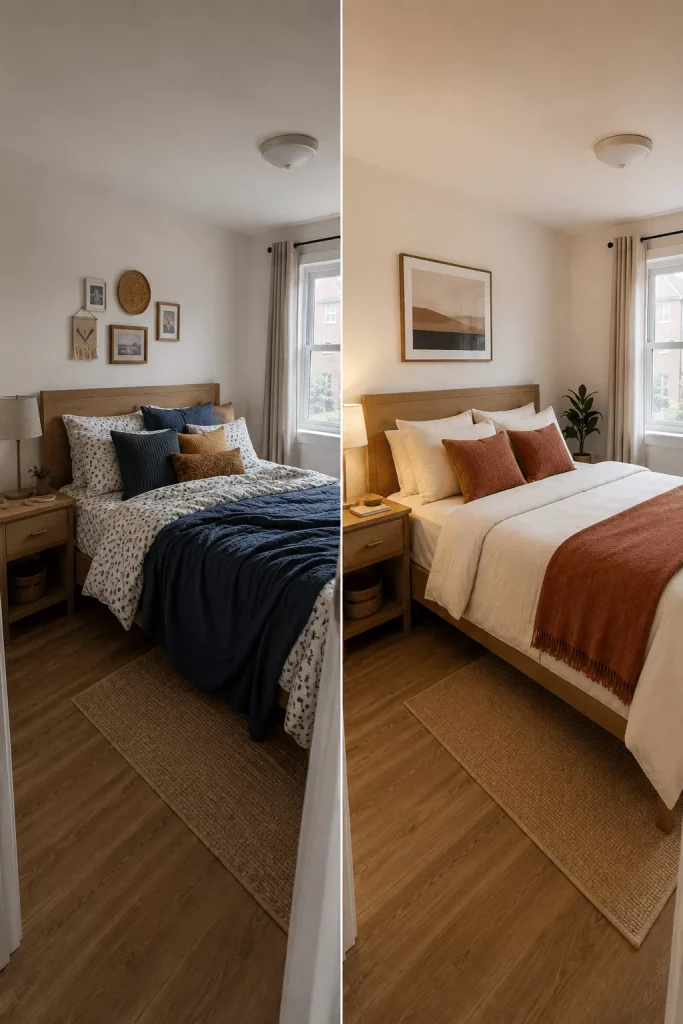
A wall can become visually crowded long before it is physically full. Several small prints, a shelf, hooks, a mirror, hanging decor, and miscellaneous objects may all fit individually, yet together they can make a compact room feel restless.
For a wall-focused makeover, remove everything first and rebuild the composition rather than trying to improve the existing arrangement one piece at a time.
Choose one main direction:
- one larger artwork
- a tight group of two or three coordinated frames
- a simple headboard feature
- a restrained removable wall treatment
- one mirror placed where it is genuinely useful
Then give the wall enough blank space around that element.
If you love decorating walls, the temptation is to use every available section. In a small bedroom, the stronger change is often deciding which wall gets attention and which walls remain quiet.
Pro tip: Cut paper or cardboard to the approximate size of the art you are considering and tape it temporarily in position. You can judge scale without committing to the purchase or hanging method.
For renters, always confirm whether the chosen hanging or surface treatment is appropriate for the wall finish and lease requirements.
5. Make the Window Wall Feel Taller and Less Heavy
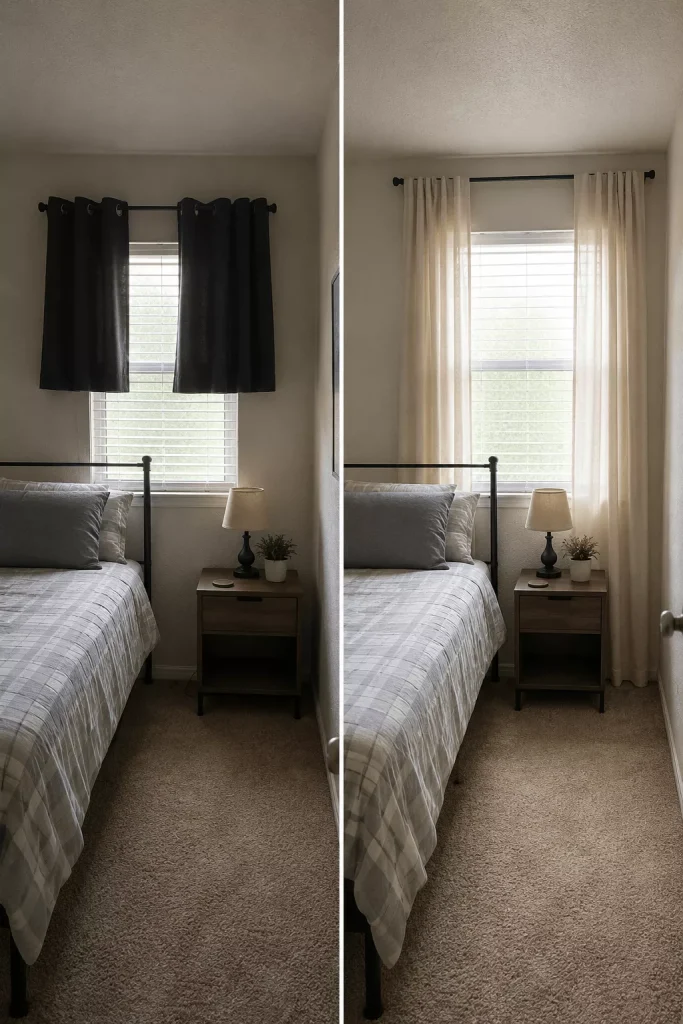
Window treatments cover a large visual area, so changing them can alter the whole room even when the furniture stays exactly where it is.
A small bedroom may feel darker or shorter when thick curtains crowd the window, the rod sits immediately above the frame, or the panels bunch heavily on the floor. The makeover goal is not always “use white curtains.” It is to make the treatment suit the actual size of the wall and the privacy needs of the room.
Start with three questions:
- Do you need blackout, privacy, light filtering, or a combination?
- Are the current panels visually heavier than the room requires?
- Could the rod position make the window look more intentional without interfering with the ceiling, trim, or hardware?
Where the room allows it, a rod positioned a little above the window and panels that reach close to the floor can create a cleaner vertical line. Keep the fabric volume controlled so it does not swallow a narrow wall.
What to keep: If existing blinds work and belong to the property, they may not need removing. A curtain layer can sometimes improve the appearance without turning the window into a larger project.
6. Replace “More Furniture” With Better Furniture Scale
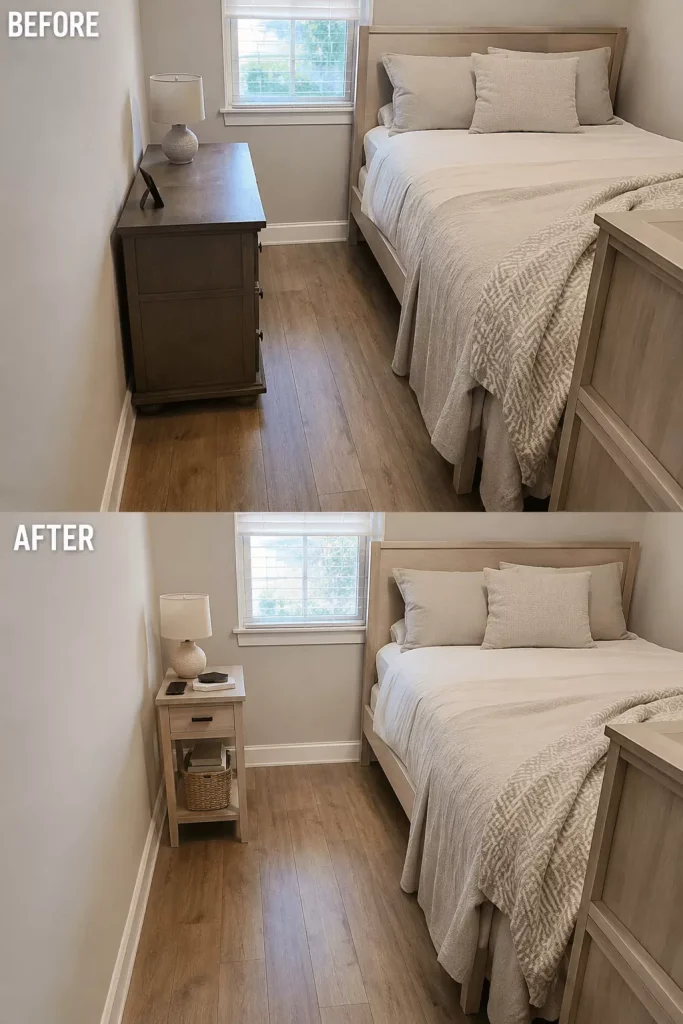
Sometimes a room does not need a new style; it needs one oversized piece to stop controlling the layout.
A deep nightstand, bulky dresser, large bench, or decorative chair can make a bedroom feel packed even when the total number of furniture pieces is low. Rather than replacing everything, identify the single item that creates the most interference with walking space or sight lines.
Measure depth as well as width before replacing it. A dresser that is only a few inches narrower may not improve much if it projects just as far into the room.
A quick evaluation:
- Does this piece narrow the main walking path?
- Does it prevent a door or drawer from opening comfortably?
- Is part of it mostly empty or unused?
- Could another piece already in the room handle its job?
- Would removing it entirely work better than buying a smaller version?
This is where a makeover begins to overlap with space planning, but save the detailed floor-plan work for <u>small bedroom layout with storage</u> and the upcoming layout guides.
Pro tip: Use painter’s tape to mark the footprint of a possible replacement on the floor before ordering it.
7. Turn a Cluttered Dresser Into One Calm Visual Zone
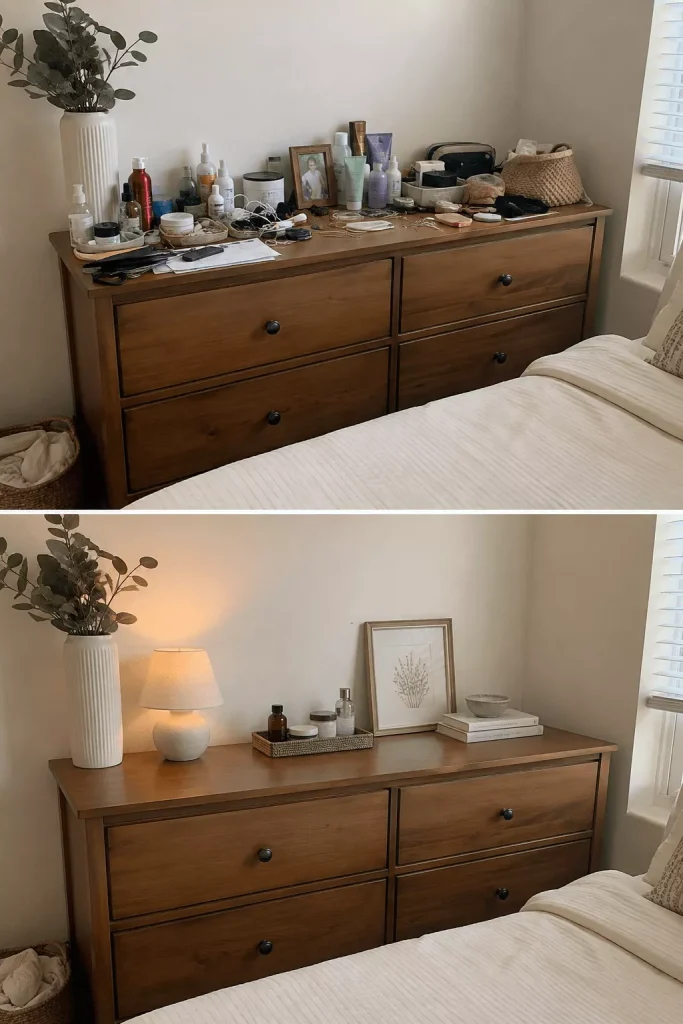
The dresser is often where a bedroom makeover quietly falls apart. Once the bed and walls look better, bottles, chargers, mail, jewelry, hair products, loose coins, and decorative objects can still make the room feel unfinished.
Do not solve this by buying several tabletop organizers first. Empty the dresser and decide which items genuinely need to stay within reach.
A useful arrangement might include:
- one practical lamp or taller object at one end
- one container for small daily items
- one framed piece or mirror behind the arrangement
- a clear area of dresser surface that stays usable
Items that belong in drawers should return to drawers. Items used in another room should leave the bedroom instead of receiving their own new container.
Note: Empty dresser space is not a missed decorating opportunity. In a small bedroom, it can be one of the strongest visual signs that the makeover is finished.
8. Change the Mood With One Color Shift Instead of Recoloring Everything
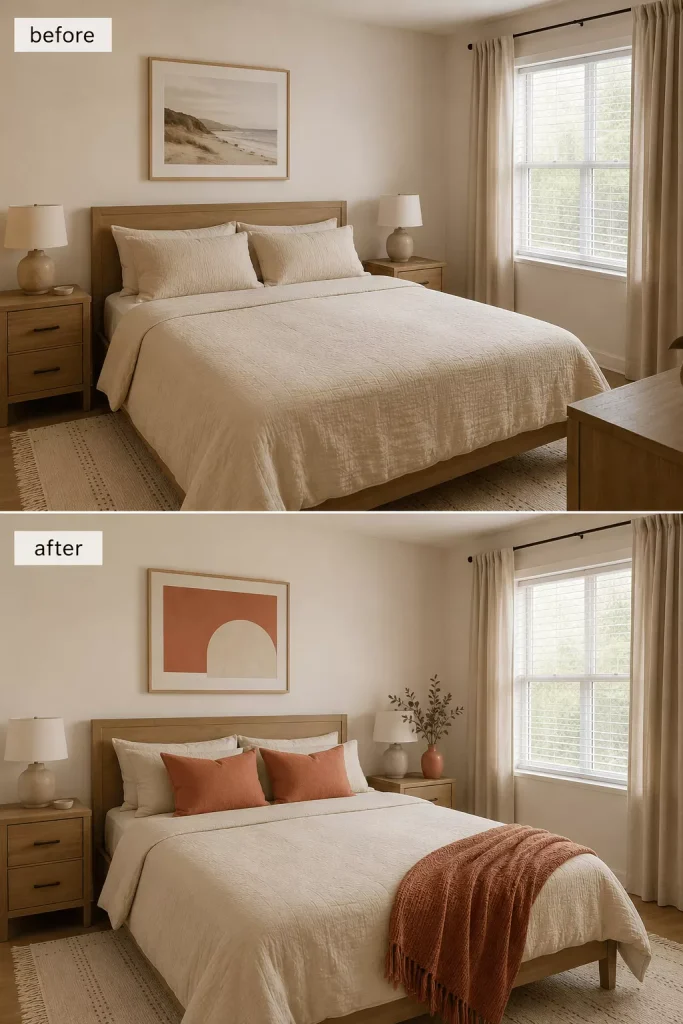
A makeover can feel dramatically different even when most of the room stays neutral. The key is choosing one accent direction and repeating it in a few visible places rather than introducing several new colors.
For example, a plain cream bedroom could move toward warm terracotta through a pillow, part of the artwork, and a throw. Another room might use muted sage in the same way. A cooler room could introduce dusty blue while keeping the existing white, gray, or light wood furniture.
Before buying anything, make a quick inventory of the colors already fixed in the room:
| Fixed or expensive to change | Easier to change |
|---|---|
| Flooring | Bedding |
| Large furniture | Pillow covers |
| Existing wall color | Small art |
| Built-in closet | Throw blanket |
| Window frame/trim | Small accessories |
Choose an accent that works with the fixed side of the table first.
Pro tip: Repeat the accent approximately three times at different heights or areas rather than concentrating every colored object on the bed.
For more color-specific inspiration later, keep <u>small bedroom decor ideas sage green</u> separate rather than turning this article into a palette guide.
9. Make a Hard, Flat Bedroom Feel Softer Through Texture
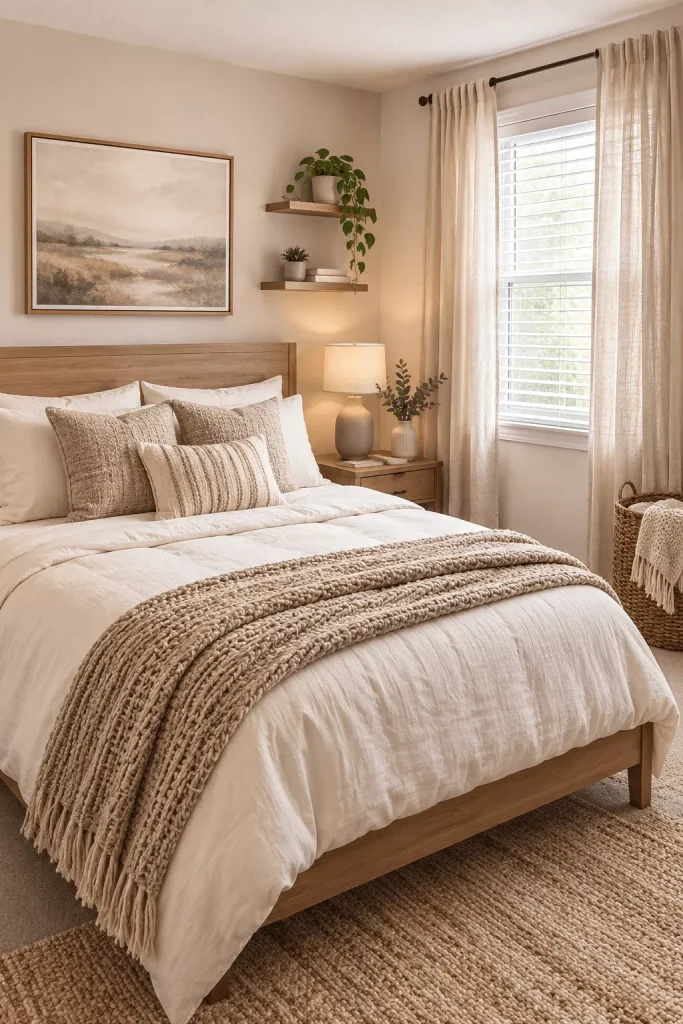
Some bedrooms do not need more color. They need a greater difference between surfaces.
If the room contains painted drywall, smooth laminate furniture, plain cotton bedding, and little else, it can look flat even when the palette works. Instead of adding more decorative objects, use texture across a few pieces that already have a purpose.
A texture-led makeover could combine:
- linen-look curtains
- a woven or lightly textured throw
- a basket used for actual storage
- natural wood grain
- one matte ceramic or fabric-shaded lamp
The important part is restraint. If every pillow, blanket, rug, curtain, basket, and wall hanging has a dramatic texture, the small room can become visually noisy again.
What to skip: Do not buy a decorative basket if you have nothing useful to store in it. Functional texture works better in a compact bedroom because the object earns both its visual and physical space.
This can lead naturally into <u>cozy small bedroom ideas</u> later without turning this makeover article into a full cozy-style guide.
10. Reset the Floor Instead of Trying to Hide Every Inch of It
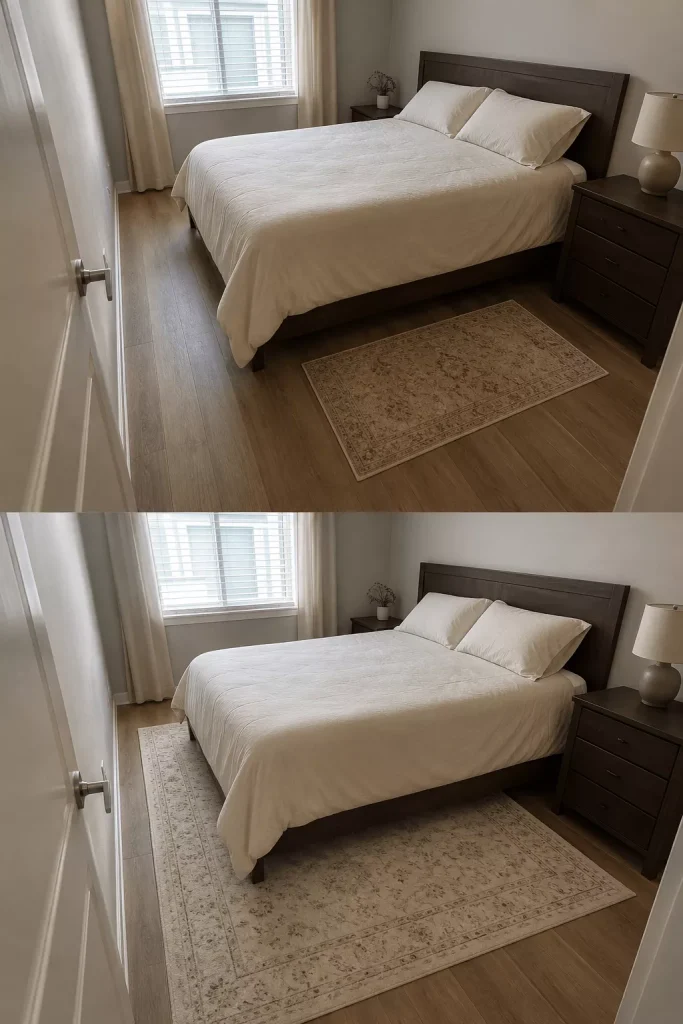
The floor is another large visual surface, yet it is often treated as an afterthought. A badly scaled rug can make a small bedroom look more fragmented, while the right rug can connect the bed area and introduce softness.
The first makeover decision is whether the room needs a rug at all.
If the existing floor already looks clean and works with the palette, keeping more of it visible may make the room feel calmer. If the floor is visually cold, worn-looking, or disconnected from the rest of the room, a rug can help establish the bed as one zone.
Before buying:
- mark the proposed rug edges with painter’s tape
- check door clearance
- make sure the rug connects visually to the bed
- avoid leaving a small decorative rug floating in unrelated floor space
If your room has limited clearance, a low-profile option may work better than a thick rug that interferes with doors or furniture.
Note: A rug is not automatically a required bedroom accessory. Skipping it can be the better makeover choice when the scale is wrong.
11. Turn an Awkward Empty Corner Into One Purposeful Moment
An empty corner can make a room feel unfinished, but filling it with another chair or small table is not always the answer. Small bedrooms benefit from vertical solutions that create interest without occupying much floor area.
First decide whether the corner needs a function.
A useful corner might contain:
- a slim full-length mirror
- a compact floor lamp
- one narrow plant if the light is suitable
- one framed piece
- a small hamper if the corner is genuinely the best location for it
If none of those solves a real need, keep the corner empty.
Pro tip: Before adding furniture, place a cardboard box or tape outline in the proposed footprint for a day. If you keep walking around it or bumping into it, the room is telling you not to fill that space.
This prevents the common makeover mistake of treating every empty spot as unfinished.
12. Make a Plain Rental-Feeling Bedroom Look Intentional Without Overcommitting
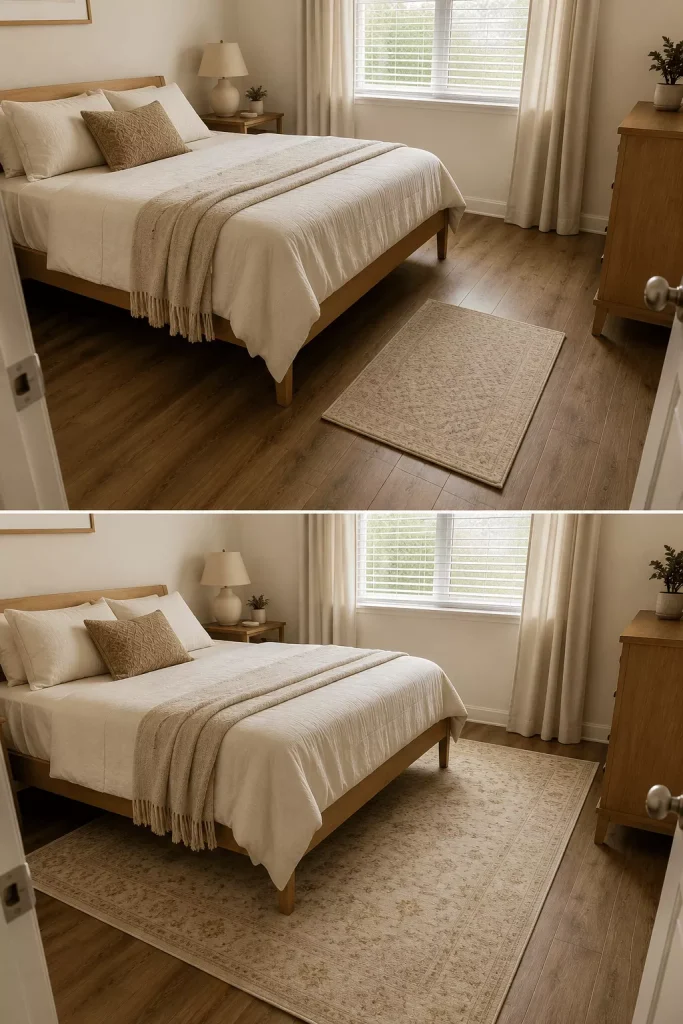
Even if you own your home, this makeover direction works well when the bedroom has plain off-white walls, builder-basic flooring, simple blinds, and few architectural details. The mistake is trying to disguise every fixed feature at once.
Instead, create a portable layer over the existing room.
Focus on things that can carry the visual identity:
- bedding
- lamps
- art
- curtains where suitable
- one rug if needed
- movable furniture
- a mirror
Use those pieces to establish one clear palette, then allow the neutral background to work as part of it.
If you actually rent, check the lease and surface requirements before adhesives, paint, drilling, or other changes. <u>small bedroom ideas for renters</u>, will go much deeper into those decisions.
What not to do: Avoid spending heavily to conceal every ordinary rental feature. Generic walls and flooring often become much less noticeable once the room has a clear focal point and repeated materials.
13. Finish the Makeover by Removing Things
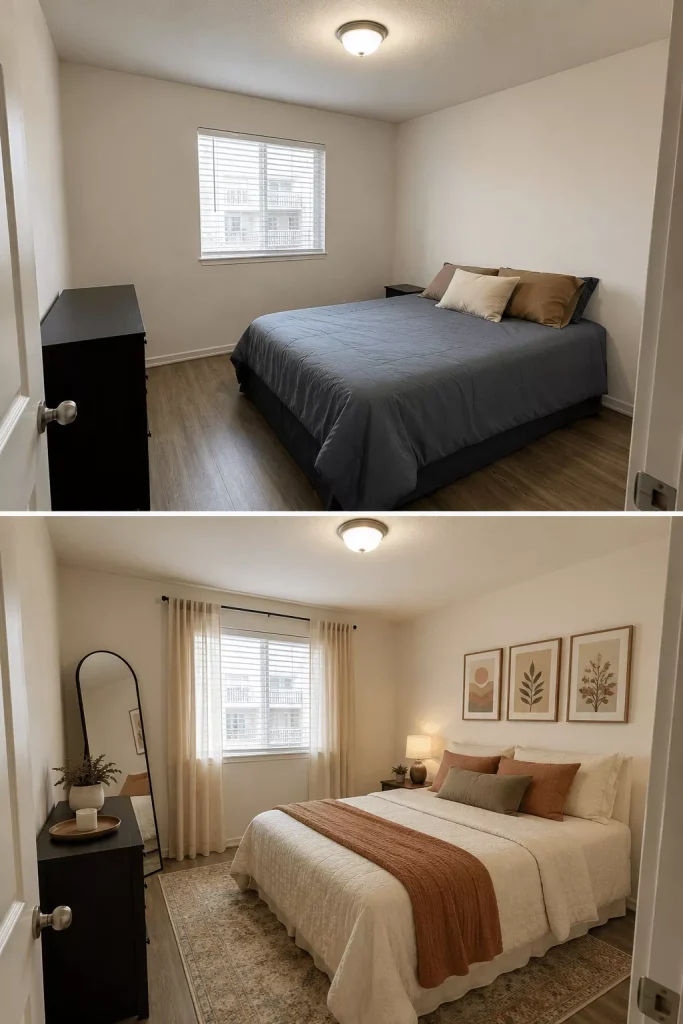
The last stage of a makeover should not automatically be another shopping trip.
Once the main changes are complete, photograph the room from the doorway and from the foot of the bed. Then remove a few items that were added during the process. The room often becomes easier to read when there is slightly less competing for attention.
Look specifically at:
- extra throw pillows
- tiny tabletop objects
- duplicate baskets
- art added because a wall felt empty
- floor items with no real function
- decor that introduces a new color or material used nowhere else
Leave the room for a day before deciding whether anything needs to come back.
A finished small bedroom should still contain personality, but the strongest pieces need enough empty space around them to be noticed.
Pro tip: Compare your final image with your original “before” photo. Ask whether the makeover changed the main problem you identified at the start. If the room is prettier but the same problem remains, one more accessory will not solve it.
A Simple Keep, Change, Add Formula
A makeover becomes much easier when you stop treating every existing item as something that must be replaced.
Use this framework before spending on the next change:
Keep, Change, Add
This is a useful check because a makeover can involve mostly keeping, selectively changing, and adding very little.
Common Small Bedroom Makeover Mistakes
Even good ideas can work against one another when too many are used at the same time.
| Mistake | Better approach |
|---|---|
| Changing every area at once | Fix the strongest visual problem first |
| Buying decor before deciding on a direction | Choose the palette and focal area first |
| Replacing useful furniture because it does not match | Try repeating finishes before replacing |
| Using every empty wall | Let at least one area stay visually quiet |
| Choosing furniture by appearance only | Measure width, depth, doors, and walking paths |
| Adding storage without deciding what it will hold | Identify the storage problem before buying the organizer |
| Adding accessories until the room feels “finished” | Finish with an editing pass instead |
The most expensive makeover mistake is not necessarily buying an expensive item. It is buying several inexpensive pieces that do not solve the actual problem.
Before You Buy Anything for the Makeover
Use this final decision check when you are tempted by another lamp, rug, frame, basket, pillow, or piece of furniture:
Before You Buy It, Ask These Five Questions
- Does this fix the main problem I identified at the start?
- Have I measured where it will actually sit?
- Does it repeat a color, material, or function already in the room?
- Is it replacing something, or only adding another object?
- Would the bedroom still look good if I skipped it?
If you cannot clearly explain what the purchase improves, leave it for now.
Small Bedroom Makeover FAQ
What should I change first in a small bedroom makeover?
Start with the problem that affects the greatest part of the room. If the bed looks unfinished, begin there. If the room is dark, deal with the window and lighting. If furniture blocks movement, address furniture scale before buying decorative pieces.
Taking a few “before” photographs can make the biggest issue easier to identify because the camera shows visual clutter and imbalance differently from the way you see the room every day.
How can I makeover a small bedroom without replacing everything?
Keep the furniture and large pieces that still function well, then create cohesion through bedding, lighting, color repetition, window treatments, wall art, and editing.
Older or mismatched furniture can often work together once two or three materials or finishes are repeated elsewhere in the room. A makeover does not require all of the furniture to come from the same collection.
Can I makeover a small bedroom without painting?
Yes. Bedding, lighting, curtains, art, rugs, mirrors, furniture arrangement, texture, and repeated colors can change a large portion of what you see without repainting the walls.
This is especially useful when the existing wall color is neutral enough to become part of the new palette rather than something you need to conceal.
How do I make a small bedroom look more finished?
Create a clear focal point, repeat a limited palette or material direction, keep functional surfaces relatively clear, and edit decorative objects that do not connect with the rest of the room.
A finished room does not need every wall and surface decorated. In a compact bedroom, leaving some visual breathing room can make the intentional pieces look stronger.
Should I buy furniture or decor first for a small bedroom makeover?
Replace furniture first only when the existing piece causes a functional problem such as blocking circulation, preventing drawers from opening, or taking more space than its function deserves.
If the existing furniture already fits, changing the visual layers around it is usually a more practical starting point than replacing it solely for style.
How do I know when the makeover is finished?
Take photographs from the doorway and the foot of the bed, then look for areas that still feel crowded or disconnected. Try removing something before assuming another object is missing.
A good stopping point is when the room has a clear focal area, practical lighting, usable surfaces, an easy walking path, and enough open space for the main design choices to stand out.
Final Small Bedroom Makeover Checklist
Is the Makeover Actually Finished?
□ The main walking path stays open.
□ Doors, drawers, and closets still work comfortably.
□ Lighting works during both the day and evening.
□ One wall or area acts as the focal point.
□ Colors or materials repeat enough to connect the room.
□ The dresser and nightstand remain usable.
□ Storage solves specific problems rather than creating more clutter.
□ At least some wall, floor, and surface area remains visually open.
□ You have removed unnecessary accessories before adding the final ones.
The Best Makeover Is the One That Fixes the Room You Actually Have
The strongest small bedroom makeover is not the one with the longest shopping list. It is the one where you can clearly explain what changed and why the room now works better.
Maybe the bed finally looks intentional. Maybe the window lets more daylight into the room. Maybe mismatched furniture now feels connected because the same wood and metal finishes repeat across the space. Or perhaps the biggest improvement came from removing a chair, clearing a dresser, and letting one wall stay empty.
Start with the room’s biggest weakness, make a small group of connected changes, then stop long enough to see whether they worked. That approach gives a small bedroom a much clearer before-and-after story than adding one new decorative object at a time.