A rental bedroom has real limits: worn paint, basic blinds, one overhead light, and a lease that says no drilling. None of that means the room has to feel unfinished or borrowed. Small bedroom ideas for renters work best when they solve an actual problem in the room, not just add another accent piece.
Key Takeaways
- Start with the layout: Clear walking paths before buying decor. Smart furniture placement can make a small bedroom feel larger without spending money.
- Choose renter-friendly upgrades: Focus on removable changes like duvet covers, rugs, curtains, mirrors, and portable lighting that move with you.
- Create personality without painting: Use textiles, bedding layers, artwork, and statement pieces to add colour and warmth without risking your deposit.
- Maximise small spaces: Slim furniture, rolling carts, baskets, and smart storage solutions help reduce clutter while keeping the room functional.
- Improve lighting: Layer table lamps, floor lamps, and plug-in sconces to replace harsh overhead lighting with a warmer atmosphere.
- Think long-term: The best rental bedroom upgrades are portable, easy to remove, and useful in your next home.
The best approach starts with what stays put and what can leave with the renter at move-out, then builds around the walking path, the light source, and the flooring already in place. Some fixes cost nothing but rearranging. Others use adhesive products that depend on wall condition and manufacturer instructions, and a few require a quick check of the lease before moving forward.
This list separates low-commitment changes from adhesive products and landlord-permission items, so a renter can match the fix to what their lease and their walls will actually allow.
1) Protect the Main Walking Route Before Adding Decor
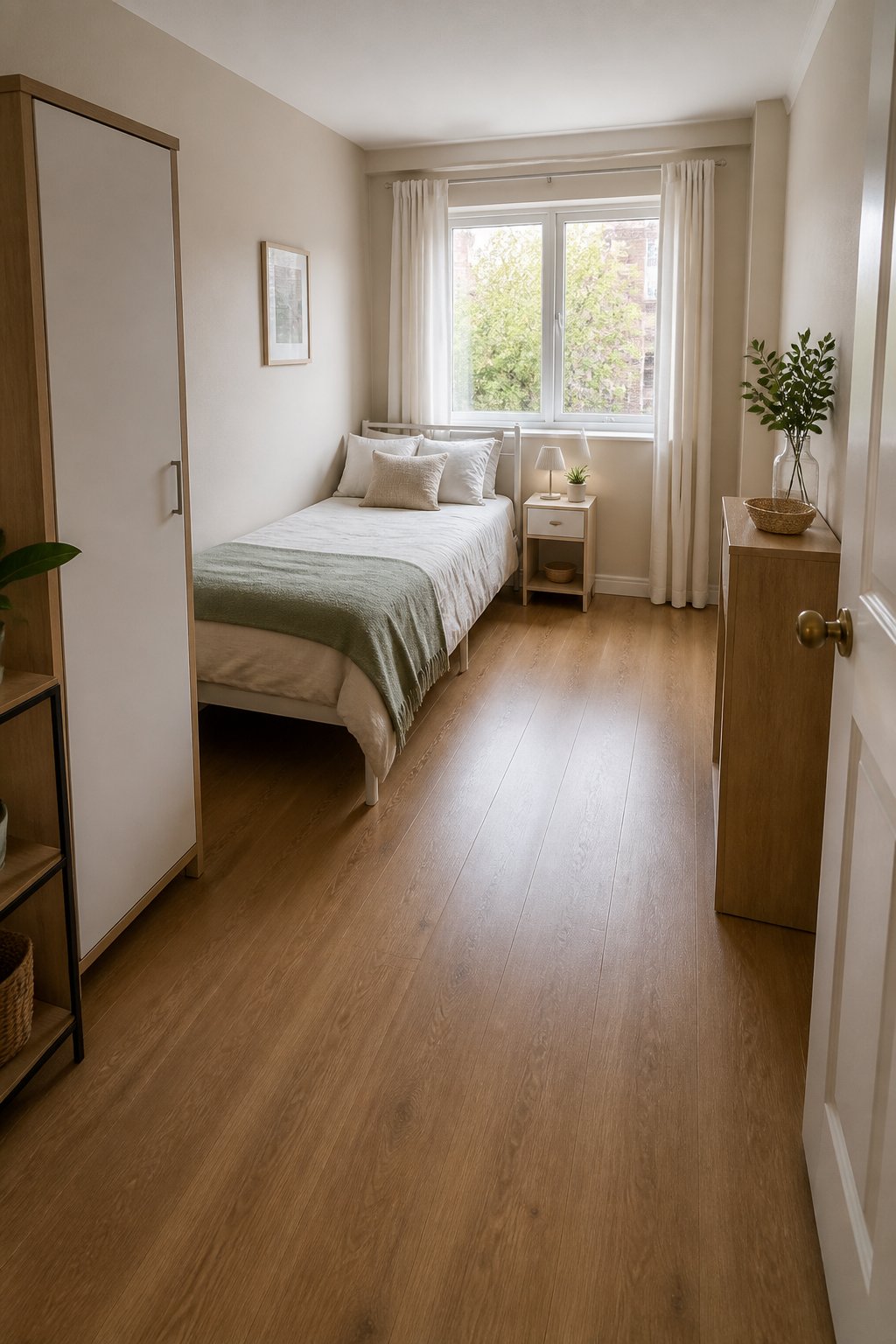
The walking route from the door to the bed, closet, and window matters more than any single decor choice. Before buying anything, a renter should walk the room the way they actually use it each morning and note where furniture blocks that path.
A small bedroom feels cramped fastest when the route zigzags around dresser corners or a desk chair. Sliding furniture flush against the wall, even by a few inches, often opens up the whole room. This step costs nothing and should happen before any purchase.
Rehearsing the daily route also reveals which pieces are actually in the way versus which ones just look crowded. That distinction saves money on furniture that would not have solved the real problem.
Quick take: Walk the room’s real daily route first. Clear furniture blocking the path before adding any decor or storage.
2) Use a Duvet Cover and Throw Blanket as the Main Color Layer
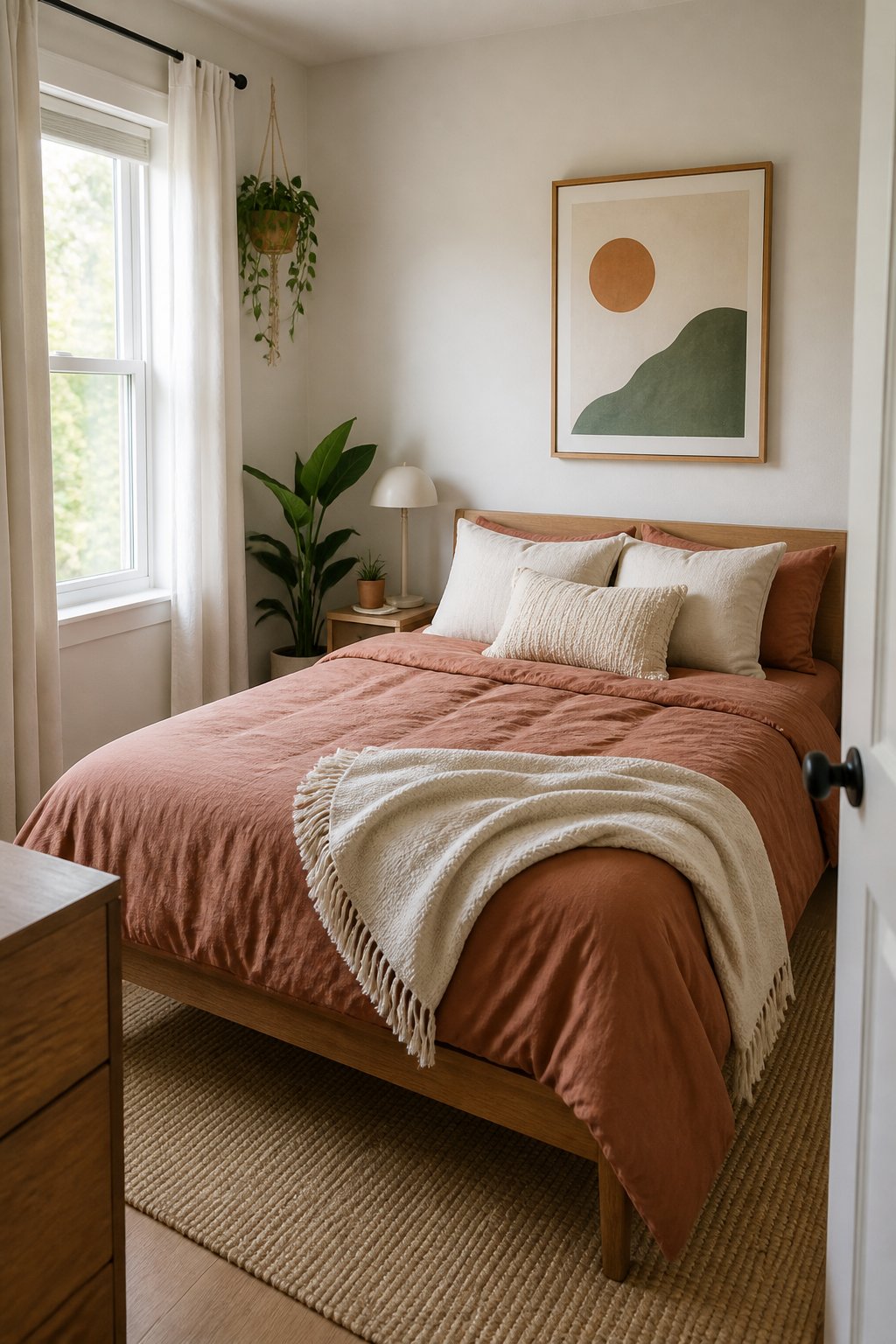
A duvet cover and throw blanket give a rental bedroom its biggest color change without touching a single wall. The bed takes up the most visual space in most small bedrooms, so it does the heaviest lifting for personality.
Both pieces are washable, foldable, and easy to pack for the next move. A renter can swap colors by season without any risk to the security deposit.
Layering a patterned throw over a solid duvet cover adds texture without needing wall art or extra furniture. This works especially well in bedrooms with plain landlord-neutral walls that cannot be painted.
3) Frame Landlord Blinds With Full-Length Curtain Panels
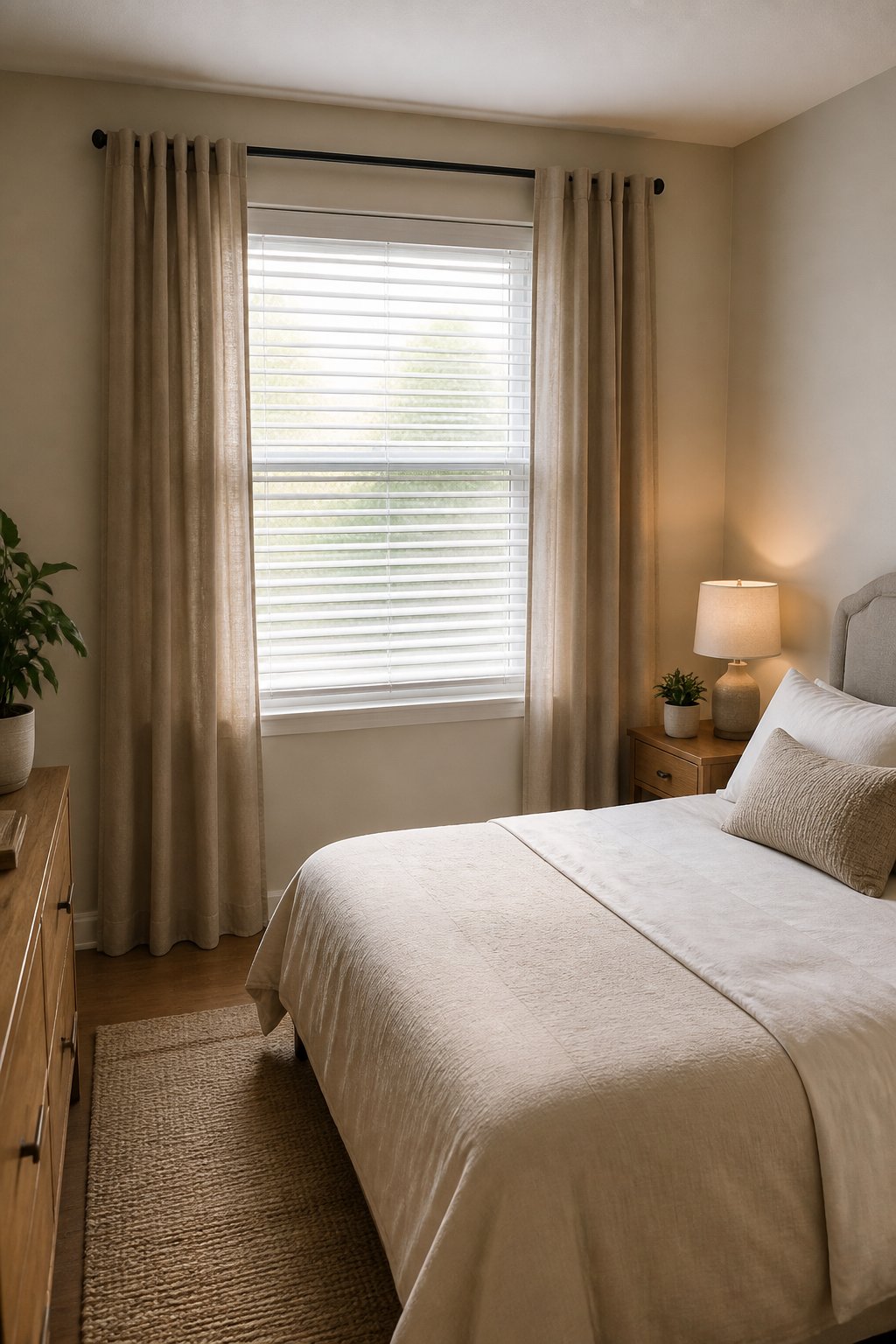
Full-length curtain panels soften basic landlord blinds without requiring their removal. Most rental windows come with plain horizontal or vertical blinds that do the job but look sparse on their own.
A tension curtain rod fits inside the window frame or mounts with pressure brackets, so no drilling is needed. Hanging panels floor-to-ceiling, even above the actual window frame, makes the ceiling look taller and the window look larger.
The blinds stay fully functional underneath for light control and privacy. Renters should keep the original blinds in place and simply add the curtain layer in front, so nothing needs to be uninstalled at move-out.
4) Cover Rental Flooring With a Low-Pile Area Rug
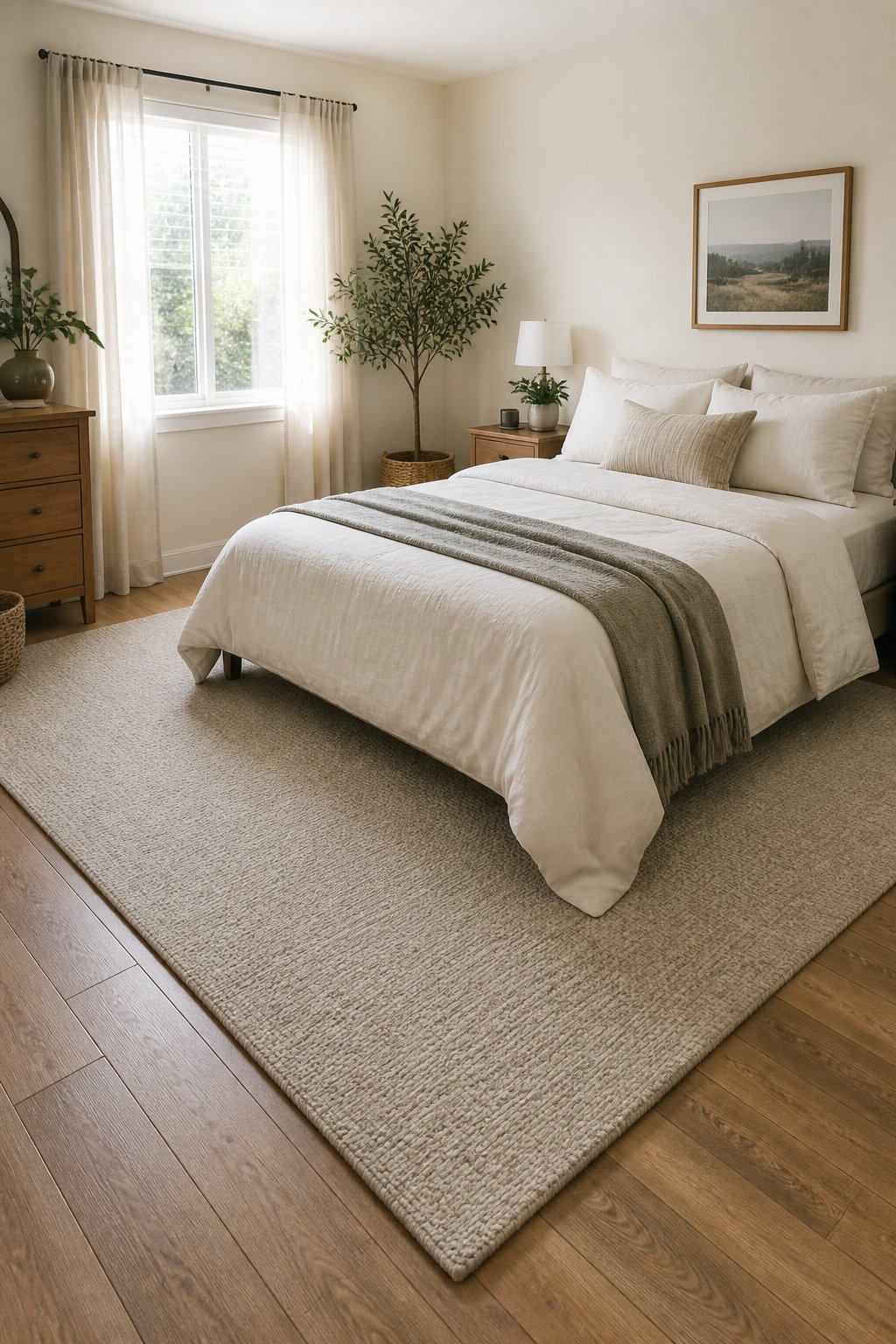
A low-pile area rug covers scuffed or dated rental flooring while adding warmth underfoot. Rental units often have flooring the tenant did not choose, from builder-grade carpet to laminate that shows wear.
Low-pile styles work best in small bedrooms because they do not eat into visual floor space the way thick shag rugs can. A rug placed under the front two-thirds of the bed, extending out toward the walking path, anchors the furniture without requiring wall-to-wall coverage.
Rugs roll up for storage and travel easily to a new address. A rug pad keeps it from sliding on hard flooring and protects the surface underneath.
5) Add a Plug-In Wall Sconce Beside the Bed
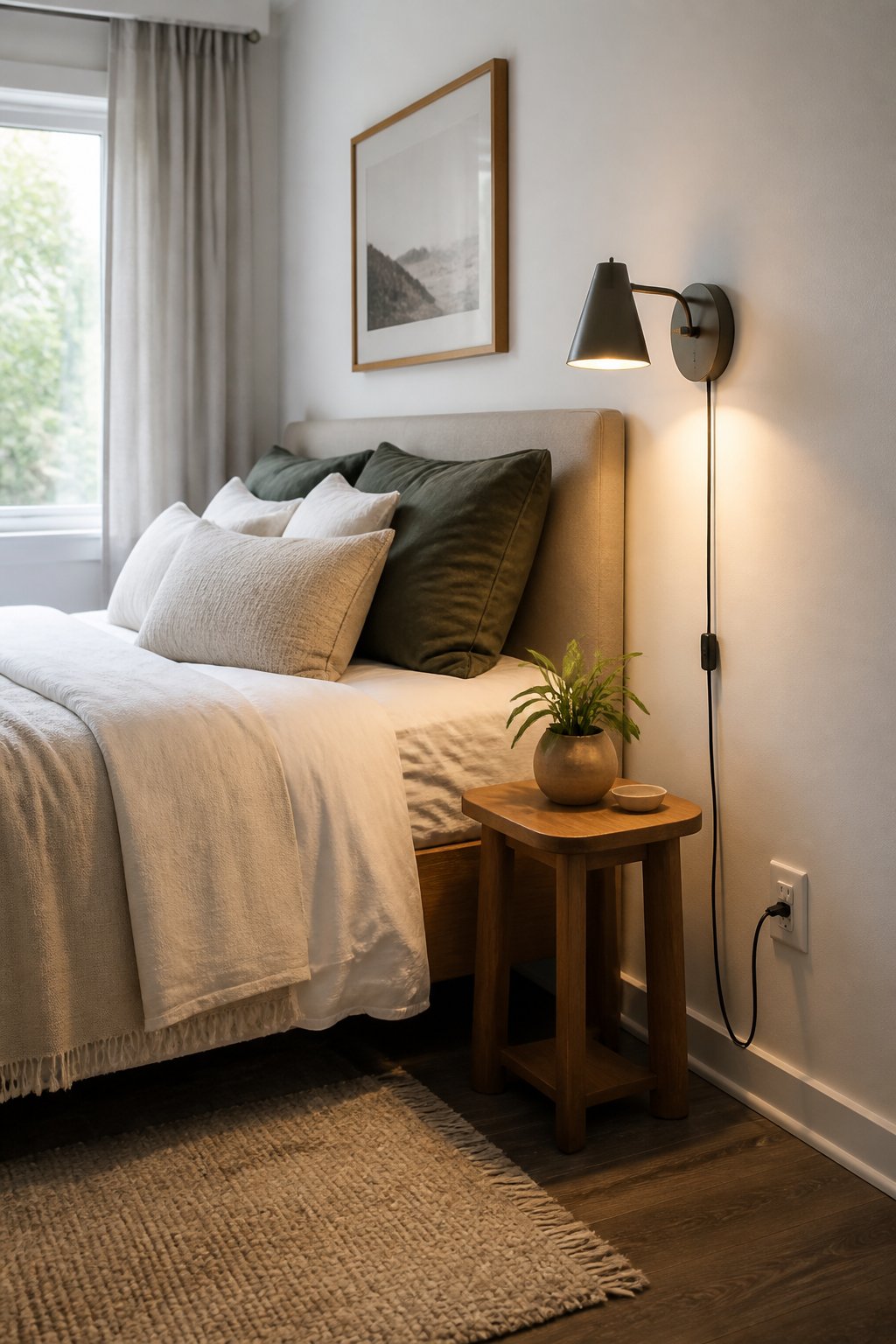
A plug-in wall sconce adds bedside lighting without any electrical work. These fixtures mount with adhesive strips or small hooks and run on a standard cord to the nearest outlet, so no wiring or junction box is needed.
They free up nightstand space that a table lamp would otherwise take, which matters in a small bedroom where every surface counts. Cord covers can route the cable neatly along the baseboard.
Renters should check the mounting hardware’s weight limit and the wall’s surface condition before sticking anything up. Textured or older paint may not hold as securely as a smooth, freshly painted wall.
6) Lean a Full-Length Mirror Instead of Mounting One
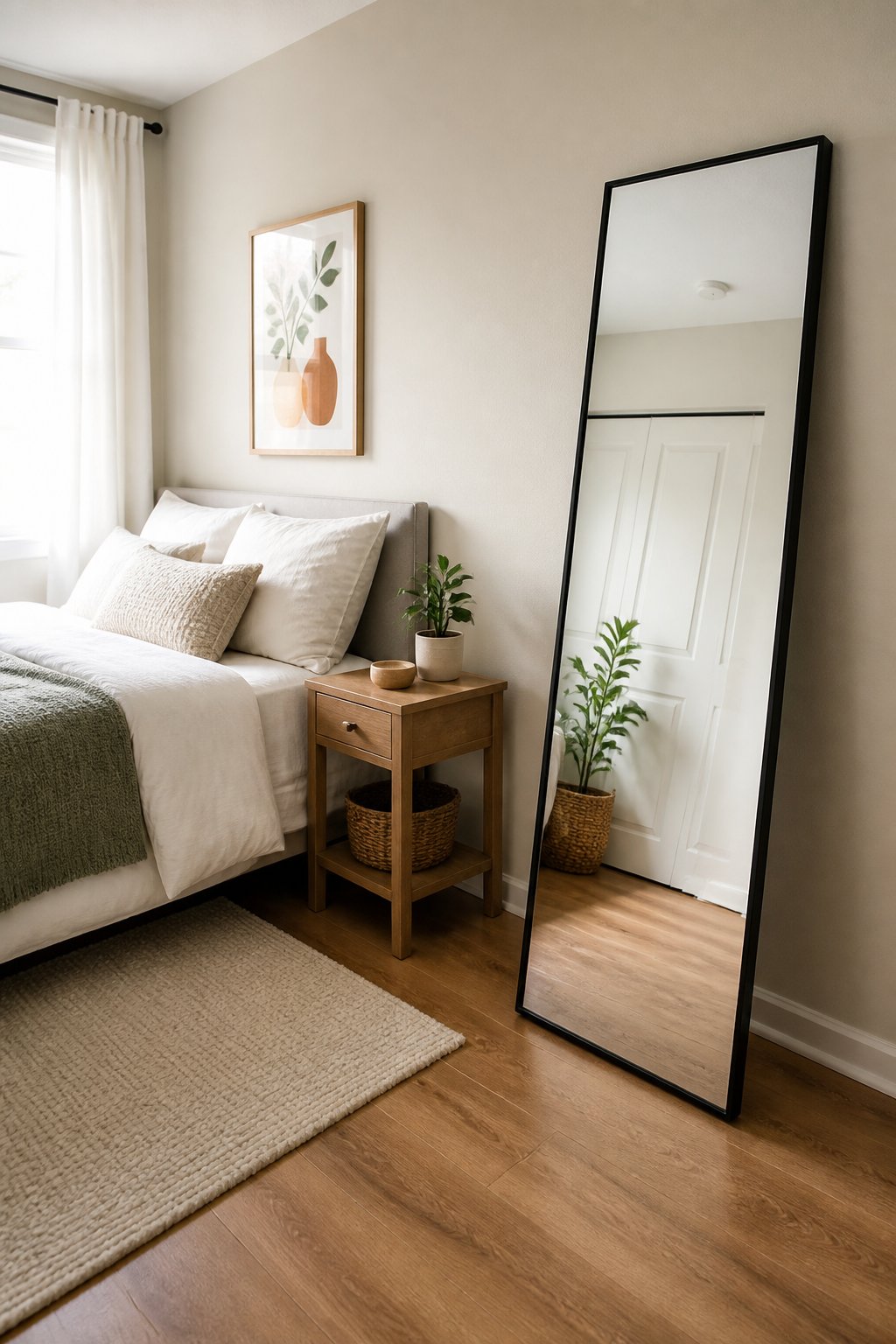
A leaning full-length mirror adds brightness and the sense of a larger room without any wall mounting. Freestanding mirrors rest against the wall on their own frame, so there is nothing to drill and nothing to patch later.
Placed across from or beside a window, a leaning mirror bounces natural light deeper into the room. This helps small bedrooms with only one window feel less closed in.
These mirrors move easily between apartments and do not require anchoring hardware that would need patching at move-out. A renter should check that the floor is level enough for the mirror to sit stable and flat against the wall.
7) Create a Headboard Effect With a Large Textile or Leaning Art
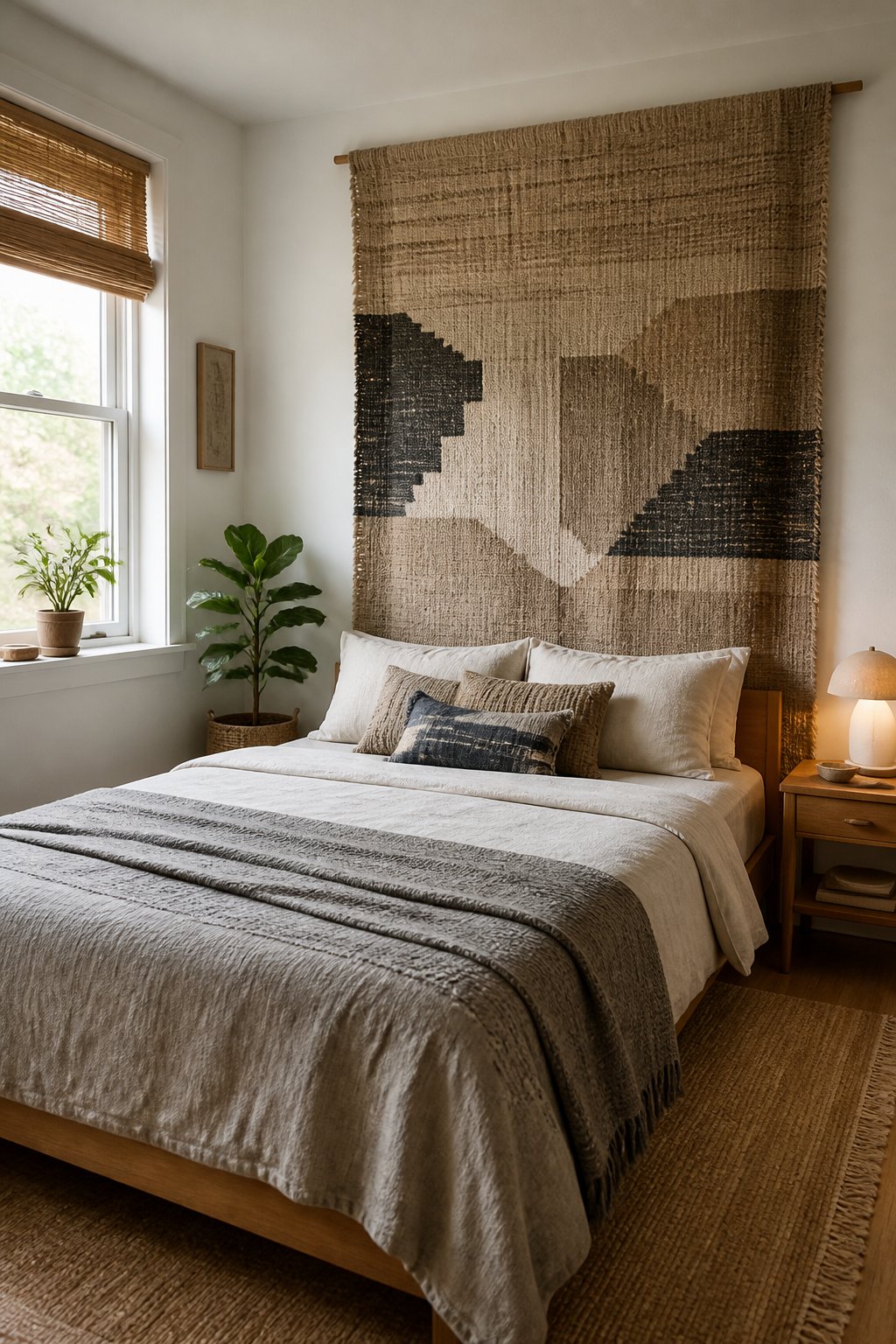
A large woven textile or leaning art panel behind the bed creates the visual effect of a headboard without any bed frame purchase. This solves a common rental problem: platform beds or frames that came without a headboard at all.
Textiles can hang from a tension rod or clip directly to a curtain rod set behind the bed. A large framed print or canvas can simply lean against the wall behind the pillows for a similar effect.
Both options avoid drilling into the wall behind the mattress, a spot landlords rarely want touched. They also pack flat for moving, unlike an actual headboard frame.
8) Use Command Picture Hanging Strips for Lightweight Framed Art
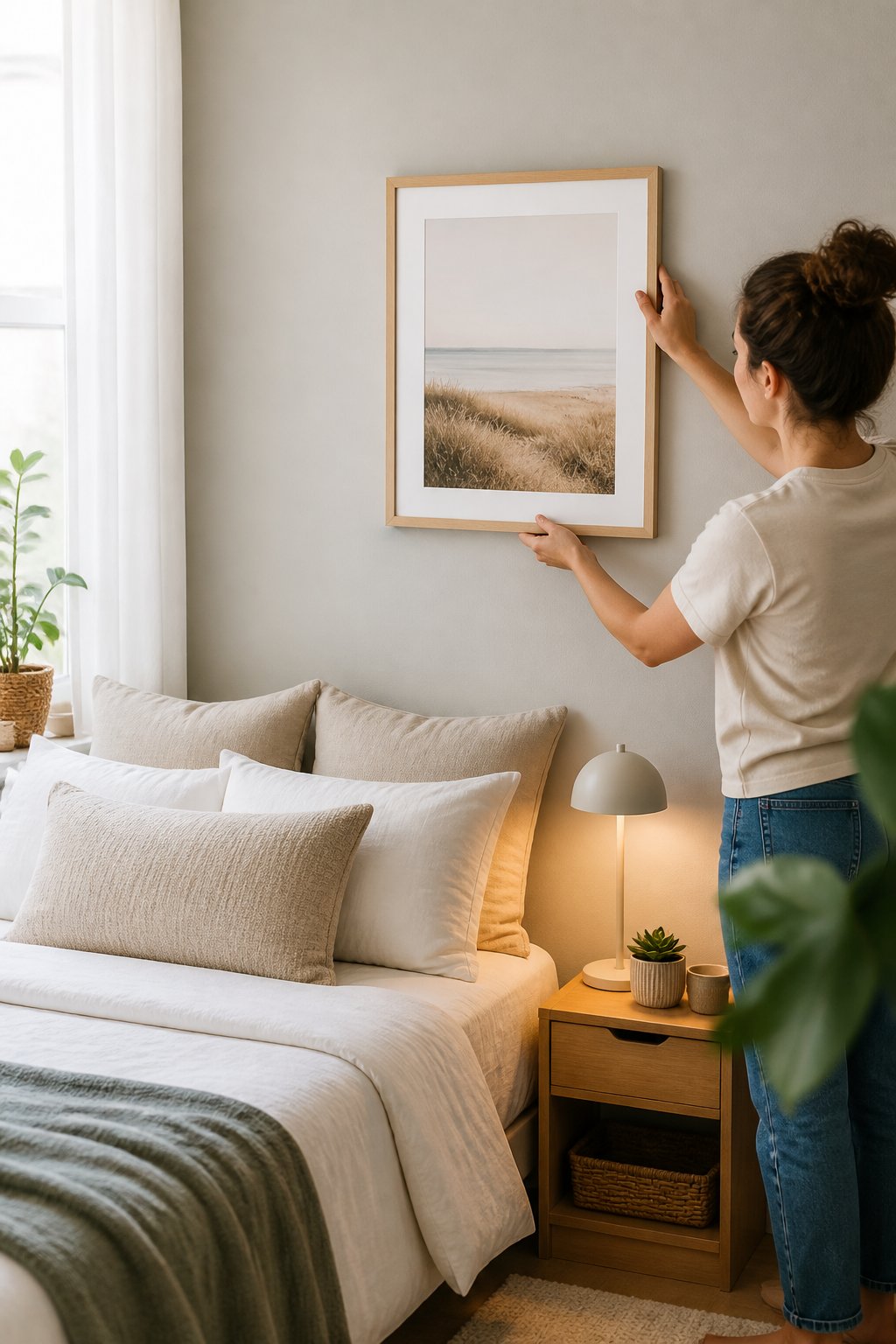
Command picture hanging strips let renters hang lightweight framed art without nail holes, as long as the wall surface and frame weight match the product’s listed limits. These strips work on painted drywall in good condition, but they do not bond well to textured, chipped, or freshly painted surfaces that have not fully cured.
Checking the manufacturer’s weight rating before hanging anything prevents frames from falling. Most lightweight picture frames under a few pounds work well within these limits.
Removal should follow the manufacturer’s stretch-and-release method exactly, pulling the tab slowly downward rather than yanking the strip off. Testing on a hidden section of wall first helps confirm the paint will not lift.
9) Make a Basic Ceiling Fixture Less Dominant With Layered Lamp Light
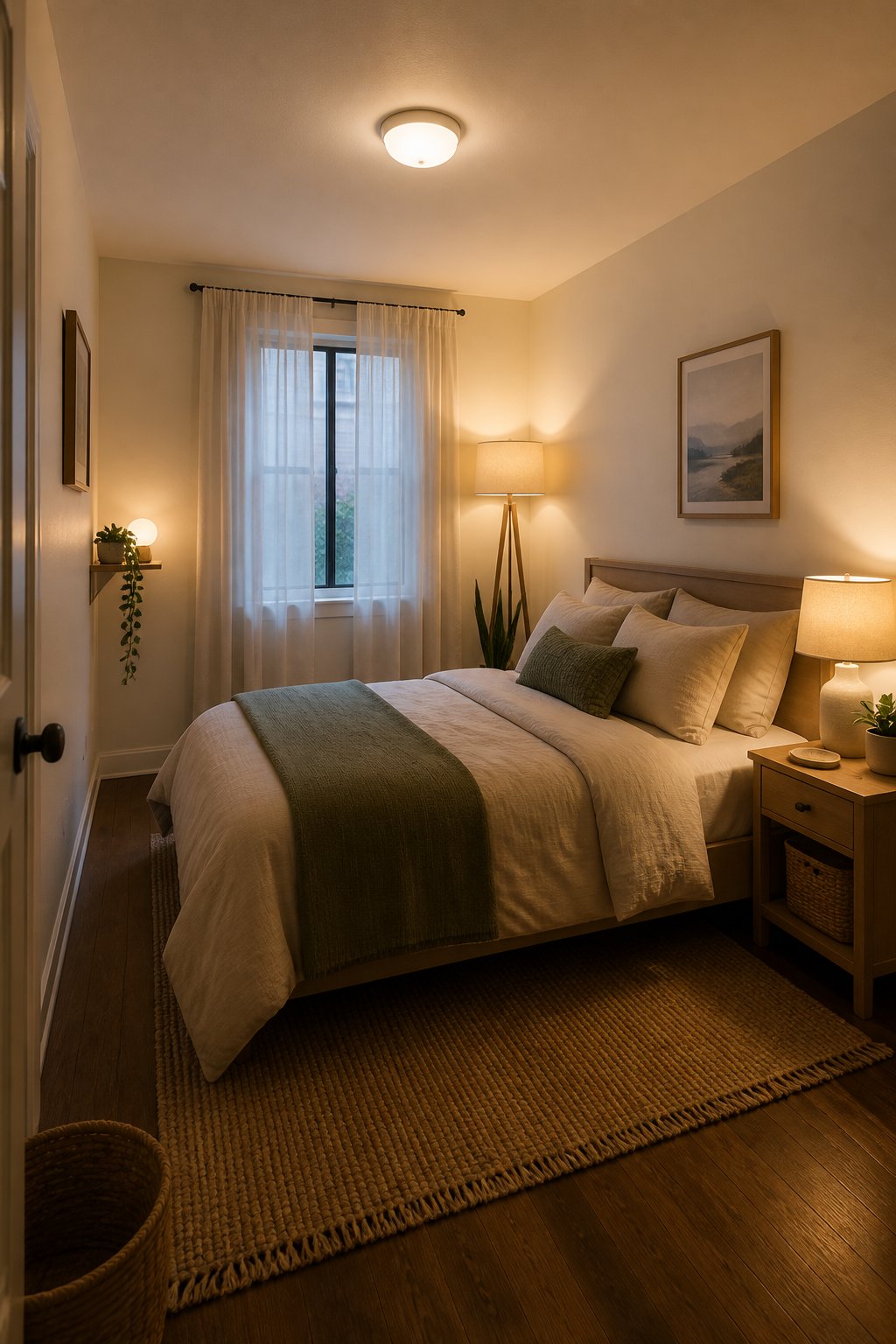
Layering table and floor lamps softens the harsh, single-source light that most rental ceiling fixtures produce. A single overhead bulb often casts flat, bright light with no warmth, which can make a small bedroom feel more like a storage closet than a place to relax.
Adding two or three lower-wattage lamps at different heights, on a dresser, floor, or nightstand, spreads light around the room instead of down from one point. Warm-toned bulbs, rated around 2700K, help soften the effect further.
Turning off the overhead fixture entirely in the evening and relying on lamp light changes the whole feel of the room at almost no cost.
10) Unify Mismatched Rental Furniture With Repeated Wood or Metal Tones
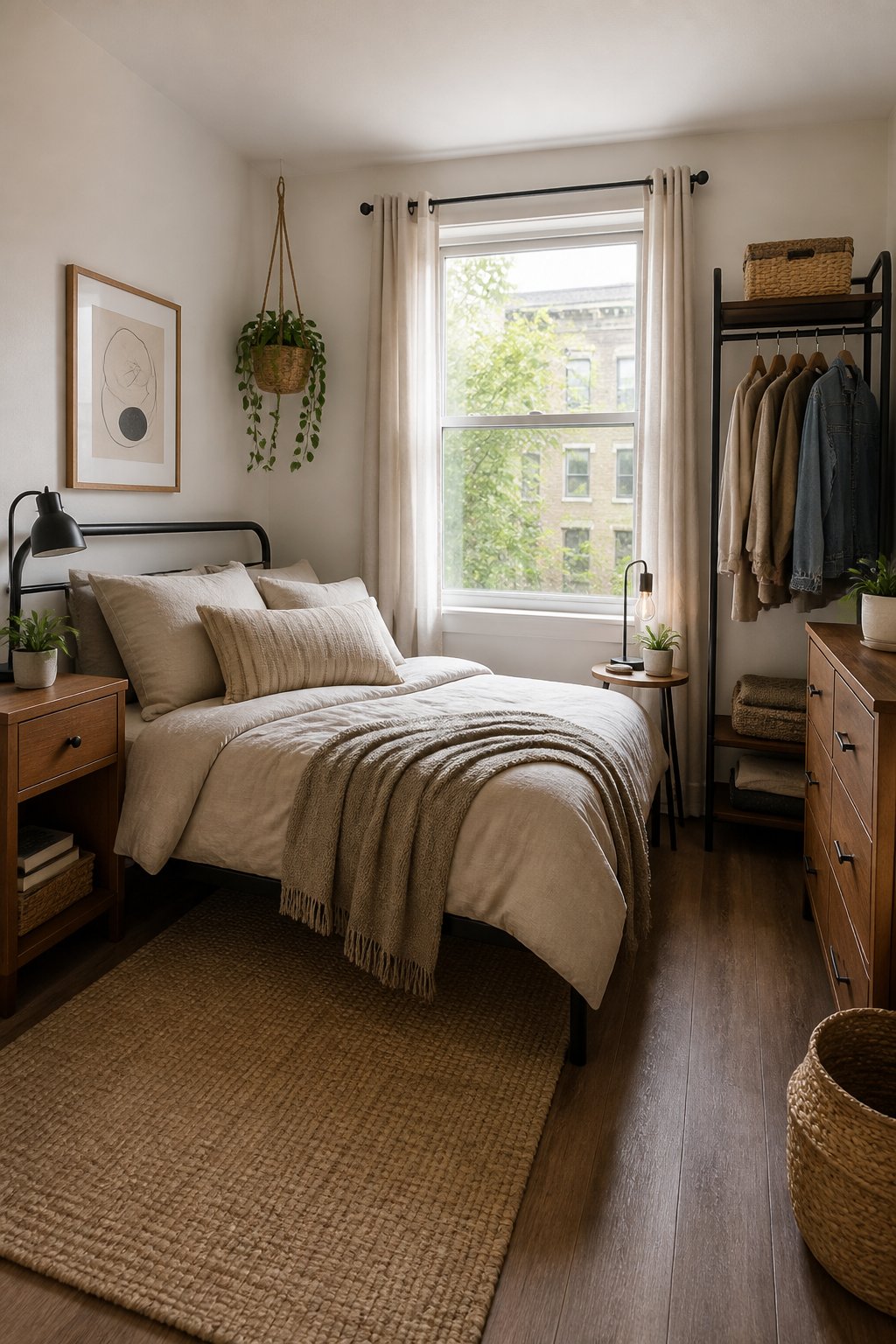
Repeating one wood tone or metal finish across mismatched furniture makes hand-me-down and thrifted pieces look chosen instead of collected at random. Renters furnishing on a budget rarely start with a matching bedroom set, and that is fine.
Picking one accent, black metal hardware, brass lamp bases, or a warm oak tone, and repeating it across two or three pieces creates a visual thread. A small basket, a lamp, and a picture frame in the same metal finish can tie together a mismatched dresser and nightstand.
This approach costs far less than replacing furniture and works with pieces already owned. For more ideas on coordinating pieces without new furniture, a full small bedroom makeover on a budget guide covers additional low-cost swaps.
11) Choose a Slim C-Table or Rolling Cart for Bedside Essentials
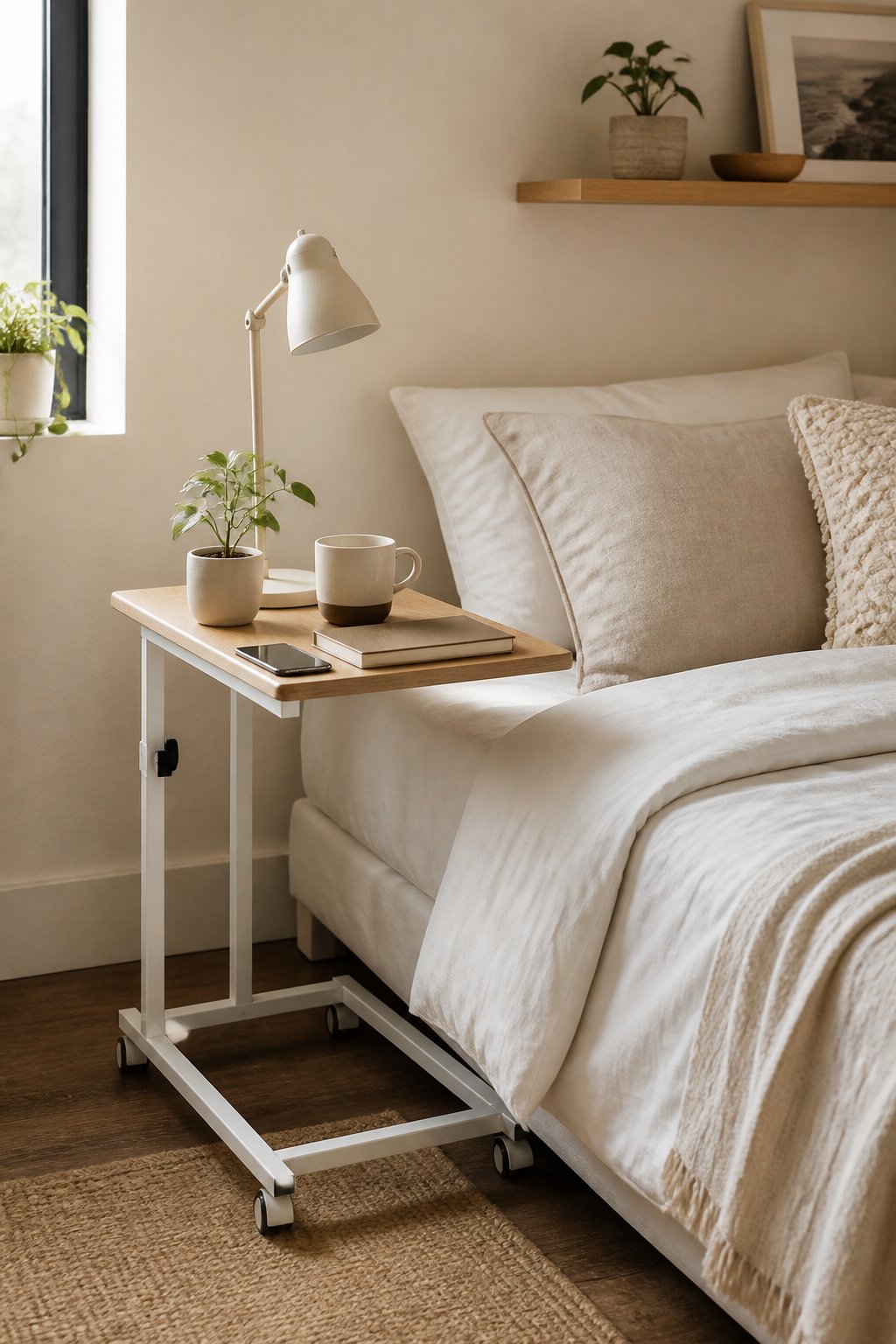
A slim C-table or rolling cart solves the bedside storage problem in bedrooms too small for a full nightstand. These narrow tables slide under the edge of the bed frame, leaving the walking path clear.
Rolling carts add the bonus of mobility, so a renter can move the piece to a desk, closet, or living room when the layout changes. Multi-tier carts hold books, chargers, and a lamp without needing a wider footprint.
Both options avoid the bulk of a traditional nightstand while still keeping essentials within reach of the bed.
12) Hide Everyday Clutter in Matching Lidded Baskets
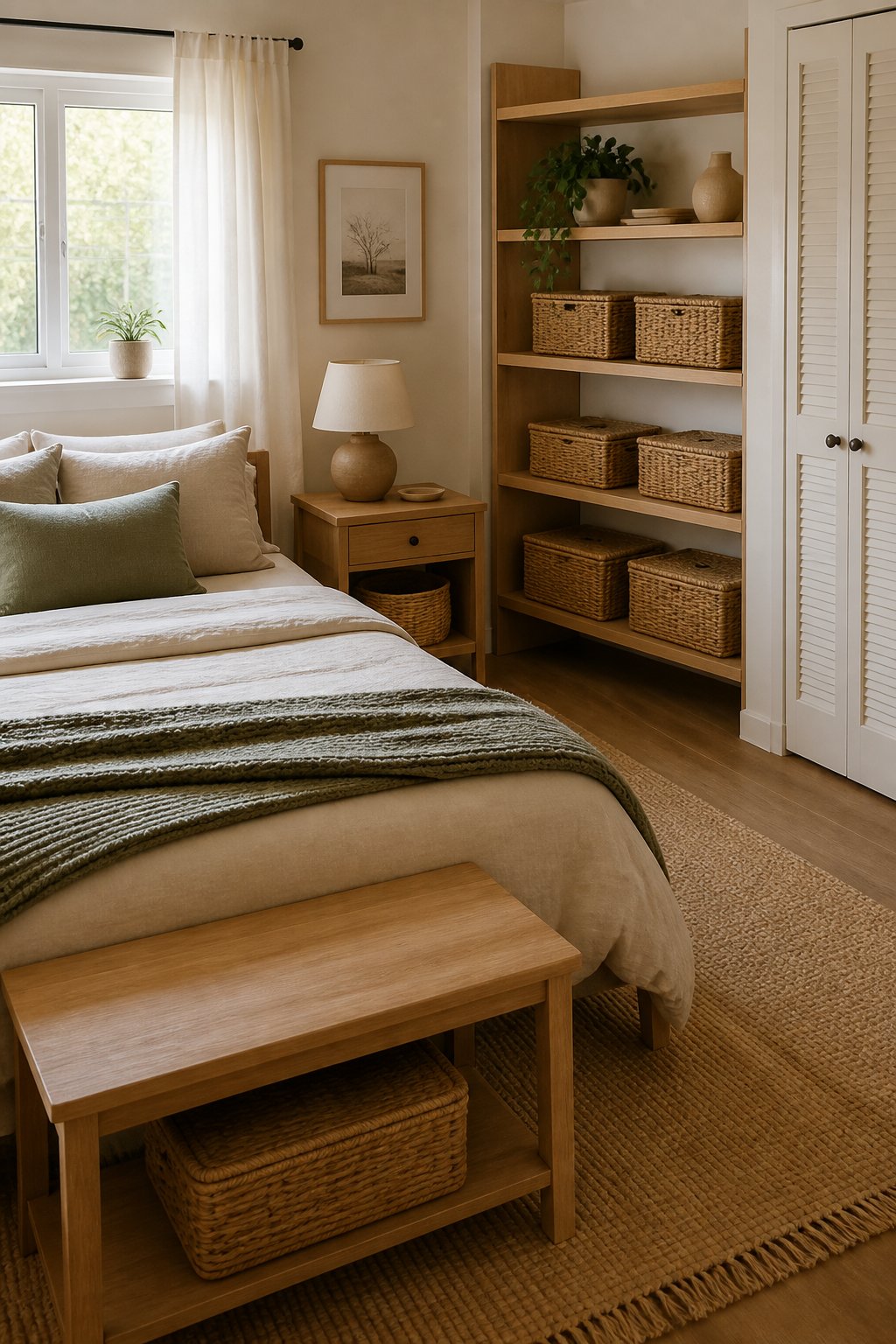
Matching lidded baskets contain everyday clutter fast, which matters most in small bedrooms where loose items pile up visibly. Baskets grouped in twos or threes on a shelf or under the bed hide laundry, chargers, and odds and ends behind one consistent look.
Choosing baskets in the same material and color, even in different sizes, keeps the room from looking like a storage unit. Woven baskets also add texture to a room with plain rental walls.
This fix takes minutes and requires no tools, adhesive, or wall contact of any kind.
13) Use an Over-the-Door Organizer Only After Checking Door Clearance
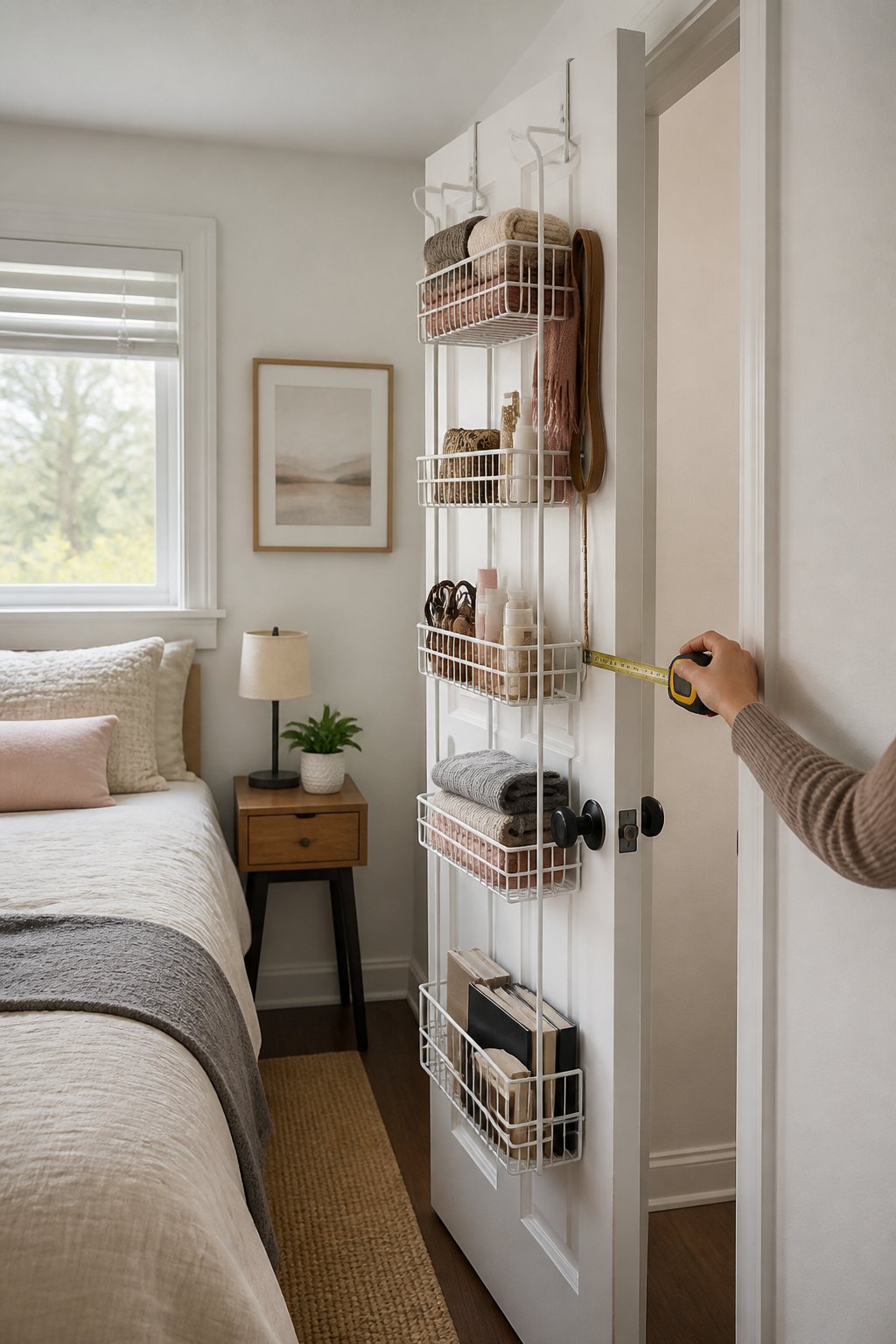
An over-the-door organizer adds storage on the closet or bedroom door, but only after confirming the door swings clear of the frame and any adjacent furniture. These organizers hang over the top of the door using hooks, so no drilling is involved.
The added thickness can cause the door to stick or scrape against the frame in tighter apartments, especially on older doors that already fit snugly. Testing the door’s full swing with the organizer in place, before loading it with items, catches this problem early.
Weight limits matter too. Overloading the hooks can bend the frame’s hardware or cause the organizer to slip.
14) Set Up a Portable Dressing Spot With a Mirror and Small Stool
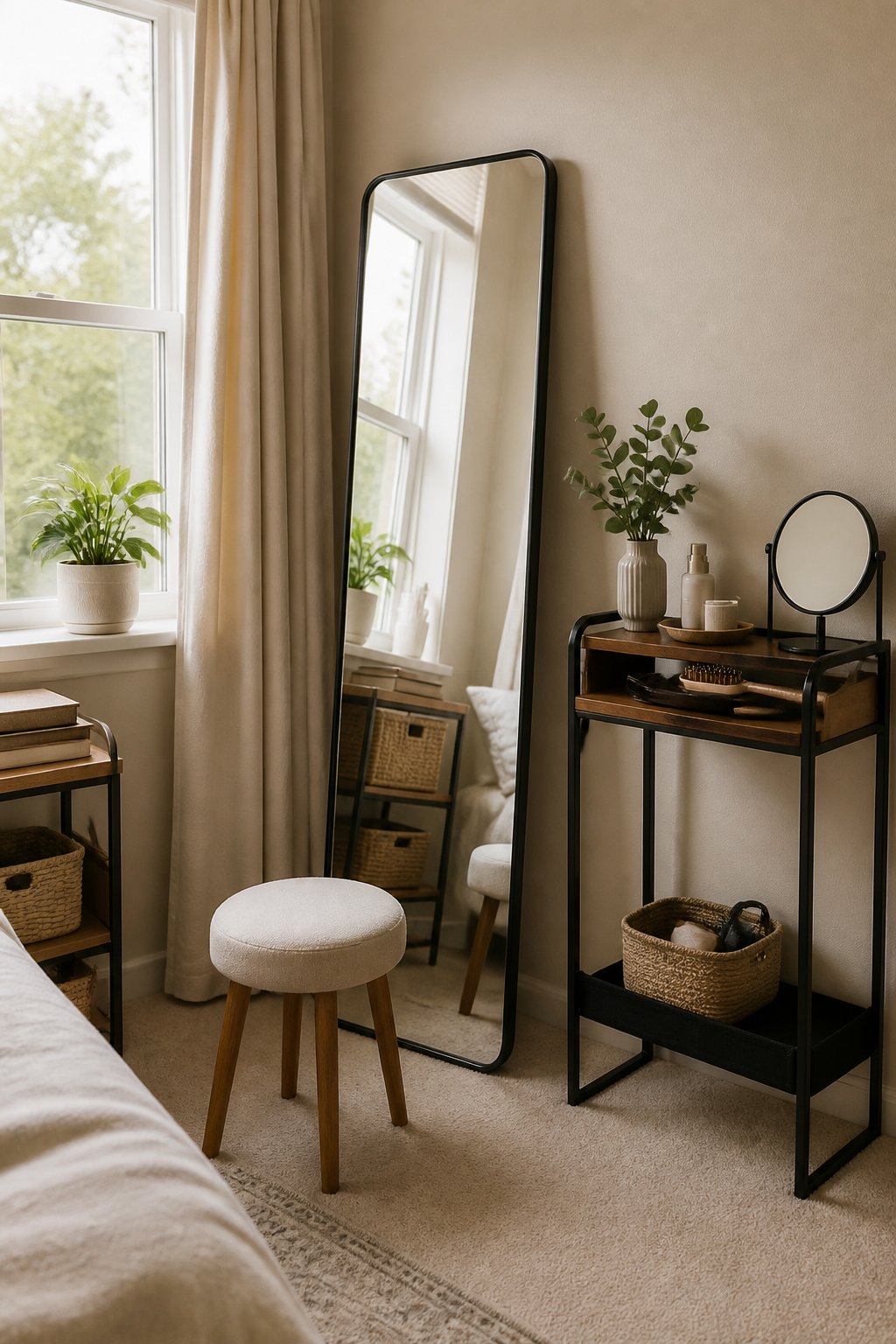
A freestanding mirror paired with a small stool creates a dressing spot without needing a dedicated corner or built-in vanity. This setup works in a bedroom too small for a full dresser-and-mirror combination.
The stool doubles as a seat for putting on shoes or a spot to set a bag down, while the mirror handles the getting-ready routine. Both pieces are lightweight enough to move to a different wall as the room’s layout changes.
Choosing a stool that also works as extra seating elsewhere makes the piece earn its space twice over.
15) Control Charging Cables With a Bedside Cable Box and Clips
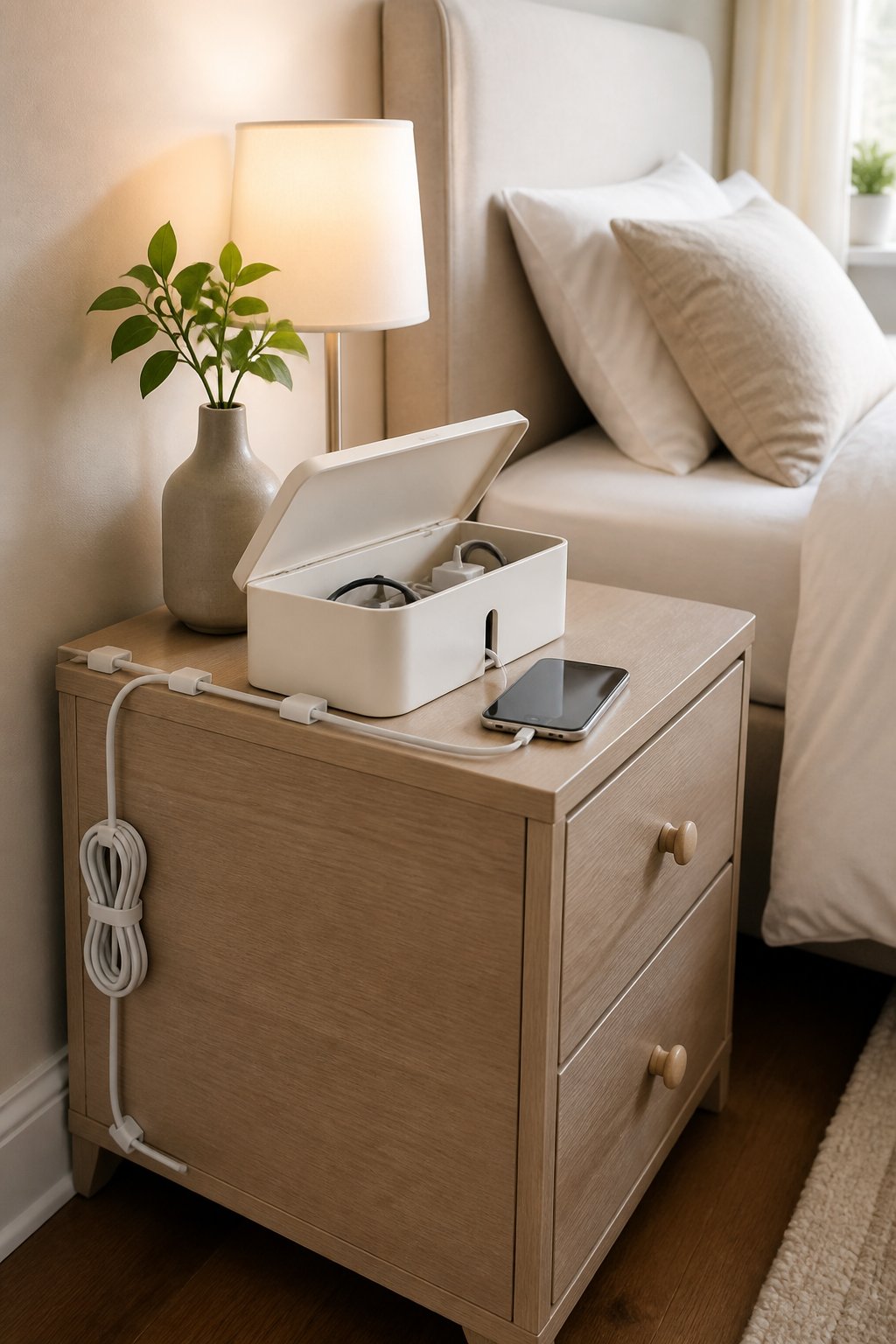
A cable box and adhesive clips keep charging cords from tangling across the nightstand or floor near an outlet. Small bedrooms often have one awkwardly placed outlet, and cords left loose become a trip hazard along the walking path.
Clips stuck along the back or side of a nightstand route cords up and out of sight. A small box or tray with a cutout hides the power strip and extra cable length inside.
This keeps the bedside area looking tidy and reduces one more thing to untangle while packing for a move.
16) Add Privacy With Static-Cling Window Film Where Appropriate
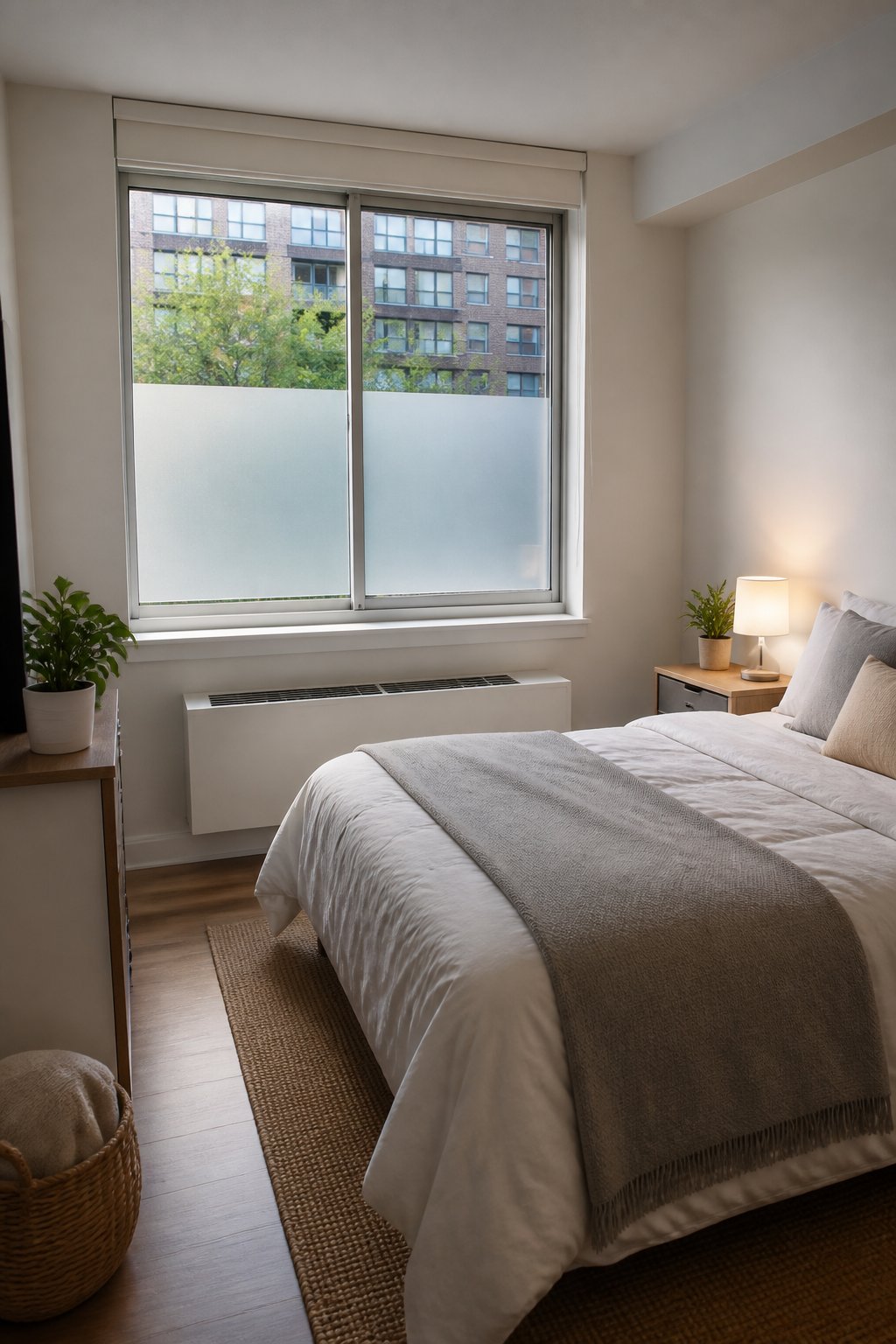
Static-cling window film adds privacy on ground-floor or street-facing windows without adhesive residue on the glass. This film uses water and static to stay in place, so it removes cleanly compared to adhesive-backed versions.
It works well on the lower half of a window, keeping light in the upper portion while blocking sightlines at eye level. Renters should check their lease for any restriction on window treatments before installing film, since some leases specifically address window coverings.
Static film should never go on tinted, treated, or older single-pane glass without checking the manufacturer’s guidance first, since some coatings do not react well to film contact.
17) Choose One Portable Statement Piece Instead of Many Small Accents
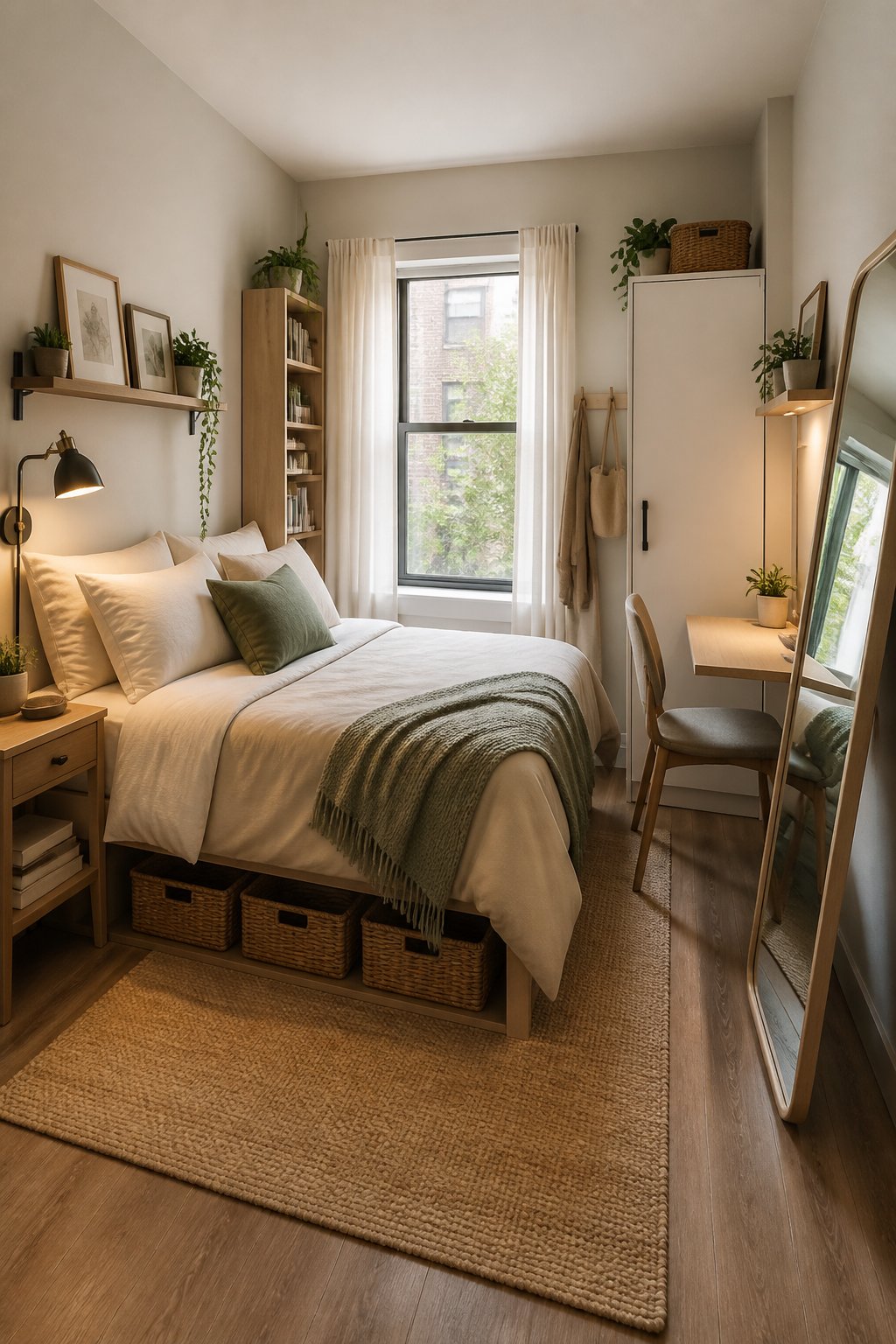
A single portable statement piece, like a bold armchair, a patterned rug, or a large art print, does more for a small bedroom than a dozen tiny accents scattered around. Small rooms get visually noisy fast when too many small decorative items compete for attention.
One larger piece gives the eye a place to rest and reads as intentional rather than cluttered. It also simplifies moving day, since one item is easier to transport and place in a new room than a collection of small trinkets.
Choosing something freestanding, not mounted or built-in, keeps the piece fully portable for the next lease. A full small bedroom decor ideas roundup offers more direction on picking a single piece that anchors the whole room.
Renter Checks Before You Hang, Stick, Swap, or Install
Every renter-friendly product falls into one of three categories, and knowing which one applies avoids deposit trouble. Low-commitment changes, like rugs, baskets, and lamps, need no approval and no wall contact at all.
Adhesive products, including Command strips, static film, and plug-in sconces, need a surface check first. Painted drywall in good condition holds these products well; textured, chipped, or freshly painted walls often do not, regardless of what the packaging promises.
Landlord-permission changes include anything altering fixtures, blinds, or the door itself. A quick message to the property manager before installing an over-the-door organizer with heavy hooks, or before swapping out blinds temporarily, prevents a bigger conversation at move-out.
Saving original hardware, like the blinds’ mounting brackets or a stock closet door hook, makes reinstalling the landlord’s version simple when the lease ends. A small labeled bag in a closet keeps these pieces from getting lost during the tenancy.
How to Choose Decor That Will Move With You
Decor that survives a move earns its place in a small rental bedroom faster than decor that only looks good in one apartment. The clearest test is whether a piece disassembles, folds, or rolls without needing tools built for that specific unit.
| Idea | Setup Effort | Wall/Surface Risk | Portability | Best For |
|---|---|---|---|---|
| Duvet cover & throw | Low | None | High | Instant colour change |
| Curtain panels | Low | None | High | Softening blinds |
| Area rug | Low | None | High | Covering flooring |
| Plug-in sconce | Medium | Surface-dependent | Medium | Bedside light |
| Leaning mirror | Low | None | High | Brightening a room |
| Textile/art headboard | Low | Low | High | Faking a headboard |
| Command strip art | Medium | Surface-dependent | Medium | Lightweight frames |
| Layered lamps | Low | None | High | Softening overhead light |
| Matching baskets | Low | None | High | Hiding clutter |
| Over-door organizer | Medium | Door clearance | Medium | Extra storage |
| Window film | Medium | Glass-dependent | Low | Added privacy |
| Statement piece | Low | None | High | Anchoring the room |
Pieces that fold flat, like a leaning mirror or a rolled rug, pack more easily than bulky furniture built for one specific corner. Reusing or thrifting furniture also reduces the cost of starting over in a new apartment. A small bedroom makeover ideas guide can help renters plan which pieces to prioritize first based on their current layout.
Frequently Asked Questions
What are the best small bedroom ideas for renters who cannot paint?
Layering color through a duvet cover, throw blanket, and rug changes the room’s whole feel without touching the walls. Leaning a large piece of art or a textile behind the bed adds more visual color and texture. These swaps work on any wall condition since none require adhesive or paint.
How can I make landlord blinds look better without replacing them?
Hanging full-length curtain panels on a tension rod in front of the existing blinds softens their look without removing them. The blinds stay in place and fully functional underneath. This keeps the original hardware intact for move-out.
Are Command Picture Hanging Strips safe to use in a rental bedroom?
Command strips work well on painted drywall in good condition, but they do not always hold on textured, chipped, or freshly painted surfaces. Checking the weight limit for the specific frame and testing on a hidden spot first reduces the risk of paint damage. Removal should follow the manufacturer’s slow stretch-and-release method.
What should renters check before using peel-and-stick products?
Renters should check the wall’s paint type, texture, and age before applying any peel-and-stick product. Fresh paint that has not fully cured and textured or older walls often do not hold adhesive well. Testing a small section in a low-visibility spot first shows how the product and the wall react together.
How can I make a very small rental bedroom feel bigger without buying more furniture?
Clearing the main walking path and adding a leaning mirror across from the window are the two fastest changes with no new furniture required. Layering lamp light instead of relying on one overhead fixture also opens up the room visually. Removing anything blocking the route from the door to the bed makes the biggest difference.
Which bedroom decor purchases are easiest to take to a new apartment?
Freestanding and foldable items travel best, including rugs, leaning mirrors, lamps, baskets, and duvet covers. These pieces need no tools built for one specific unit and pack down or fold flat for moving. Furniture that disassembles with basic hardware, like a slim rolling cart, also transports easily between apartments.