A small bedroom can support adult routines, restful sleep, clothing storage, and occasional work when each piece earns its floor space. The strongest layouts begin with the bed, then build storage and lighting onto the walls and unused vertical areas.
The best small bedroom ideas for adults combine clear walking paths, shallow storage, layered lighting, and finishes that reflect or organize the eye. A compact room can feel calm and personal while still accommodating a queen bed, clothing, bedside essentials, and a desk.
Before buying new furniture, mark the proposed footprint on the floor with painter’s tape. Living with the outline for a day can reveal whether the piece actually improves the room or creates a new circulation problem.
1) Place the Bed on the Longest Uninterrupted Wall
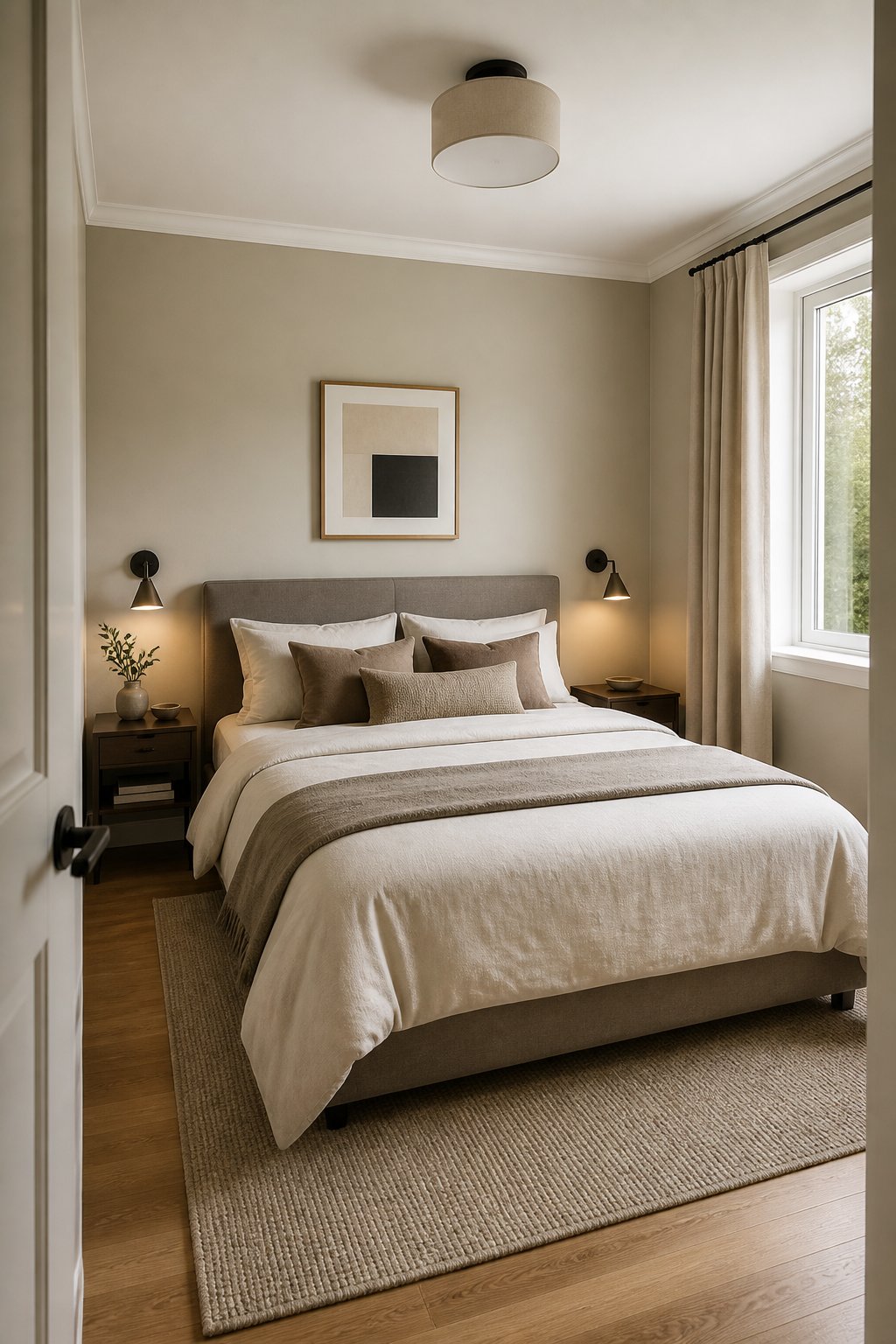
Place the bed against the longest clear wall to create the most usable circulation path. This position keeps doors, closets, and windows easier to access while giving the room a strong visual anchor.
Measure the bed, frame, and walking clearance before moving it. A slim platform frame helps preserve space around the mattress, while a queen-bed layout needs careful attention to door swings and closet access. For more planning help, a small queen bed bedroom layout can clarify spacing choices.
2) Choose a Storage Bed With Lift-Up or Drawer Storage
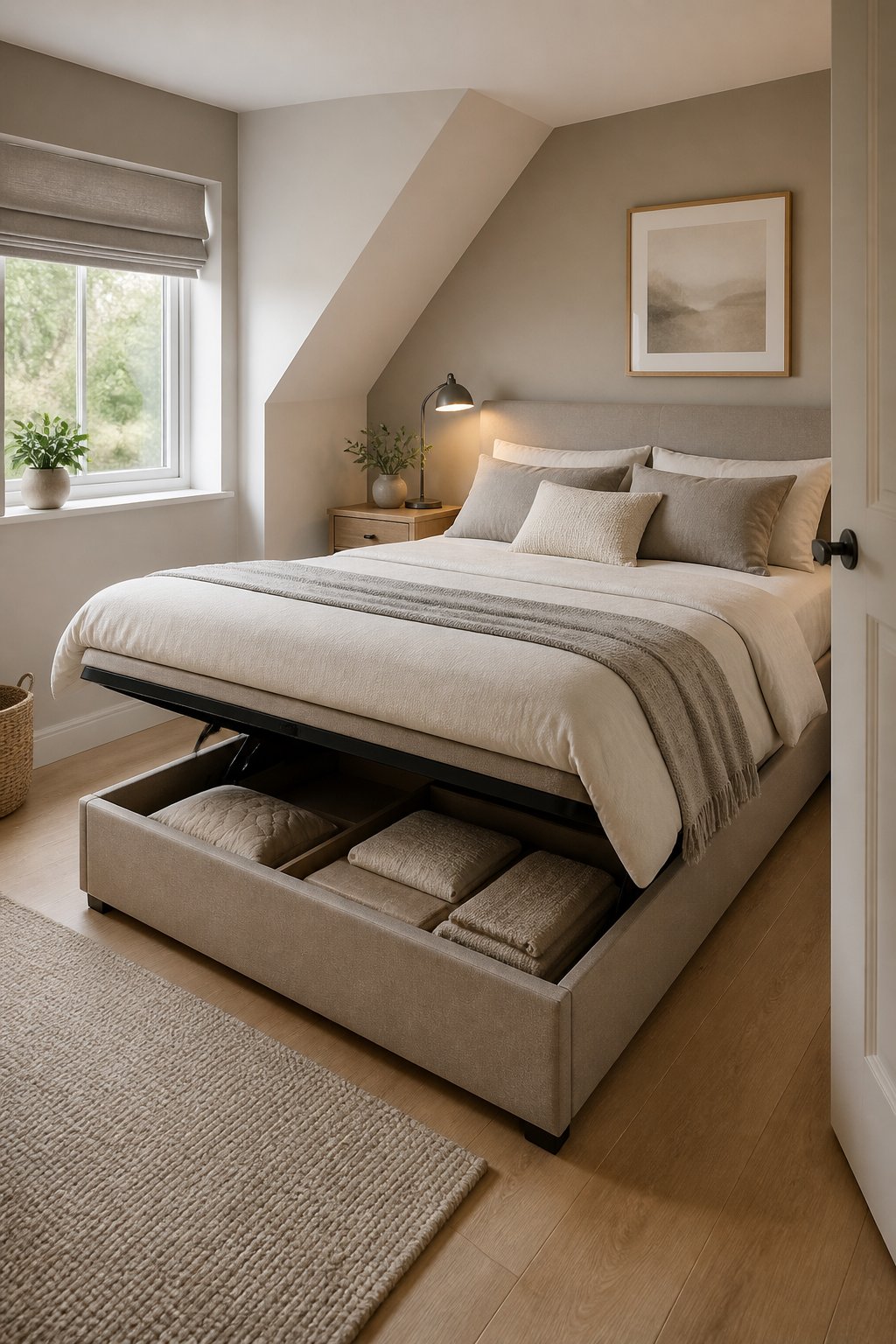
A storage bed turns the largest piece of furniture into a concealed storage zone. Lift-up platforms suit items used a few times each season, while drawers provide easier access for shoes, extra bedding, or folded clothing.
Check the opening direction before buying. Drawers need a clear pullout path, and lift-up frames need enough room at the foot or sides for safe operation. Choose sturdy hardware and label soft-sided containers inside the base.
3) Install Wall-Mounted Reading Sconces Instead of Table Lamps
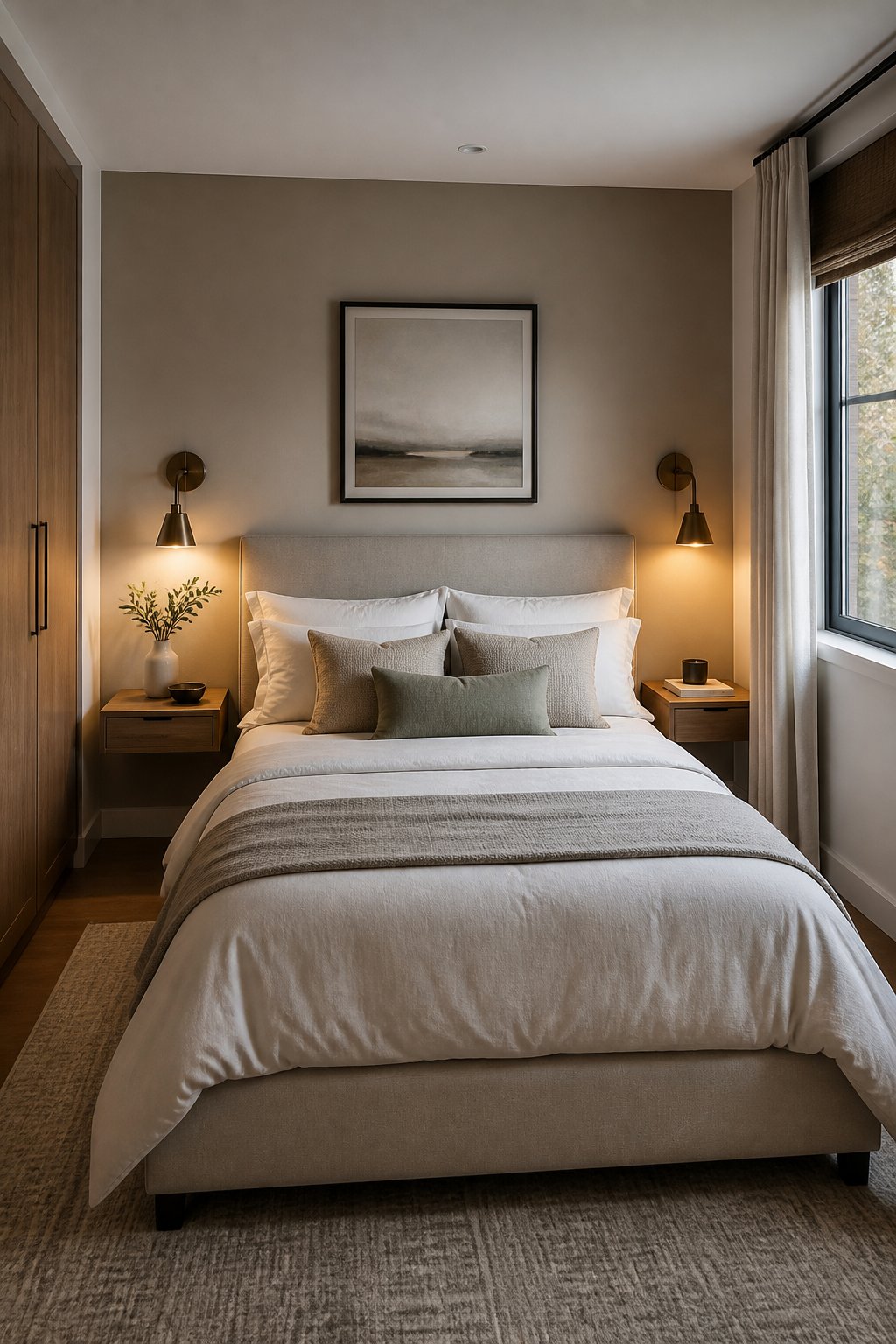
Wall-mounted reading sconces free the bedside surface for a phone, book, or water glass. Swing-arm models direct light toward the pillow and fold close to the wall when unused.
Mount each fixture at a comfortable reading height, then confirm whether the wall needs electrical work. Plug-in sconces suit renters when cords can run through a paintable cord cover. Choose warm-white bulbs around 2700K for evening use.
4) Replace Bulky Nightstands With Floating Shelves
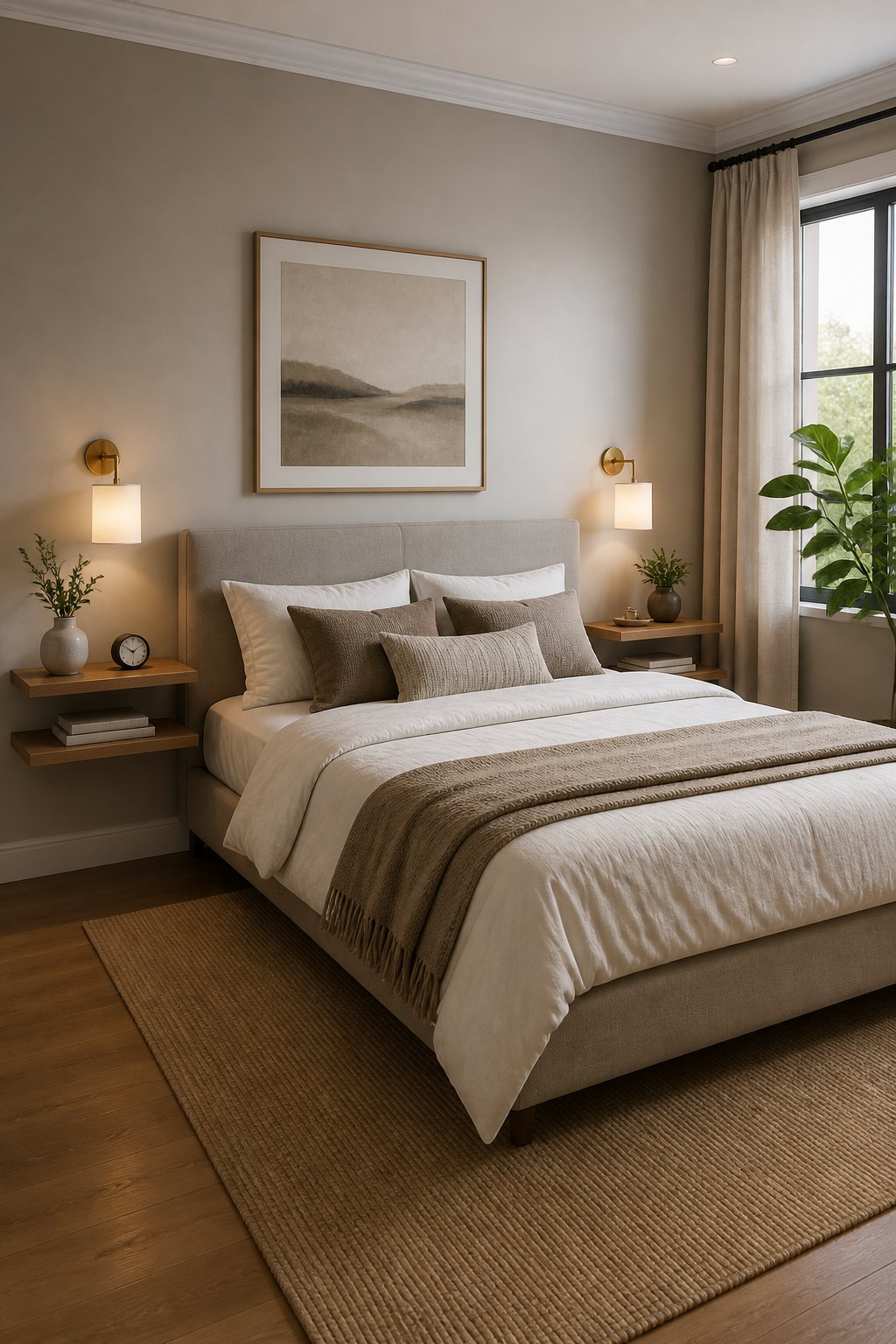
Floating shelves provide bedside storage without consuming floor area. A shelf around mattress height keeps essentials within reach, while a second narrow shelf higher on the wall holds small decor or a charging dock.
Secure brackets to wall studs or use anchors rated for the shelf load. Leave enough clearance for bedding and shoulders, and choose a shelf with a front lip if items tend to slide. Renters can use removable shelving where the wall system allows it.
Small Bedroom Measurement Checklist
Room Measurements
- Room length and width
- Ceiling height
- Window location and size
- Door swing clearance
- Closet opening space
Furniture Checks
- Bed frame footprint
- Furniture depth, not only width
- Drawer opening distance
- Walking path clearance
- Power outlet locations
5) Use Ceiling-Height Curtains to Visually Raise the Room
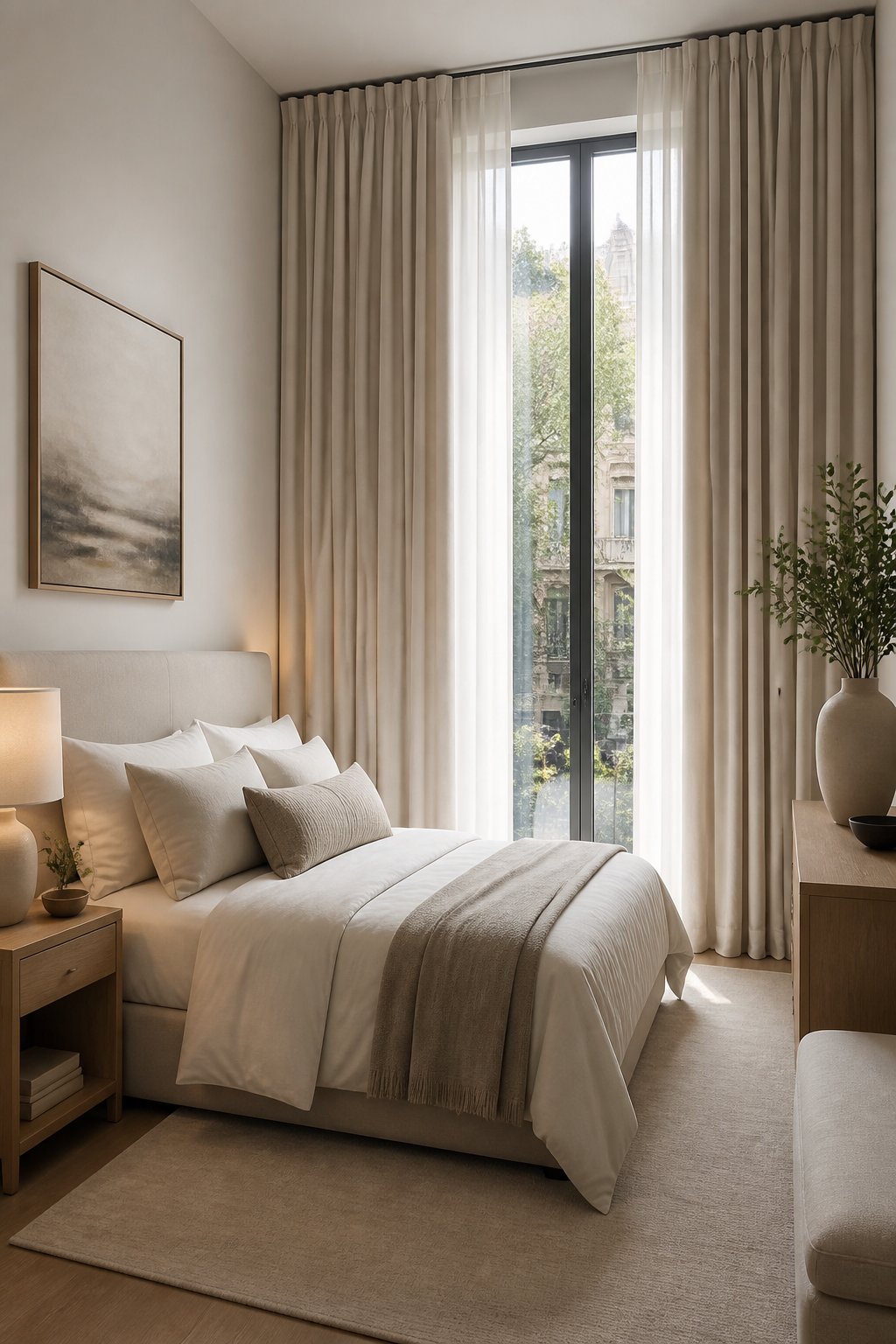
Ceiling-height curtains draw the eye upward and make a low room feel taller. Mount the rod several inches below the ceiling, extend it beyond the window frame, and let the panels reach the floor.
Choose lightweight linen-look fabric when the room needs daylight. Blackout lining supports sleep, though thick panels take more visual and physical space. A ceiling track provides a clean option when wall space above the window is limited.
6) Fit Roman Shades Inside Small or Bay Windows
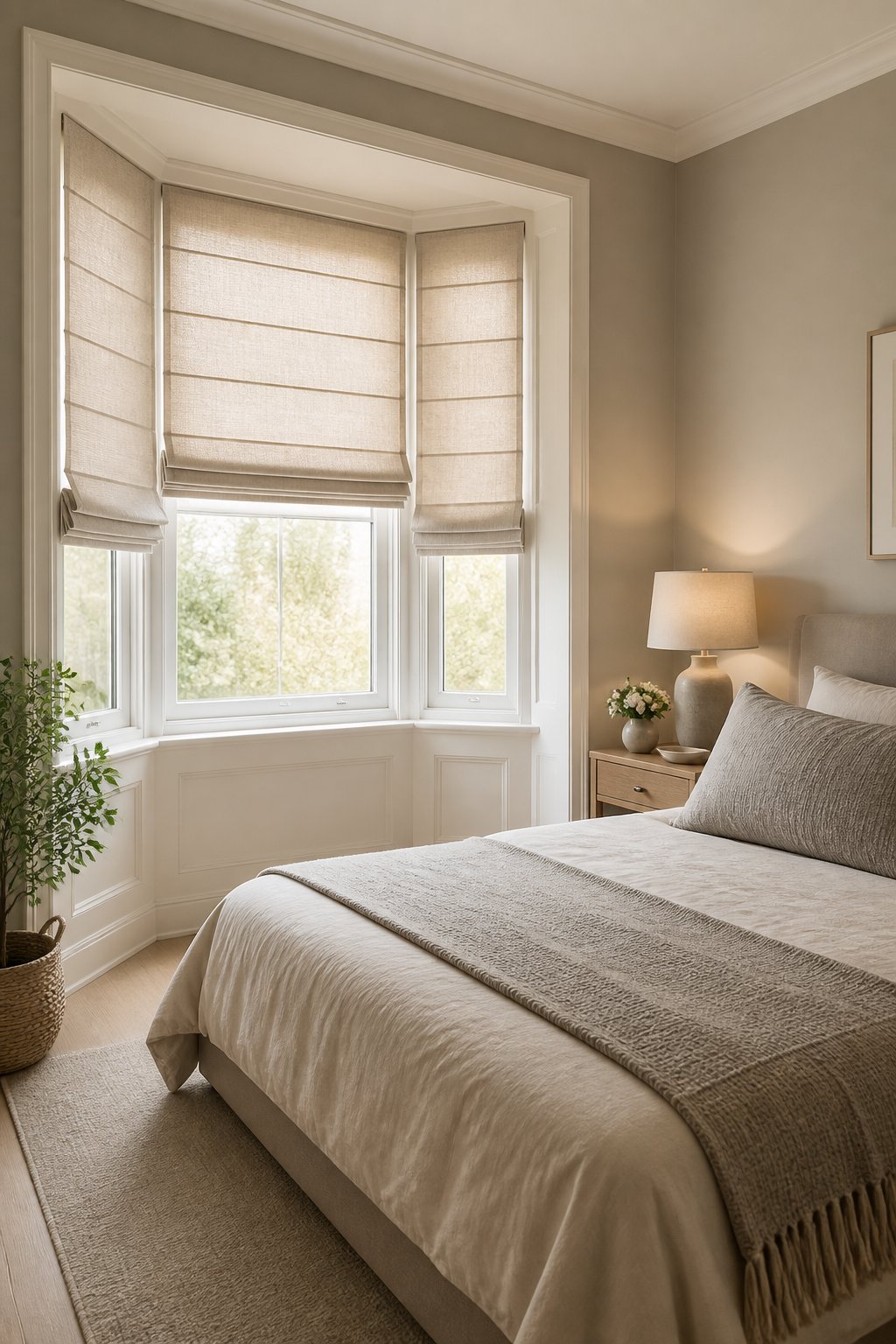
Inside-mounted Roman shades keep window treatments close to the glass and preserve clearance around a small or bay window. Their flat profile suits a bed placed nearby and gives the wall a tidy, tailored finish.
Measure the recess at several points before ordering. Choose a light-filtering fabric for daytime privacy and a blackout liner for a sleeping room. Cordless operation reduces visual clutter and improves safety.
7) Build Vertical Storage With a Tall, Shallow Wardrobe
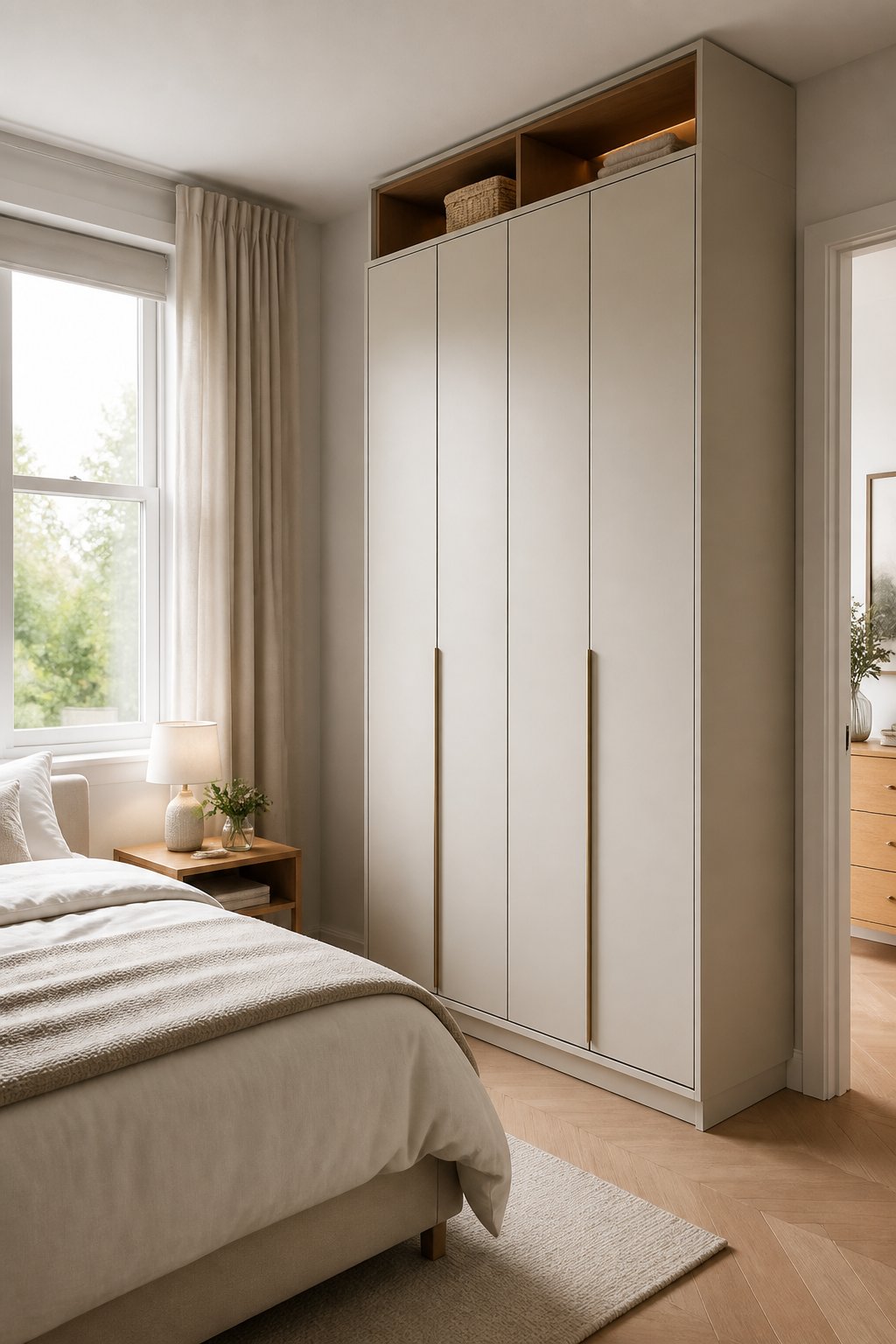
A tall, shallow wardrobe uses wall height while keeping the floor projection modest. Look for adjustable shelves, a short hanging section, and doors that fit the available opening.
A tall, shallow wardrobe can save valuable floor space in a small bedroom. Check the actual depth before buying because a few extra inches can affect walking paths, doors, and nearby furniture clearance.
A depth near 18 to 24 inches works for many folded items and adult clothing, though hanging garments need enough room to avoid crushing. Anchor the unit securely, especially in a rental where freestanding furniture must remain stable. More small bedroom wardrobe design ideas can help organize the interior.
8) Add a Full-Length Mirror Opposite a Window
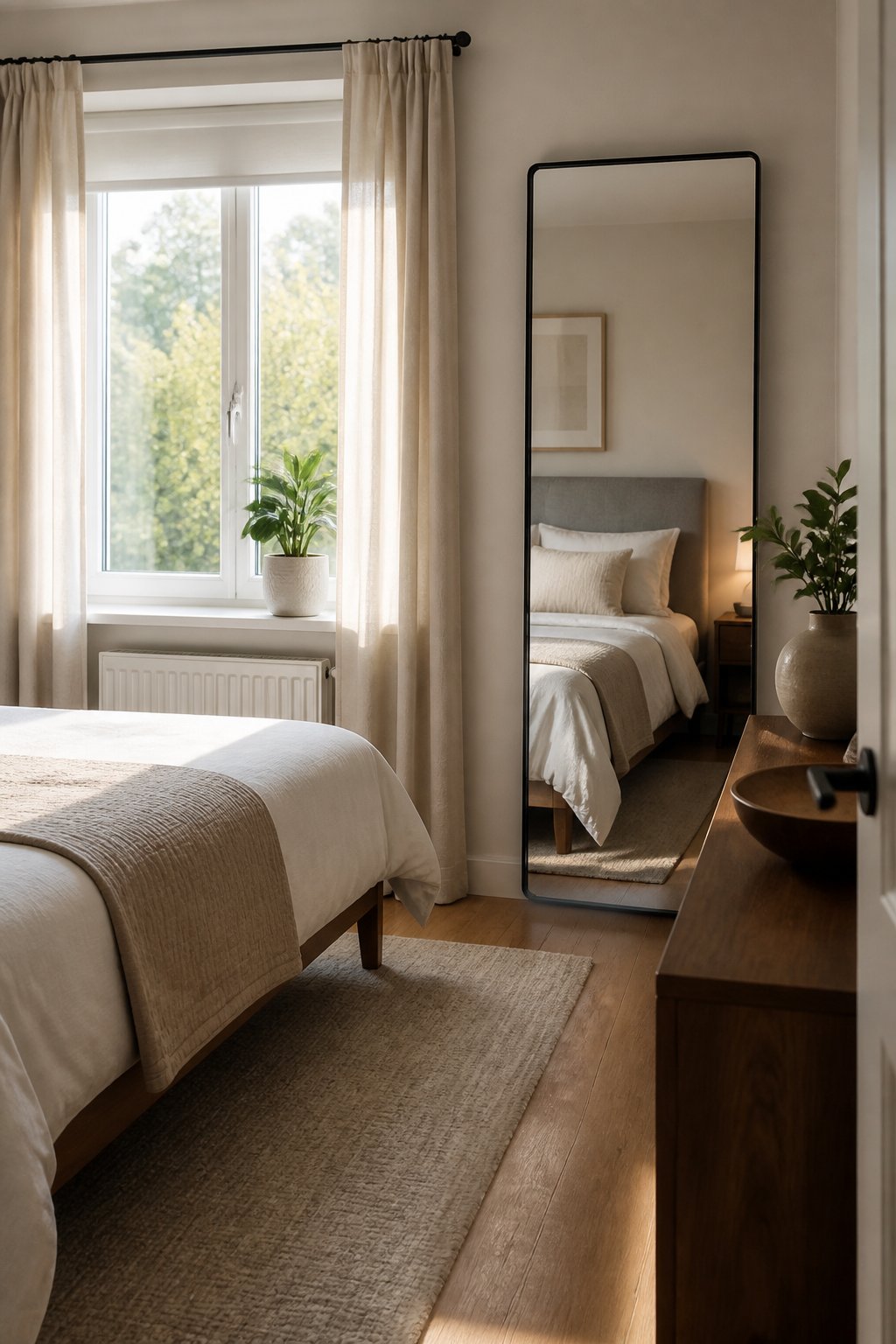
Place a full-length mirror opposite or near a window to reflect daylight into the room. A slim leaning mirror works where floor space allows, while a wall-mounted model keeps the walking path clear.
Avoid aiming the reflection directly at a messy storage area. A simple frame in wood, black, or soft metal gives the mirror a finished role in the decor. Browse more full-length mirror bedroom ideas for placement options.
9) Use Light-Reflecting Paint in Warm White, Soft Blue, or Pale Gray
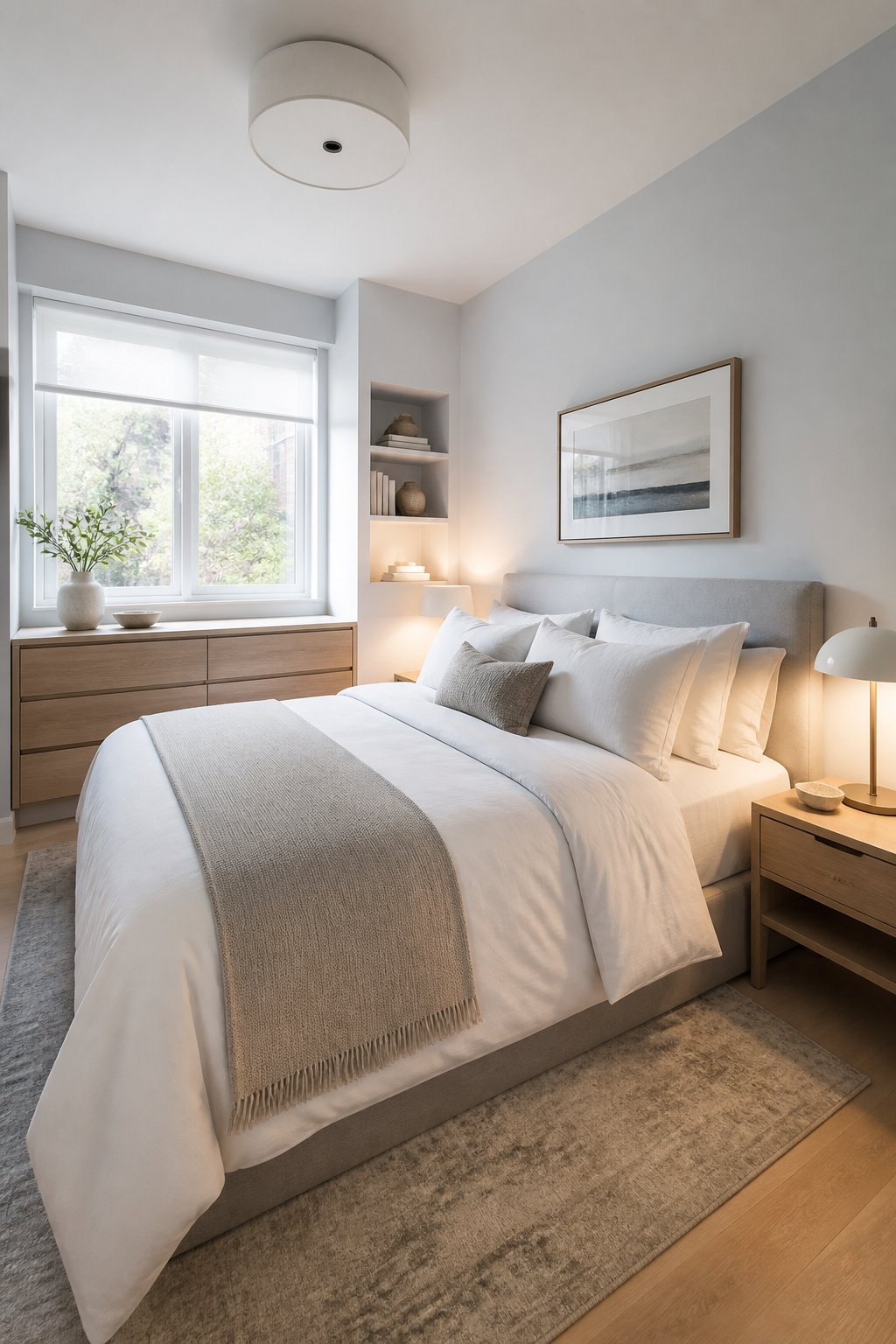
Light-reflecting paint helps daylight travel across a compact bedroom. Warm white adds softness, pale gray creates a quiet backdrop, and soft blue brings color while keeping the walls visually light.
Sample the paint on more than one wall because north-facing and south-facing rooms change color through the day. Use the same or a closely related tone on trim for a continuous surface. Satin or eggshell finishes clean easily without excessive shine.
10) Create Depth With Tonal Patterned Bedding and Wallpaper
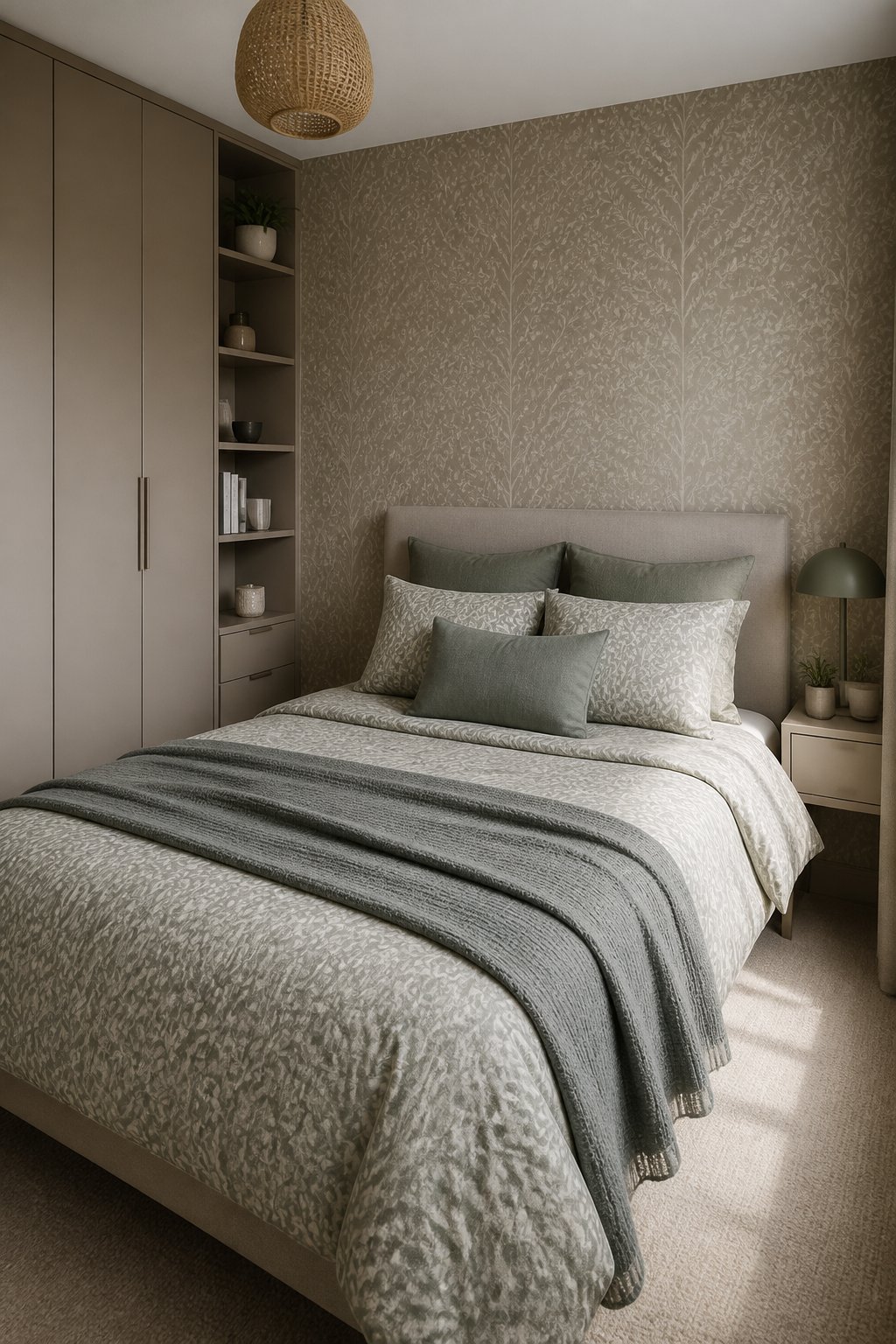
Tonal pattern creates depth while keeping the bedroom visually settled. Pair bedding and wallpaper within one color family, then vary scale through a small geometric print, a wider stripe, or a quiet botanical motif.
Keep larger patterns behind the bed and use solid sheets to give the eye a resting place. Peel-and-stick wallpaper suits renters when the wall is smooth and properly prepared. A painted headboard zone offers a lower-cost version of the same layered effect.
11) Turn an Awkward Corner Into a Wall-Mounted Desk
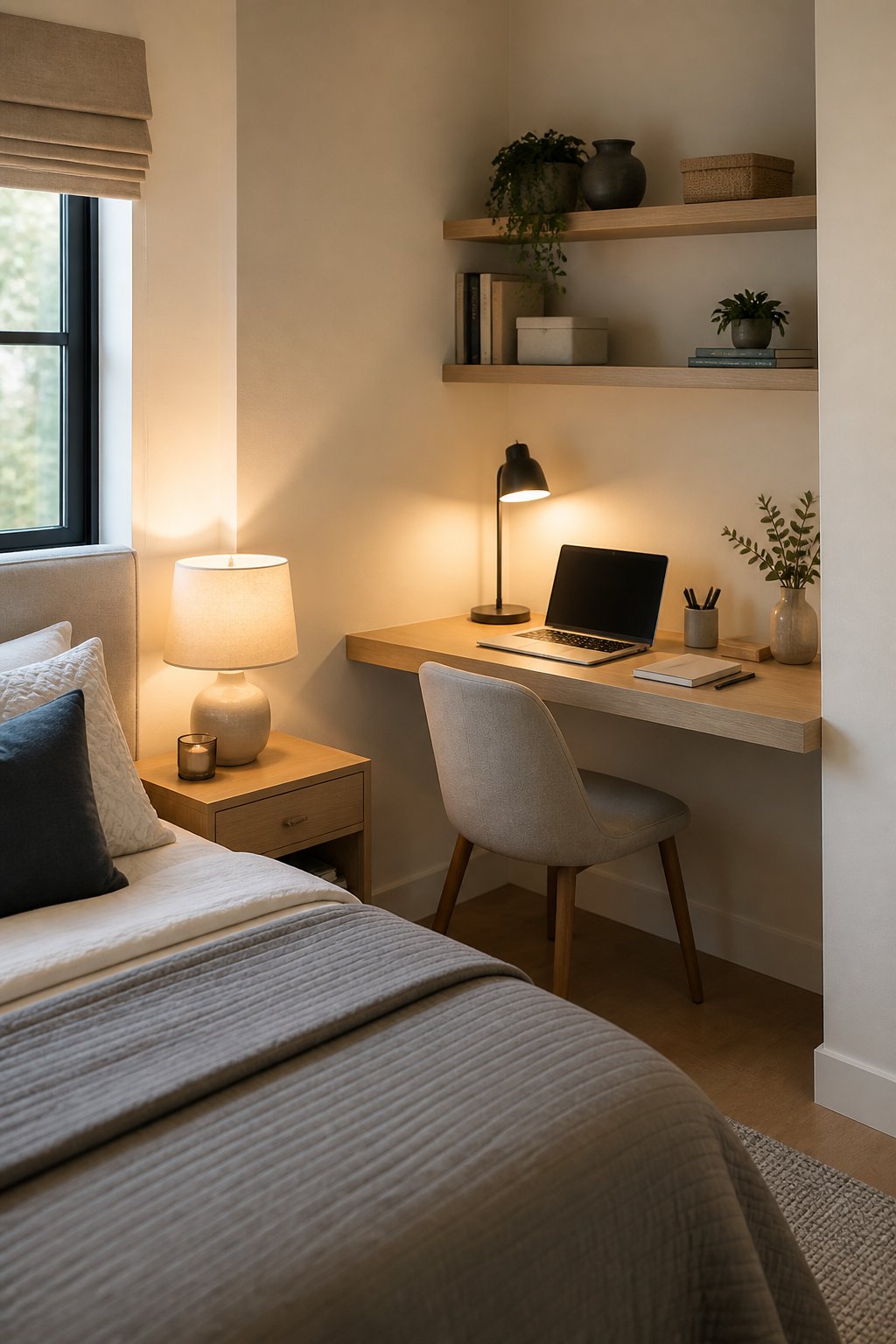
A wall-mounted desk converts an awkward corner into a useful work surface without adding deep cabinetry. Choose a folding or floating top, then pair it with a chair that slides fully beneath the desk.
Keep the desktop shallow enough to preserve the bed’s walking path. Add a wall-mounted task light and a narrow shelf for supplies. A small bedroom desk and bed layout can help separate work and sleep zones.
12) Use Under-Bed Bins for Seasonal Linens and Clothes
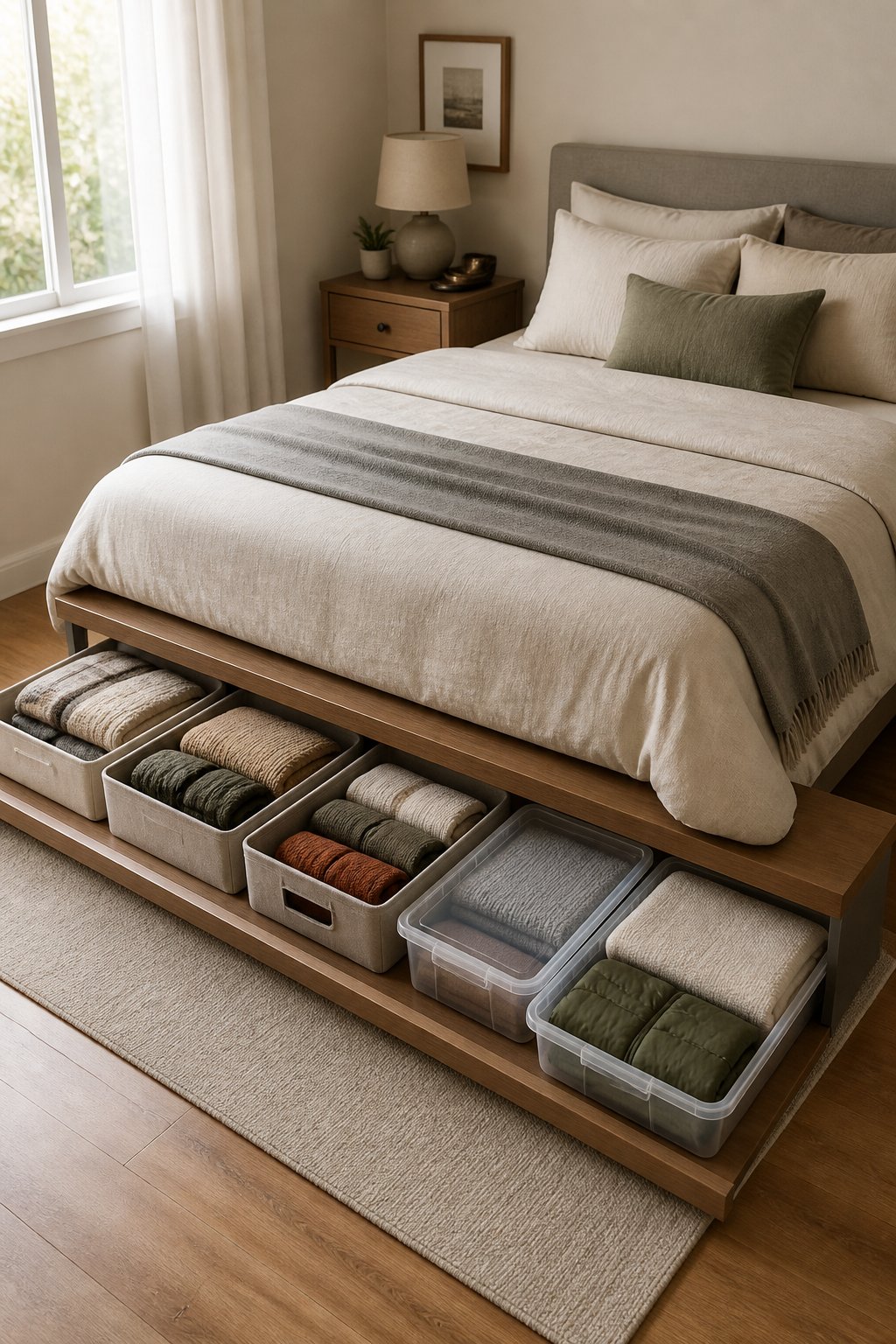
Under-bed bins keep seasonal clothing and spare linens out of sight while preserving closet space. Select lidded containers with wheels when the bed frame has enough clearance for frequent access.
Measure the opening in height, width, and depth before shopping. Soft zippered bags work around frame supports, while clear plastic bins make contents easy to identify. Store clean, fully dry textiles and leave a small gap for air movement.
13) Choose a Murphy Bed for a Studio or Flexible Guest Room
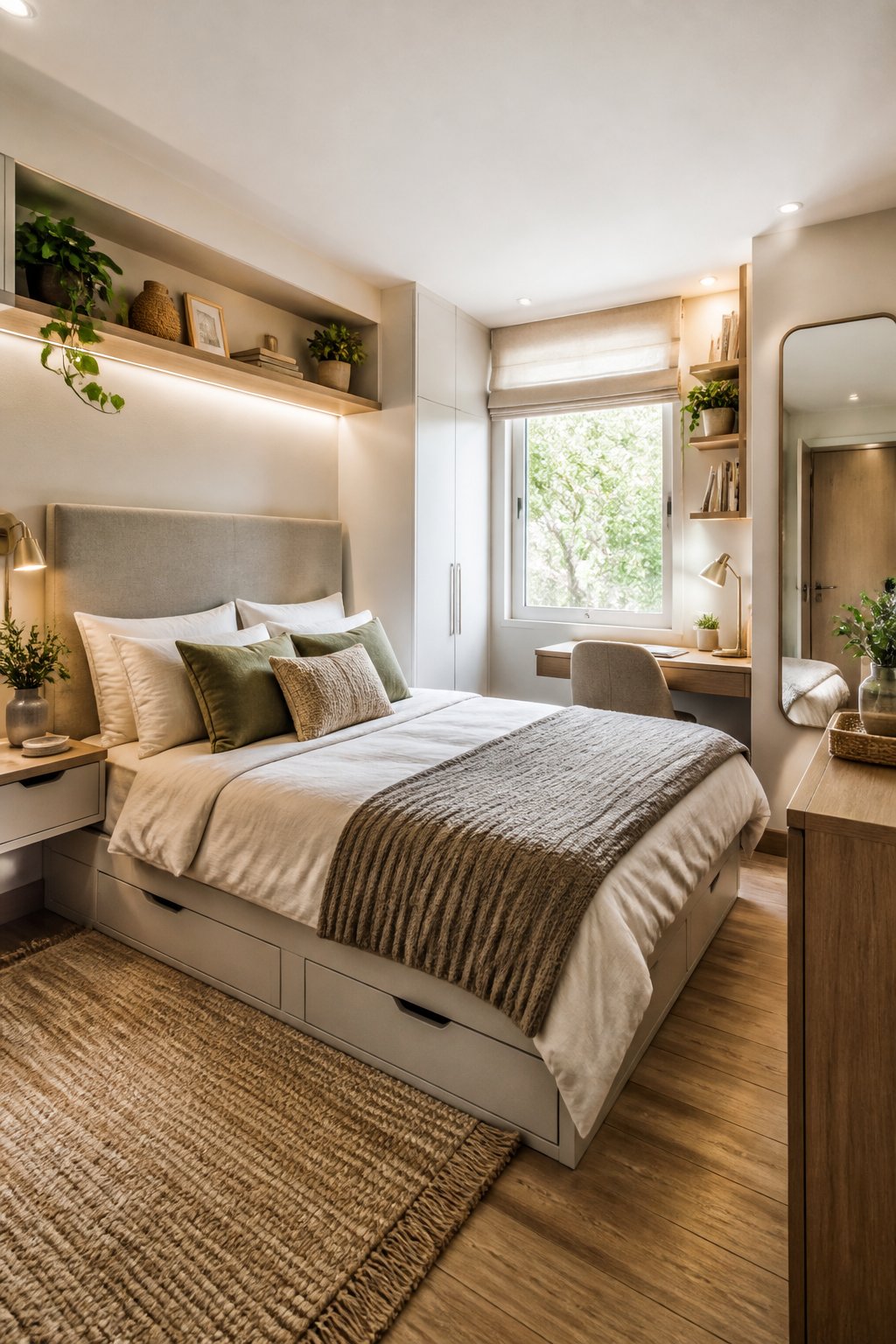
A Murphy bed suits a studio or guest room that needs open floor space during the day. The mattress folds into a wall cabinet, allowing the area to serve as an office, sitting zone, or exercise space.
Confirm the cabinet depth, ceiling height, and required wall anchoring before installation. A side cabinet can add lighting and storage, though the complete unit needs a clear opening path. This choice works best when the room has a second daily function.
14) Make Confident Color Feel Intentional in a Small Bedroom
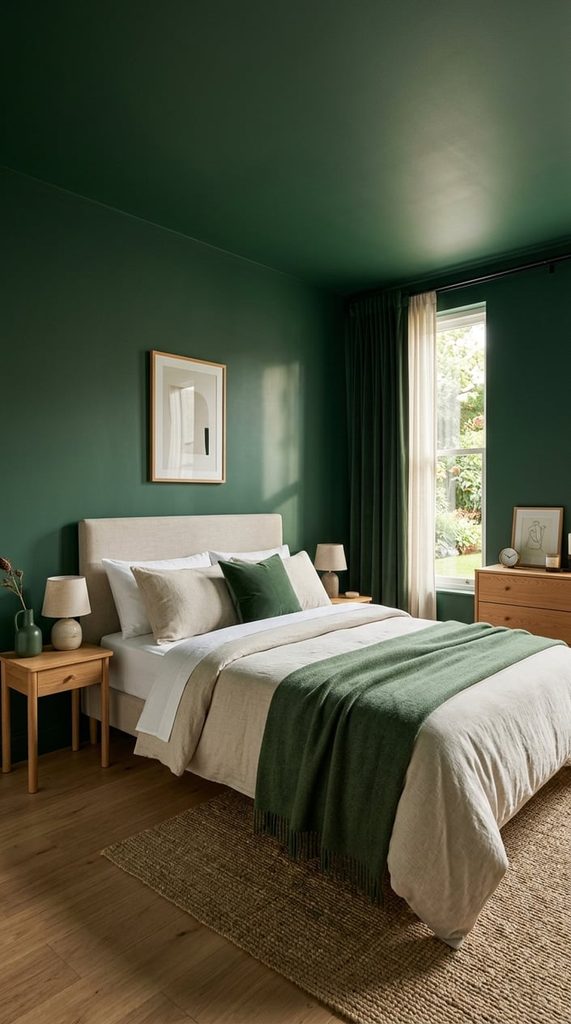
A confident color works in a small bedroom when it appears in a controlled, repeated palette. Paint the ceiling and walls in one deep tone for a cocooned effect, or use a saturated headboard wall with lighter surrounding surfaces.
Repeat the chosen color in one textile and one small accessory so the scheme feels planned. Test samples under morning and evening light before committing. Renters can create the same effect with removable wallpaper, bedding, or a large textile wall hanging.
15) Small Bedroom Layout Mistakes to Avoid
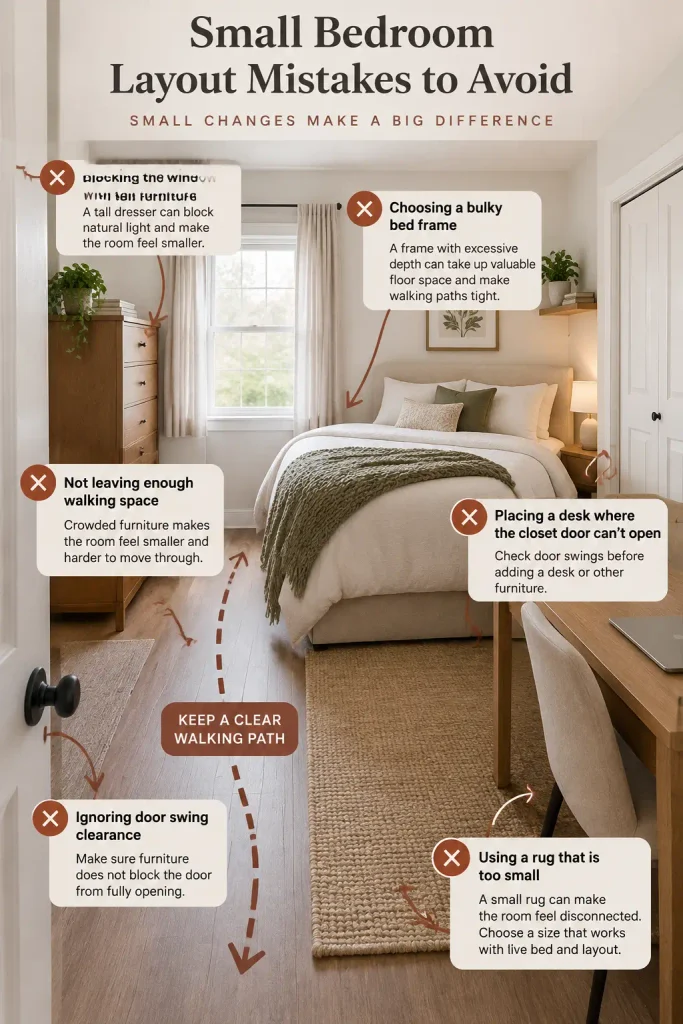
Small bedrooms work better when furniture respects the walking path and door clearance. Common problems include blocking a window with a tall dresser, placing a desk where a closet door cannot open, and choosing a bed frame with excessive depth.
Measure the room, door swings, window trim, and radiator location first. Mark furniture footprints with painter’s tape, then walk through the proposed layout. Keep the route from the entrance to the bed and closet as direct as possible.
Frequently Asked Questions
How can two adults share a small bedroom without making it feel cramped?
Two adults can share a small bedroom comfortably when the bed stays centered on the clearest wall and each person receives accessible storage. Matching wall sconces, separate shelf zones, under-bed bins, and a tall wardrobe reduce the need for floor furniture.
What colors work best in a small adult bedroom?
Warm white, soft blue, pale gray, and muted green keep a small room light while adding personality. Deep colors also work when they cover a defined area, such as the headboard wall, and repeat through bedding or window treatments.