A small apartment bedroom works best when every piece serves a clear purpose. Floor space supports movement, walls handle storage, and light-colored surfaces help the room feel open without adding expensive renovations.
The most effective small bedroom decor ideas combine concealed storage, slim furniture, vertical organization, and reflective finishes. Renters can achieve much of the effect with freestanding pieces, removable hooks, tension hardware, and landlord-approved anchors.
Key Takeaways
- Maximise hidden storage: Use under-bed drawers, baskets, and smart storage solutions to keep clutter away while protecting floor space.
- Choose space-saving furniture: Floating nightstands, low-profile beds, and narrow bookcases create more movement space in compact bedrooms.
- Use vertical space: Floor-to-ceiling shelves and tall storage units add capacity without making the room feel crowded.
- Improve natural light: Mirrors, light colours, and reflective surfaces help small bedrooms feel brighter and more open.
- Keep decor intentional: One oversized artwork or statement piece creates a focal point without adding visual clutter.
- Prioritise renter-friendly solutions: Freestanding furniture, removable hooks, and approved anchors provide flexibility without permanent changes.
1) Use Under-Bed Storage Drawers to Hide Seasonal Clothes
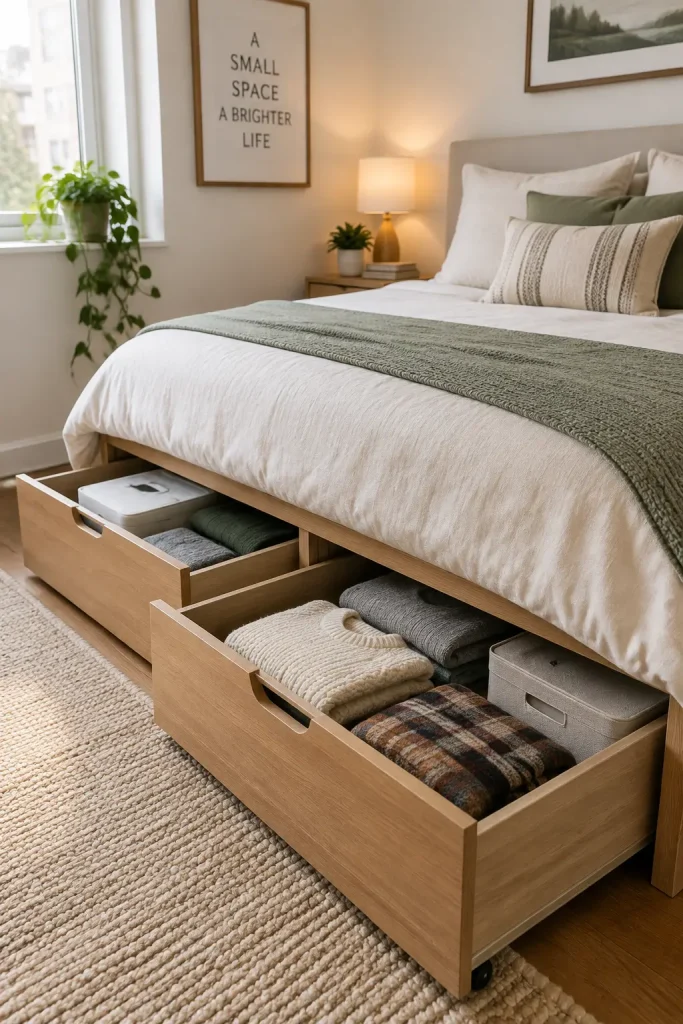
Under-bed storage drawers turn unused space beneath the mattress into concealed closet capacity. Choose smooth-rolling drawers with lids or fabric bins that protect sweaters, coats, spare bedding, and other seasonal items from dust.
Measure the clearance beneath the bed before buying containers. Low-profile drawers work best under platform beds, while wheeled bins suit apartments with hard flooring. Label each drawer so seasonal clothing stays easy to retrieve.
A bed with built-in drawers creates the cleanest appearance, though separate containers provide more flexibility for renters. Clear plastic bins help locate items quickly, while opaque fabric drawers keep the bedroom looking calmer. Keep a small gap around each container so the drawers open without scraping walls or baseboards.
2) Install Wall-Mounted Floating Nightstands
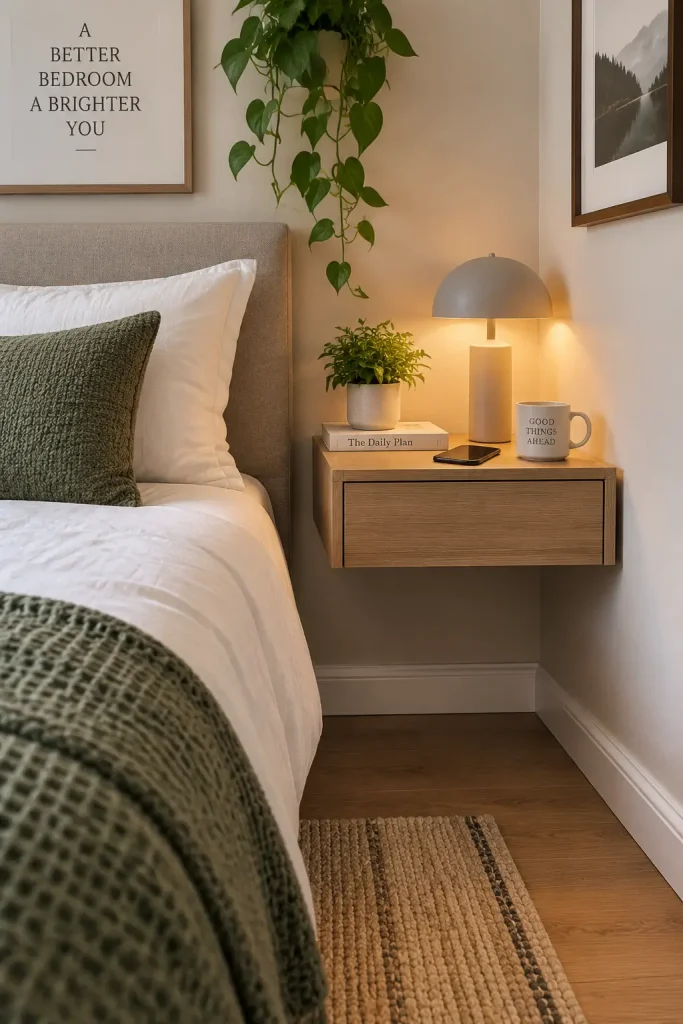
Wall-mounted floating nightstands preserve floor clearance and provide a landing place for a lamp, phone, book, or glass of water. Their open space underneath keeps the room easier to clean and makes a narrow walkway feel wider.
A simple wood shelf with a small front edge can serve as a budget nightstand. Renters can use a lightweight shelf with removable mounting strips when the wall surface and weight limit allow it. Heavier shelves need studs or landlord-approved anchors.
Mount each nightstand close to mattress height, leaving enough room for bedding and outlet access. A drawer model conceals chargers and small items, while an open shelf keeps the furniture visually light. A plug-in sconce above the shelf frees even more surface area.
3) Choose a Low-Profile Platform Bed
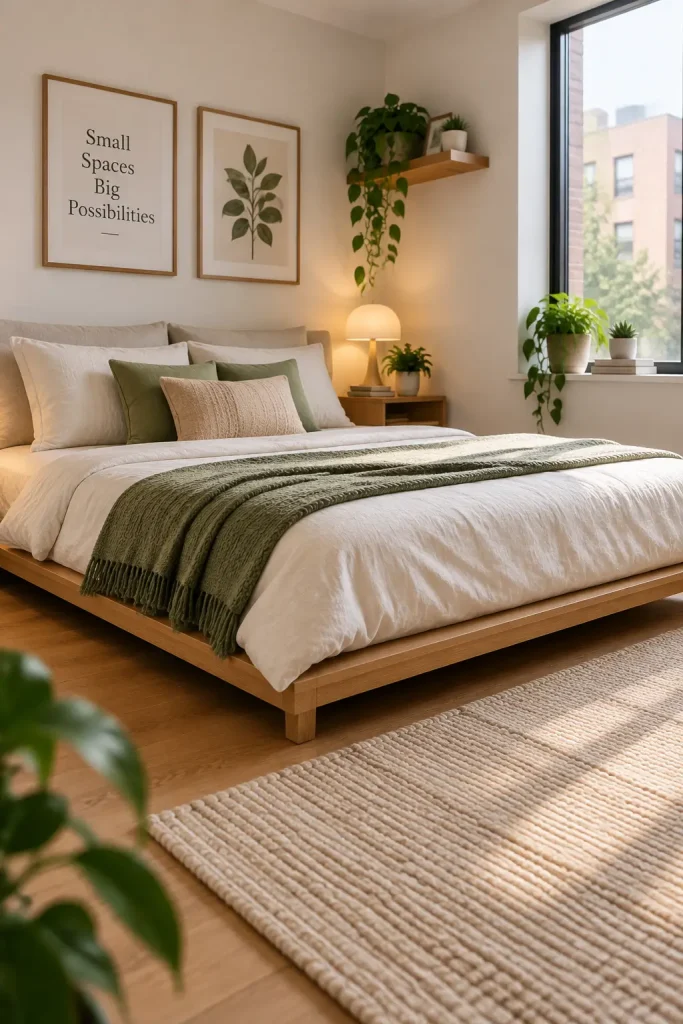
A low-profile platform bed keeps the bedroom’s visual center low, leaving more wall area and ceiling height in view. A slim frame also eliminates the bulk of a tall headboard and creates a cleaner footprint.
Select a platform with integrated drawers when clothing storage is limited. A simple wood or metal frame works well when the room already has enough storage and needs maximum floor visibility. Check the bed’s total width, including side rails, before moving it into a tight apartment bedroom.
A low platform can make getting in and out harder for some sleepers, especially when paired with a thick mattress. Test the combined height before purchase. Renters who need flexibility can choose a freestanding frame that moves without wall damage.
4) Add a Full-Length Mirror Opposite a Window
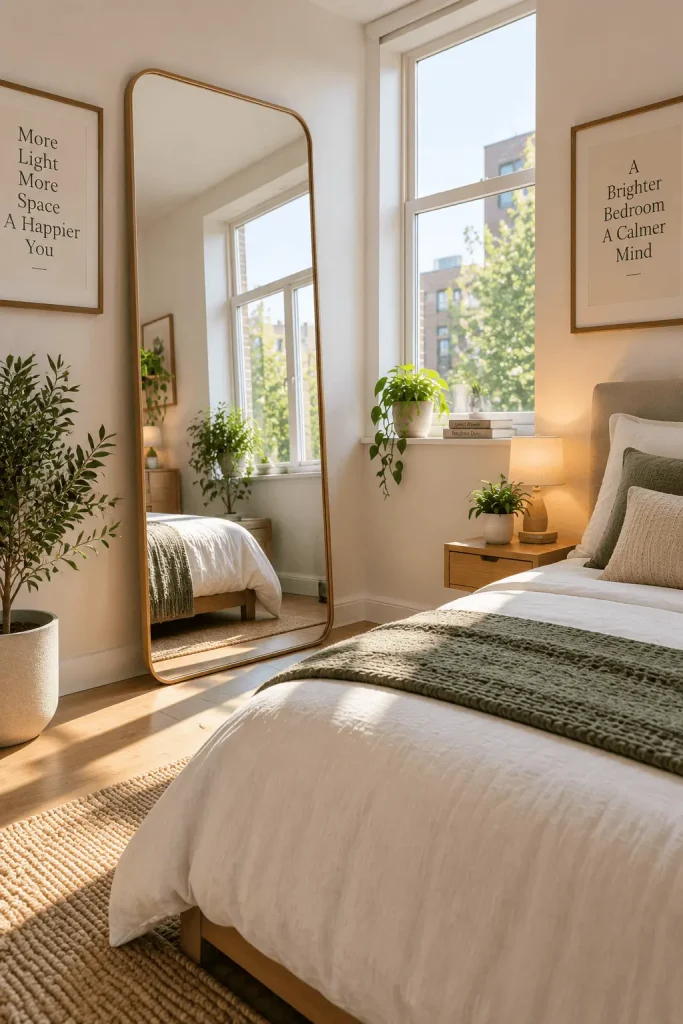
A full-length mirror opposite a window reflects daylight across the bedroom and creates a stronger sense of depth. Leaning the mirror against a wall avoids drilling, while an anchored model provides better safety in homes with pets or children.
Choose a narrow frame that matches the room’s hardware and place the mirror where it reflects the brightest part of the window. Avoid positioning it toward a messy closet or crowded storage area, since the reflection doubles that visual activity.
A mirrored wardrobe door provides the same light-reflecting function while adding storage. For a rental, an over-the-door mirror or freestanding cheval mirror offers a removable solution. Keep several inches of clearance around the mirror so it feels intentional instead of squeezed between furniture.
5) Hang Roman Shades Instead of Bulky Floor-Length Curtains
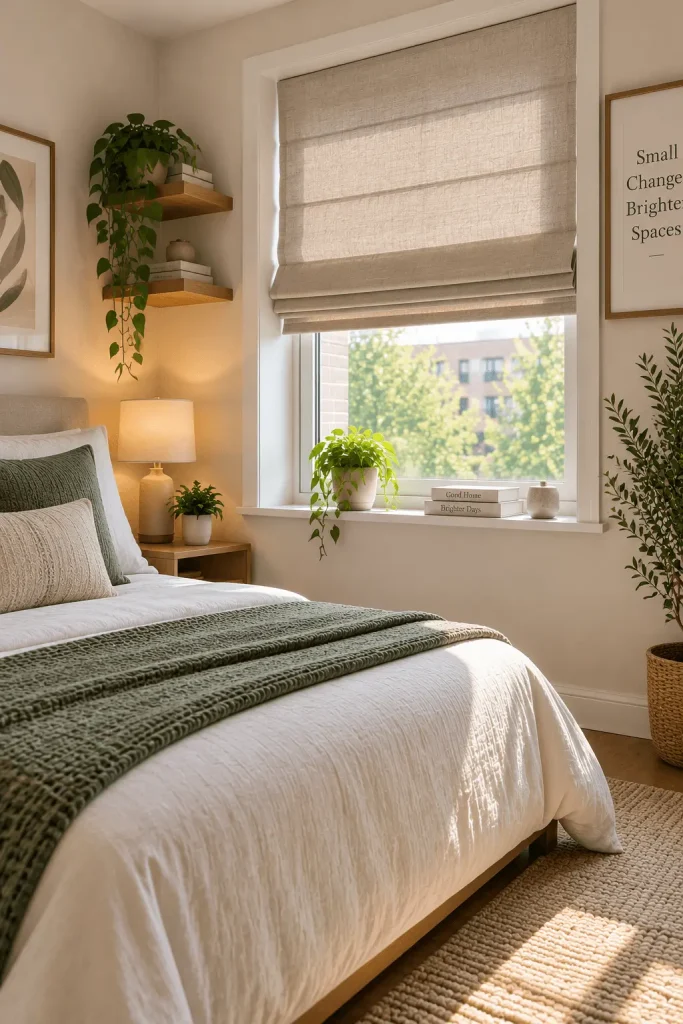
Roman shades keep window coverings close to the glass, preserving wall and floor space around the bed. Their tailored folds add softness without creating a heavy curtain stack in a narrow room.
Inside-mount shades provide the most compact fit when the window frame is deep enough. Outside-mount shades cover more of the wall and help block light around the edges. Measure carefully, especially in older apartments with uneven window trim.
Cordless shades improve safety and create a cleaner line. Renters can use tension-mounted shades when the window design supports them, or choose adhesive brackets approved for the product’s weight. A light-filtering fabric brings in daylight, while a room-darkening liner supports better sleep for bedrooms facing bright streets.
6) Build Floor-to-Ceiling Shelving Around the Bed
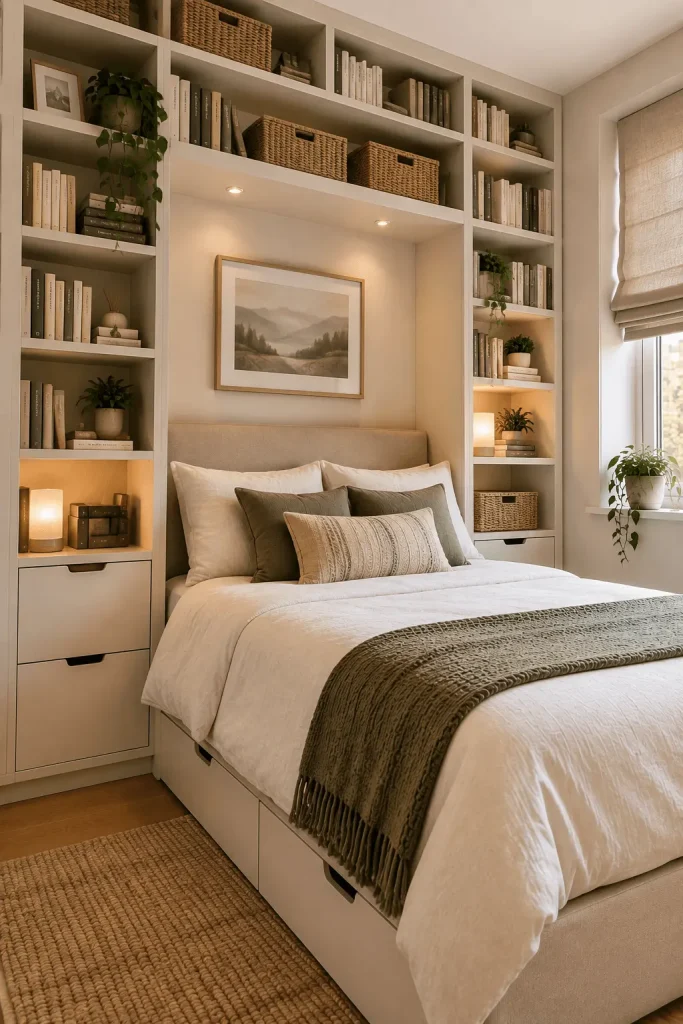
Floor-to-ceiling shelving around the bed uses vertical space for books, folded clothing, baskets, and display items. A shallow configuration keeps the sleeping area from feeling enclosed while framing the bed as the room’s main zone.
Freestanding bookcases create a renter-friendly version of built-in storage. Secure tall units to studs or approved anchors to prevent tipping, particularly when they stand above or beside the bed. Leave ventilation space around heating vents and avoid blocking windows or exits.
Closed cabinets on lower shelves hide less attractive items, while open shelves near the ceiling hold lighter objects. Matching baskets create visual order without requiring custom carpentry. A narrow bridge shelf above the bed needs careful installation and enough head clearance for safe movement.
7) Style a Tall, Narrow Bookcase for Vertical Storage
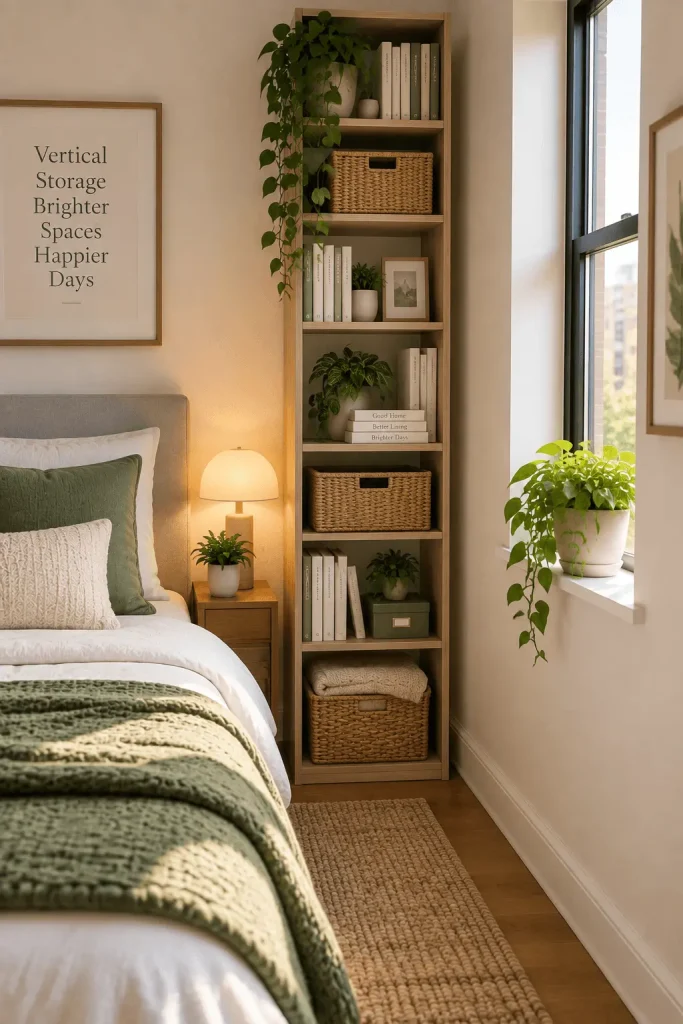
A tall, narrow bookcase adds storage without consuming the footprint of a wide dresser. It can hold folded garments, reading material, baskets, and a small number of decorative objects beside a door or in an unused corner.
Select a unit no wider than the available wall allows, then reserve its lowest shelf for heavier items. Keep frequently used belongings between waist and eye level. Matching bins on upper shelves reduce dust and make open storage look more controlled.
A bookcase with adjustable shelves adapts as storage needs change. Freestanding furniture suits most rentals, though tall pieces require anti-tip hardware. When drilling is restricted, a tension safety strap or landlord-approved attachment offers added stability. Maintain a clear path to the bed and closet.
8) Paint Walls in Light-Reflecting Sage, White, or Soft Blue
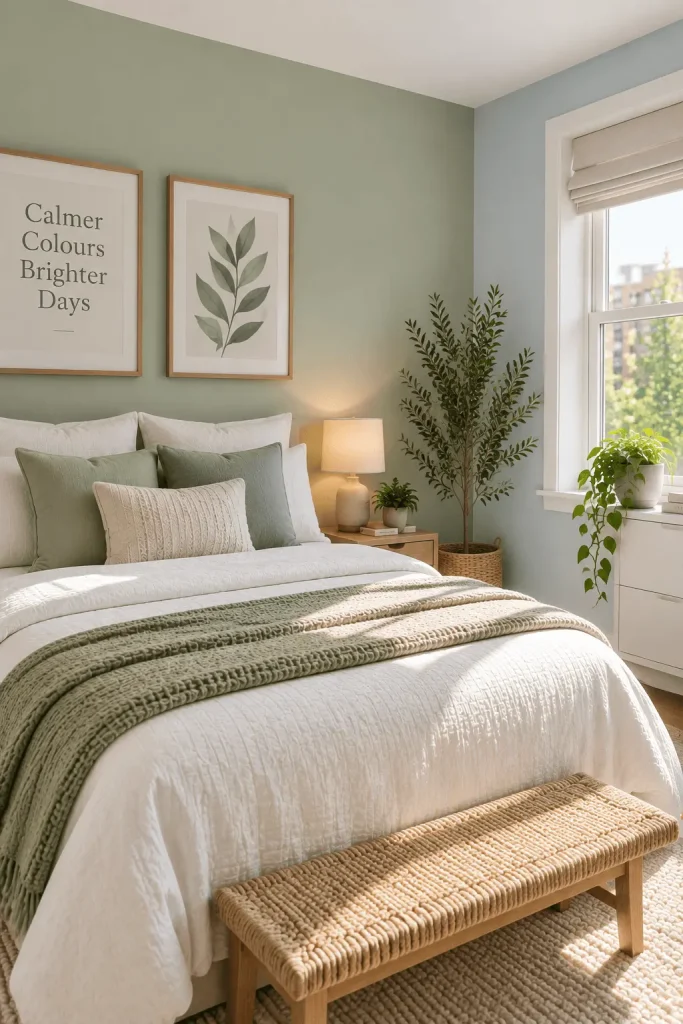
Light-reflecting sage, white, and soft blue help bounce daylight around a small bedroom and create a calmer visual field. Matte or eggshell paint reduces glare while keeping walls easy to maintain.
White gives the strongest sense of openness, while soft blue adds cool depth. Pale sage brings color without making the walls feel heavy. Use one shade across the walls and trim when possible to reduce visual breaks and make the room feel more continuous.
Renters should confirm paint rules before starting. Peel-and-stick wallpaper in a light tone offers a removable accent, provided the product suits the wall finish. Sample paint near the window and under evening lighting because apartment bulbs can shift pale colors toward gray, green, or yellow.
9) Use One Oversized Statement Artwork Above the Bed
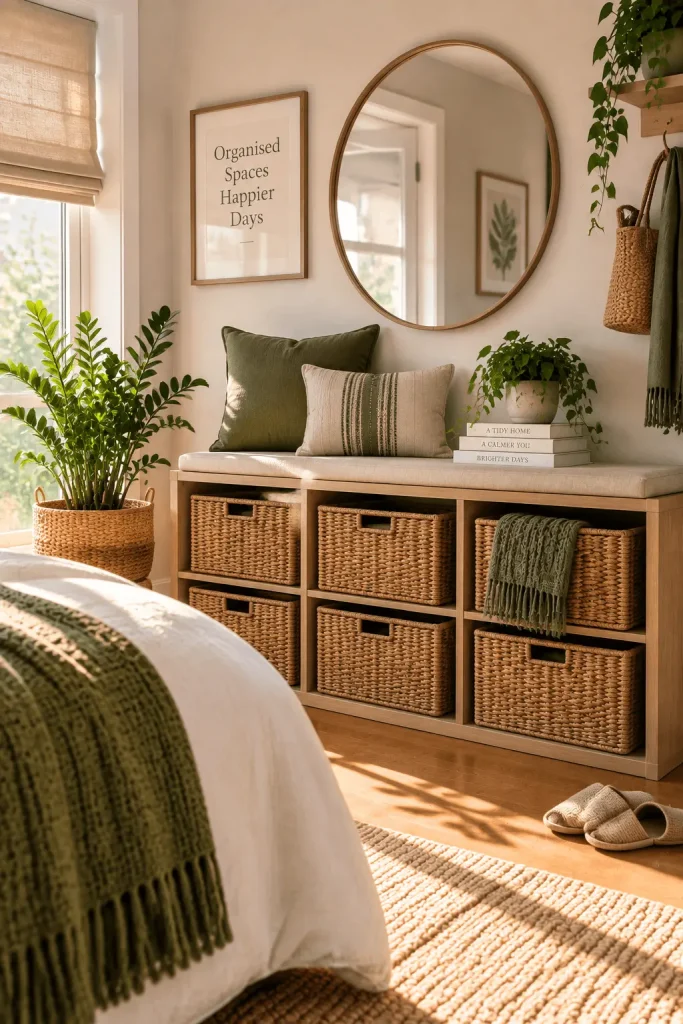
One oversized artwork piece above the bed creates a clear focal point without filling the room with small frames. A broad horizontal print can visually anchor the mattress and reduce the need for a bulky headboard.
Choose artwork with a simple palette that repeats one wall or bedding color. Keep the lower edge high enough to protect the frame from pillows, while maintaining a balanced gap above the bed. Lightweight canvas or poster frames reduce the load on rental walls.
Adhesive picture-hanging strips suit lightweight pieces when the package weight limit matches the artwork. Heavier frames need a stud, approved anchor, or freestanding picture ledge. A single large piece also makes future decorating easier because the room has one defined visual center.
How to Make a Small Apartment Bedroom Feel Larger
A small apartment bedroom feels larger when its floor remains open, storage rises vertically, and the eye follows a limited color palette. Place the bed where it leaves a direct walking route, then use mirrors, window light, and slim furniture to support that layout.
| Decor Idea | Main Benefit | Space Impact | Best For |
|---|---|---|---|
| Under-bed storage drawers | Creates hidden storage space | Uses unused floor area | Seasonal clothes & bedding |
| Floating nightstands | Adds bedside function | Keeps floor clear | Small walkways |
| Low-profile platform bed | Creates cleaner visual space | Makes ceilings feel taller | Tiny bedrooms |
| Full-length mirror | Reflects light and depth | Makes rooms feel larger | Dark apartments |
| Roman shades | Provides window coverage | Saves wall and floor space | Narrow bedrooms |
| Floor-to-ceiling shelving | Adds vertical storage | Uses wall height | Books, clothing & baskets |
| Tall narrow bookcase | Adds storage without bulk | Uses unused corners | Compact apartments |
| Light-reflecting wall colours | Improves brightness | Creates open feeling | Small dark rooms |
| Oversized statement artwork | Creates a focal point | Reduces visual clutter | Minimal decor styles |
Which furniture proportions work best in a small bedroom?
Low, narrow, and tall furniture proportions work best in a small bedroom. A platform bed, floating nightstand, slim dresser, and narrow bookcase preserve walking space while using the room’s height.
Measure furniture depth as carefully as width. A shallow dresser may hold less per drawer, yet it keeps doors, closets, and pathways usable. Leave enough clearance for drawers and closet doors to open fully.
How can lighting improve a cramped bedroom?
Layered lighting makes a cramped bedroom feel more open and functional. Use a ceiling fixture for general light, a wall sconce or plug-in lamp for bedside use, and a small warm lamp where the room needs softer evening light.
Choose fixtures with compact profiles and position them to avoid blocking the mirror or window. Light-colored shades spread illumination across walls, while dimmable bulbs let the bedroom shift from task lighting to restful lighting without adding more fixtures.
What should you remove first to reduce visual clutter?
Unused floor furniture should be removed first, especially extra chairs, bulky hampers, and wide bedside tables. Then clear visible surfaces and move seasonal belongings into under-bed drawers or labeled upper-shelf bins.
Keep one open surface for daily essentials and group small items in a tray. Fewer visible objects make the storage system easier to maintain and give the room’s main furniture a clearer shape.
Frequently Asked Questions
What is the best bed for a very small apartment bedroom?
A low-profile platform bed with built-in drawers is the strongest choice for a very small apartment bedroom. It combines a slim visual footprint with concealed storage, while a Murphy bed suits rooms that need daytime floor space for work or other activities.
How can two people arrange furniture in a small bedroom?
Two people should center the bed on the longest usable wall and keep a clear route on at least one side and at the foot. Floating nightstands, shared under-bed drawers, and a tall bookcase reduce the need for duplicate furniture.
What colors make a tiny bedroom look bigger?
Soft white, pale blue, and light sage make a tiny bedroom look bigger by reflecting daylight and reducing sharp visual breaks. Use a consistent wall and trim color, then add deeper tones through bedding, artwork, or a small accent item.