

A compact bedroom window shapes daylight, airflow, privacy, and usable wall space. The right treatment can make the room feel wider while keeping furniture clear of the sill and opening path.
A light-filtering shade, a slim curtain, or privacy film usually delivers the best balance of brightness and seclusion in a small bedroom. Frame color, mounting height, and window clearance also affect how open the room feels.
Choose Your Small Bedroom Window Solution
Need More Light?
Use sheer linen curtains, white cellular shades, mirrors, or clear upper window sections to spread daylight.
Need More Privacy?
Choose frosted film, Roman shades, top-down blinds, or layered curtains without blocking natural light.
Need More Space?
Use sliding windows, slim shades, floating shelves, and compact treatments that protect floor area.
Need More Style?
Add window seats, soft fabrics, black frames, or architectural details to create a focal point.
1) Sheer Linen Curtains on a Single Small Window
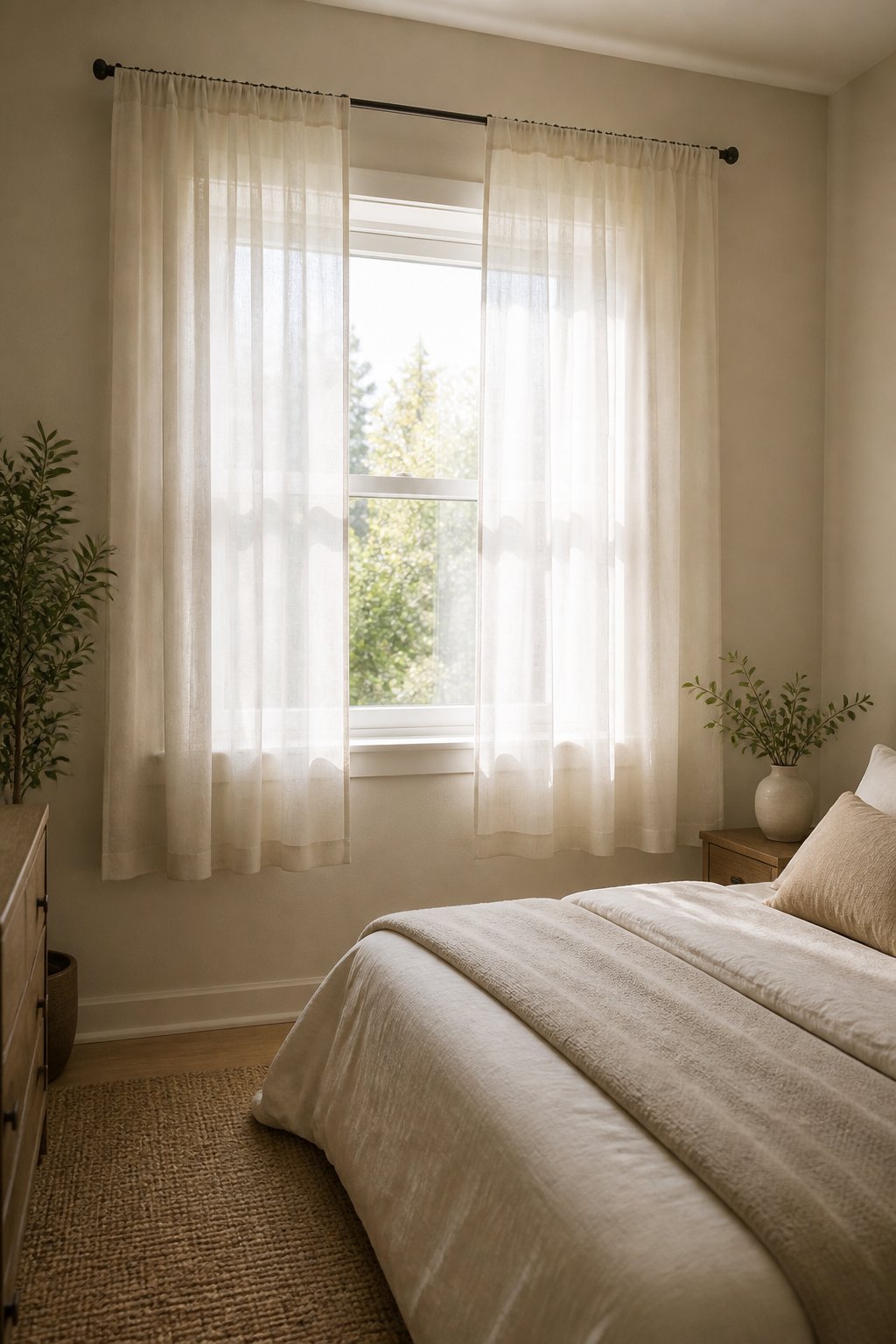
Sheer linen curtains soften daylight while preserving an airy sightline through a compact window. Mounting the rod several inches above and beyond the frame makes the opening look taller and lets panels stack against the wall.
White, ivory, and pale gray reflect more light than deep colors. A blackout roller behind the linen adds sleep privacy for renters who need flexible control. Keep the fabric clear of a radiator and check that the panels do not obstruct the sash.
2) Top-Hinged Awning Window Above the Bed
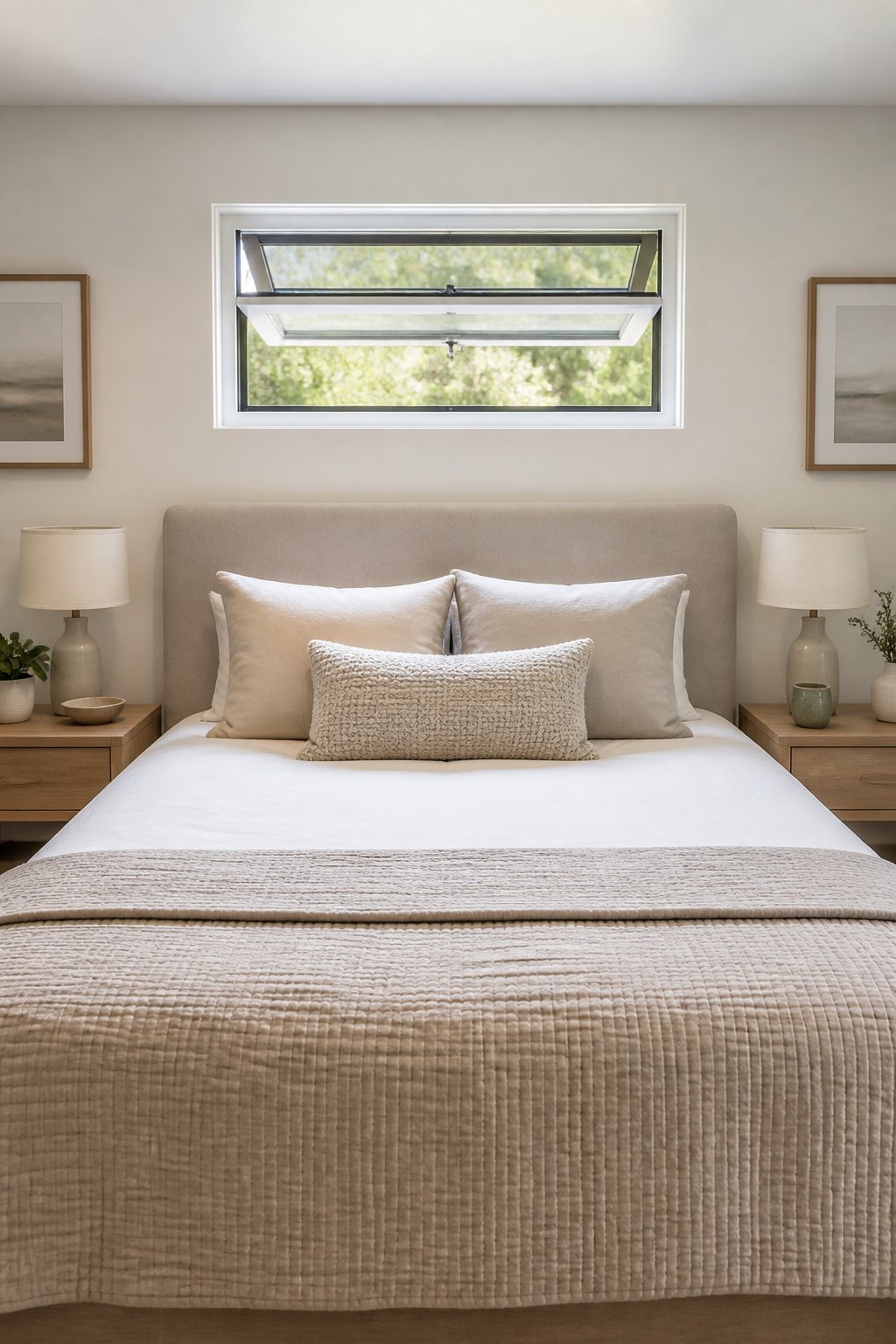
A top-hinged awning window works well above a bed because its outward-opening sash needs little interior clearance. The angled glass admits air during light rain and places the opening higher on the wall, which improves privacy.
This design suits a renovation or new build more than a rental. A deep headboard or tall artwork can interfere with operation, so the bed should sit far enough below the sill for safe access and cleaning.
3) Space-Saving Horizontal Sliding Window
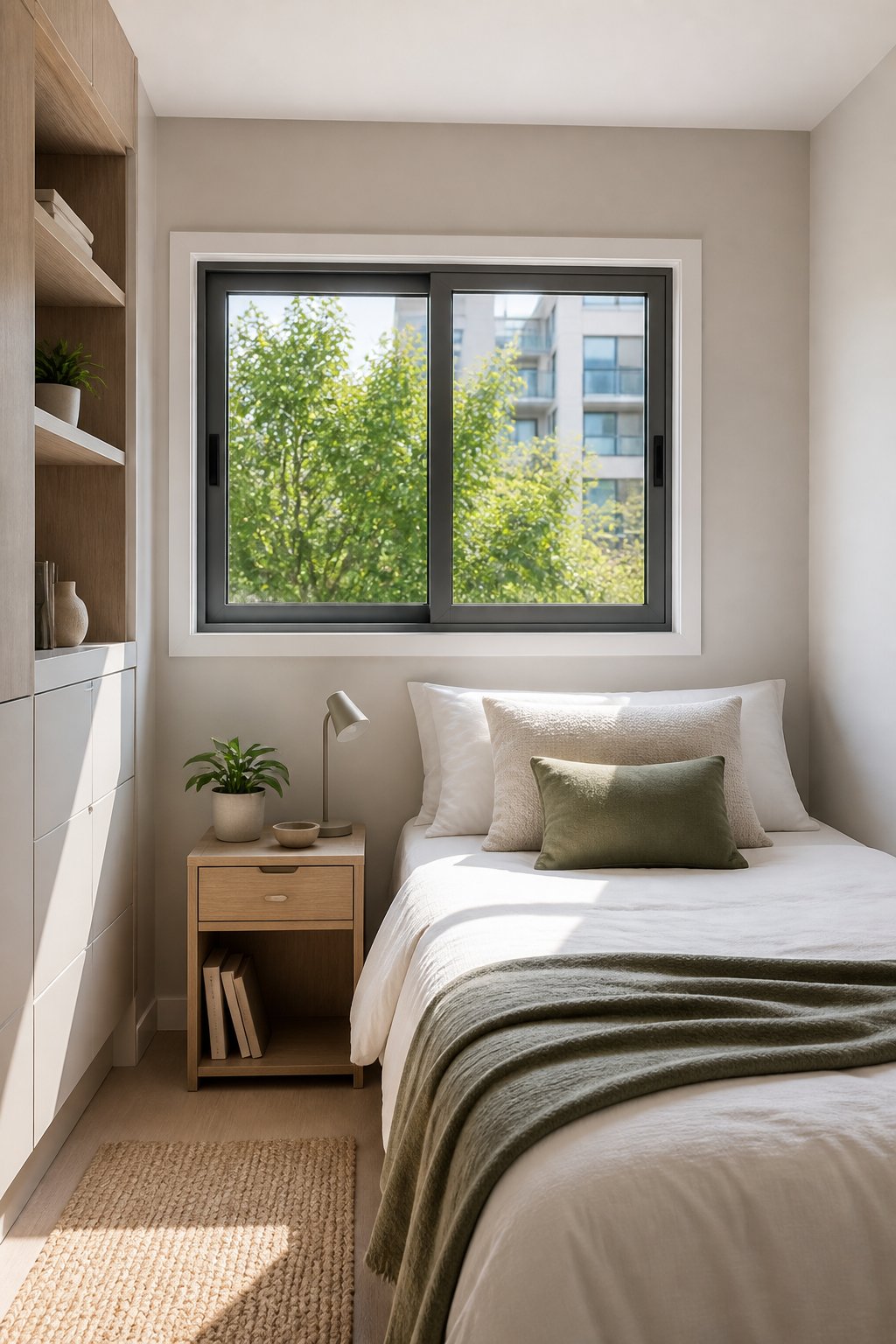
A horizontal sliding window preserves floor space because the sash moves within the frame. Its wide proportion spreads daylight across a short wall and pairs well with a low dresser or narrow desk below.
Sliding panels provide easy ventilation, though only part of the opening remains clear at one time. Use a slim roller shade or inside-mounted cellular shade to protect the opening without adding bulky hardware.
How The Right Window Design Changes A Small Bedroom
Without Planning
- Heavy curtains reduce daylight
- Furniture blocks window access
- Privacy solutions make rooms darker
- Window area feels disconnected
With Smart Design
- Light-filtering shades keep rooms bright
- Furniture placement protects clearance
- Privacy improves without losing daylight
- Window becomes a design feature
4) Frosted Privacy Window Film With a Clear Upper Band
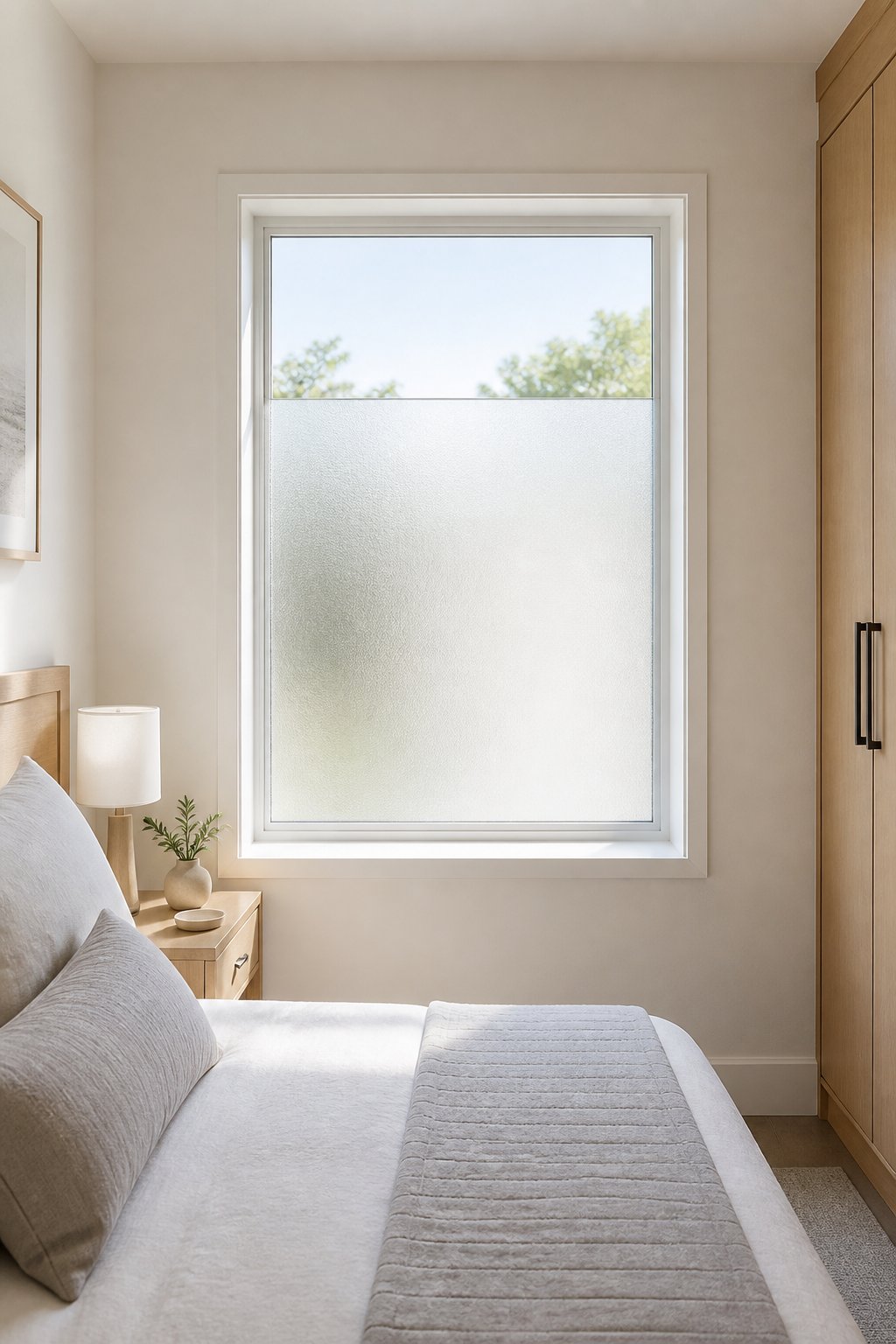
Frosted film with a clear upper band gives privacy at eye level while directing daylight into the room. The split treatment works well for street-facing bedrooms where full-height clear glass exposes the bed or dressing area.
Removable adhesive film suits many rentals and installs with soapy water, a squeegee, and careful trimming. The clear strip preserves sky views, while the frosted area softens glare. Curtains still provide nighttime privacy when interior lights turn on.
5) Tall Mirror Placed Opposite the Window
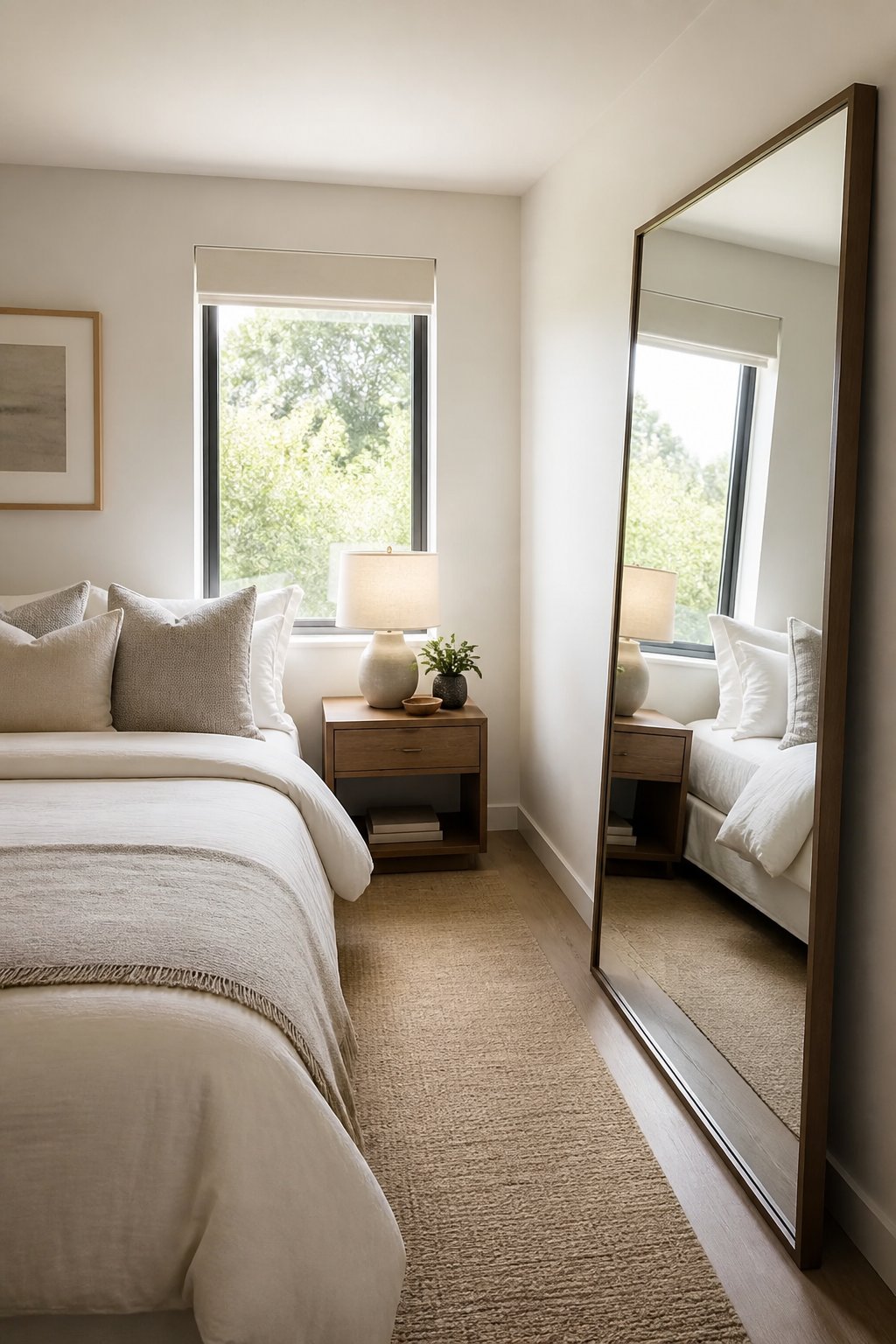
A tall mirror opposite the window redirects daylight into the bedroom and increases the sense of depth. Positioning the mirror on a side wall often gives a softer reflection than placing it directly across from harsh afternoon sun.
Choose a narrow, wall-secured frame that leaves walking space around the bed. The mirror reflects the view and window treatment, so a tidy sill and pale curtain create a calmer visual field.
6) Roman Shade Mounted Above the Window Frame
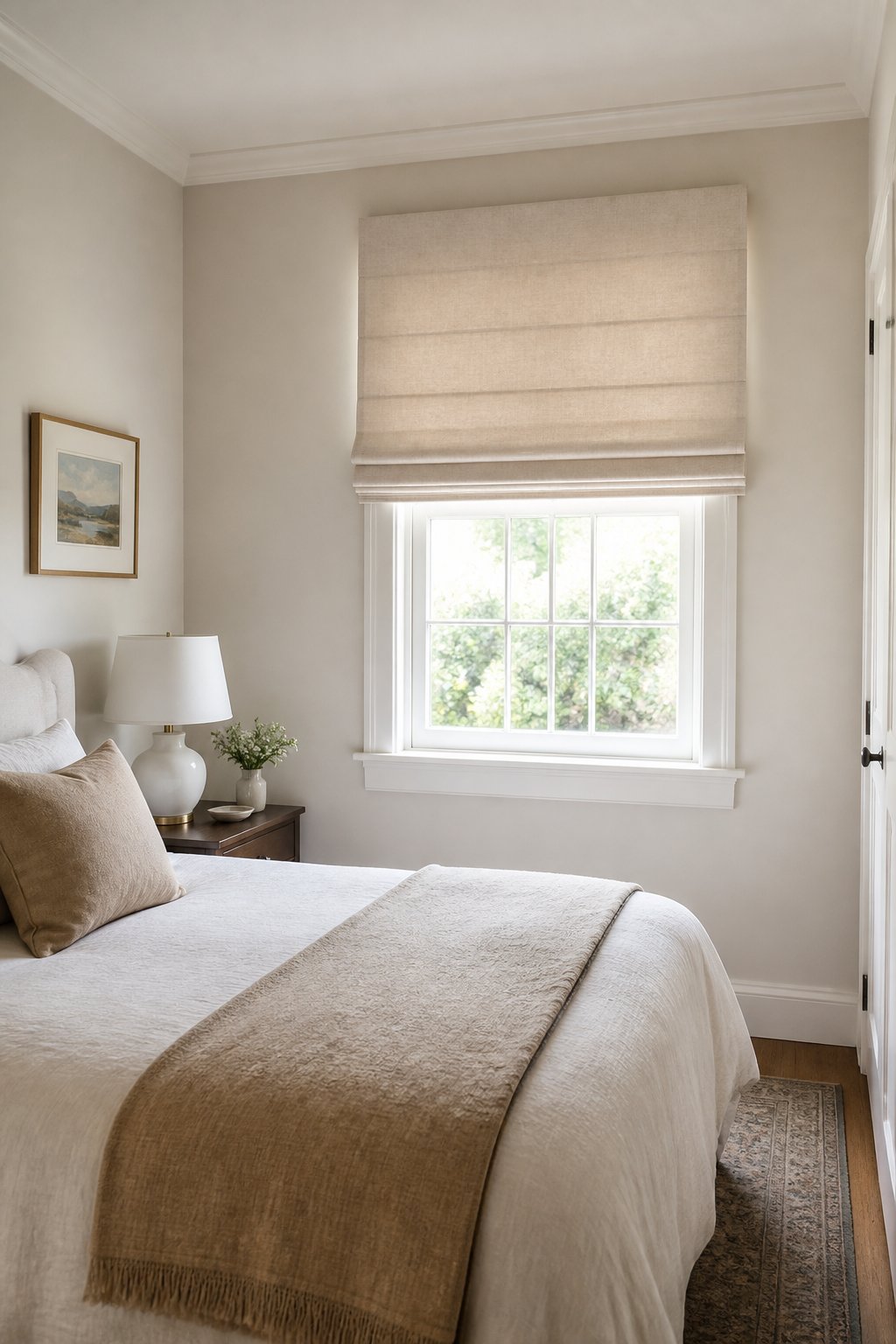
A Roman shade mounted above the frame adds tailored privacy while keeping fabric close to the wall. Raising the shade exposes more glass and draws the eye upward, which helps a low or narrow window feel better proportioned.
Light-filtering fabric maintains daytime brightness; a lined version improves sleep conditions. Confirm the shade clears the window handle, and use an inside mount when the sill has trim worth showing.
7) Built-In Window Seat With Drawer Storage
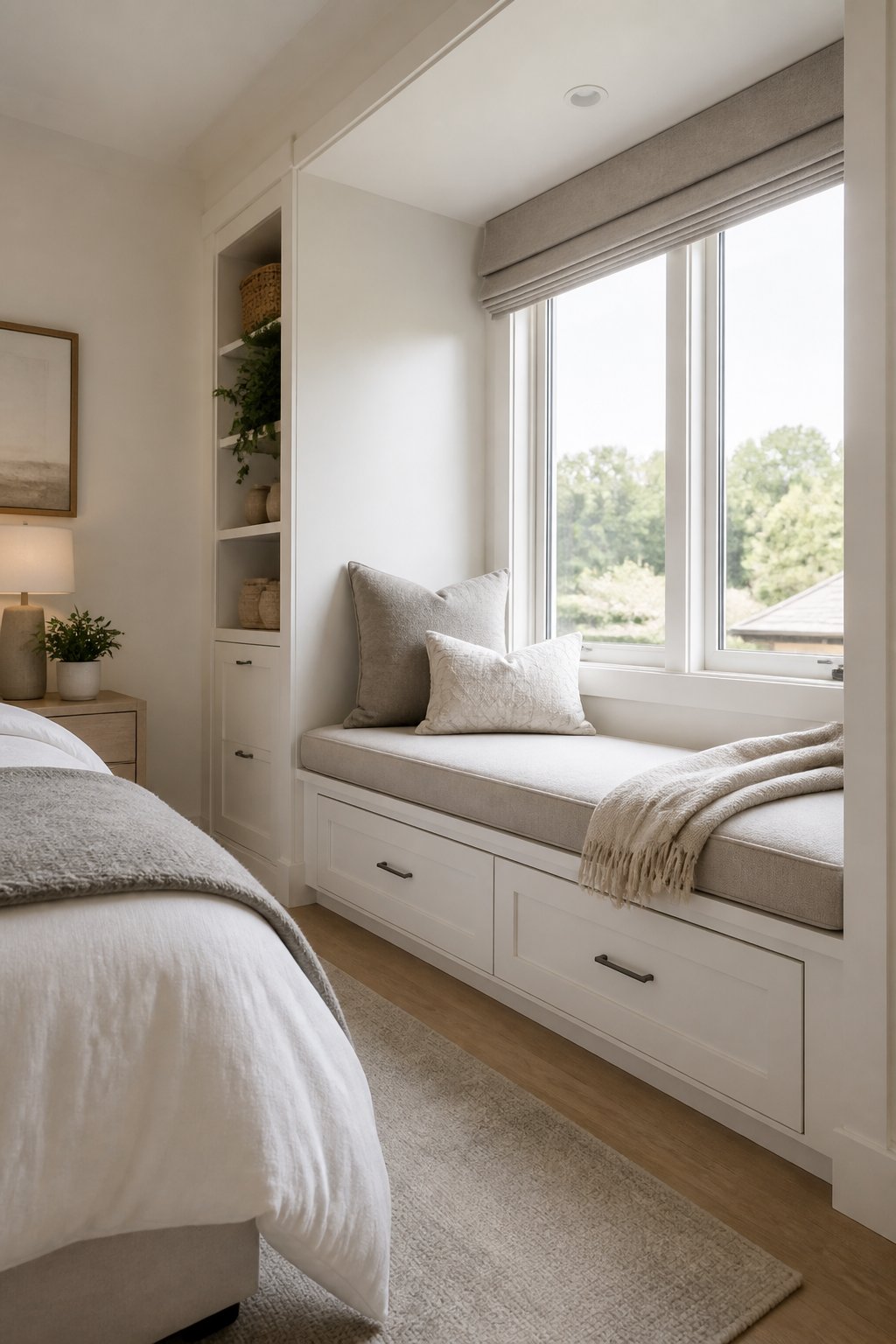
A built-in window seat turns unused space below a compact window into seating and concealed storage. Drawers hold bedding, books, or seasonal clothing while the cushion creates a bright reading spot.
This solution requires carpentry and careful attention to heat sources, sill height, and egress rules. A shallow bench preserves circulation, while washable upholstery handles daily use. Homeowners can match the seat to existing trim; renters need a freestanding storage bench.
8) Narrow Floating Shelf at the Window Sill
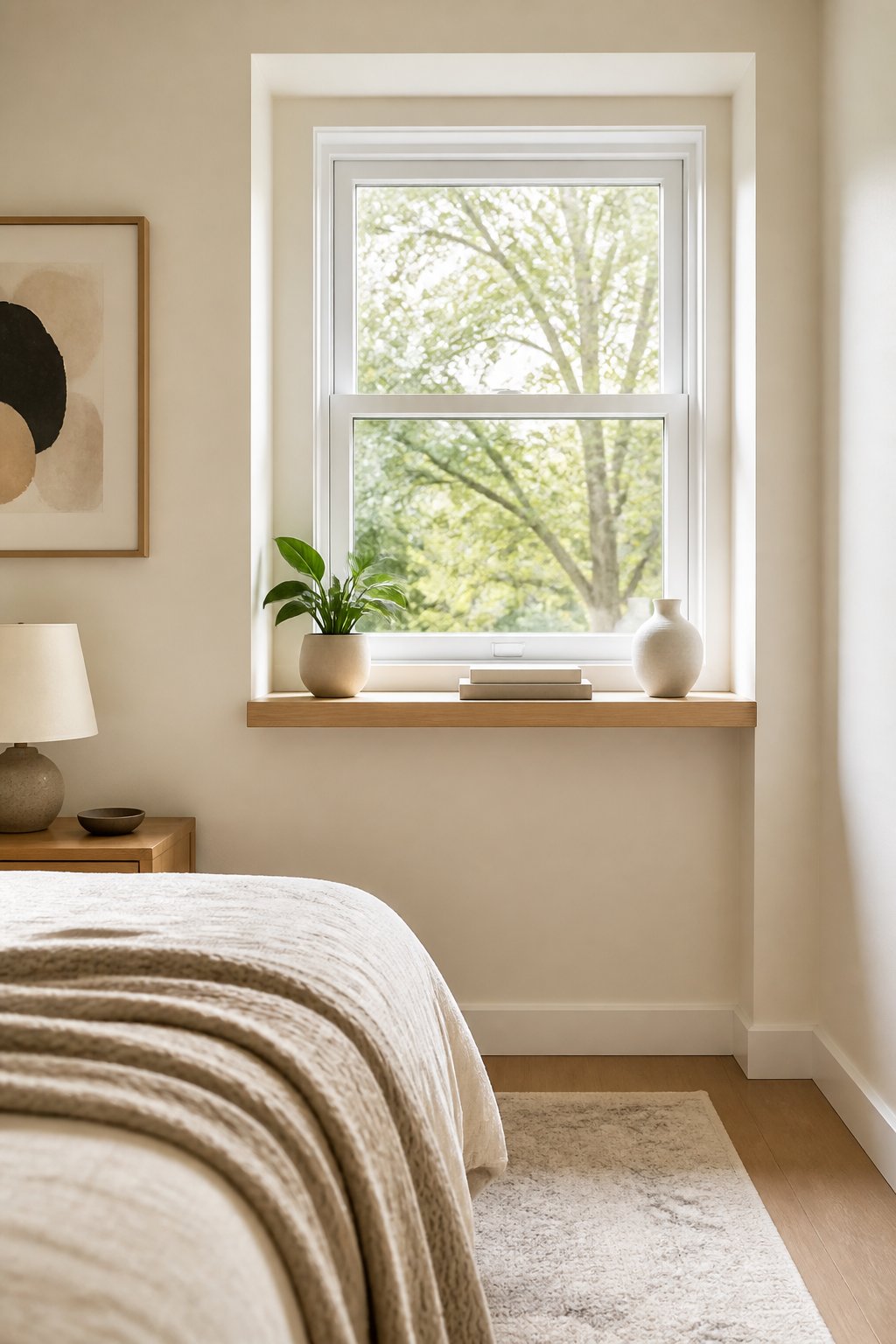
A narrow floating shelf adds display or bedside surface without consuming floor area. Installed below the sill, it holds a small lamp, a book, or a compact plant while keeping the window visually open.
Choose a shelf depth that preserves the window handle and opening path. Secure it to studs or proper anchors, especially above a bed. Renters can use a slim console or removable brackets when drilling is restricted.
9) White Cellular Shades for Insulation and Soft Light
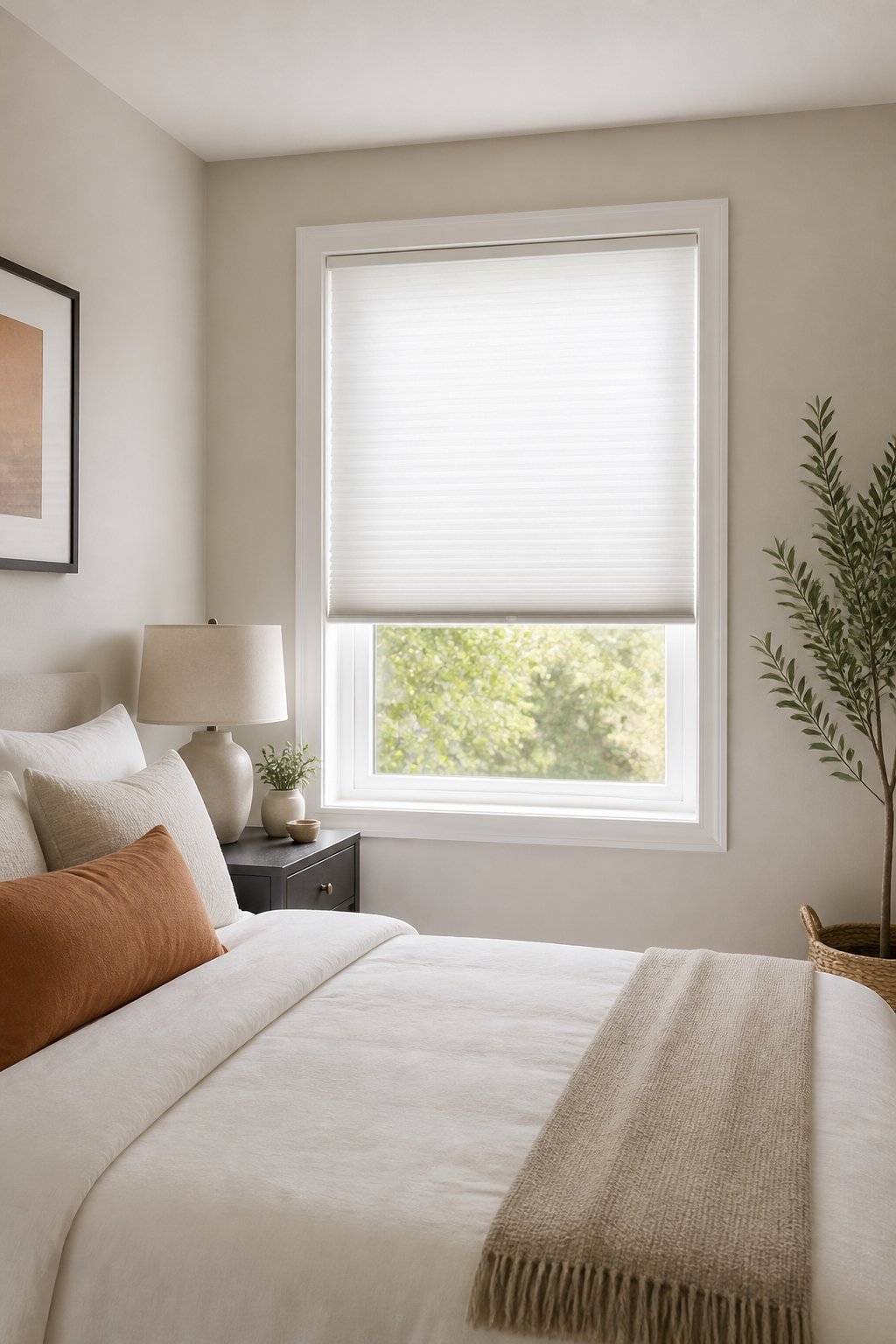
White cellular shades diffuse daylight and add a layer of insulation at the glass. Their honeycomb structure softens glare without requiring full curtains, which keeps a narrow wall clean.
A top-down, bottom-up style improves privacy while admitting light from above. Measure the recess carefully for an inside mount, and leave enough clearance for the shade to move past the handle. Pale fabric reflects light into the room.
10) Corner Window With Wall-Mounted Reading Lights
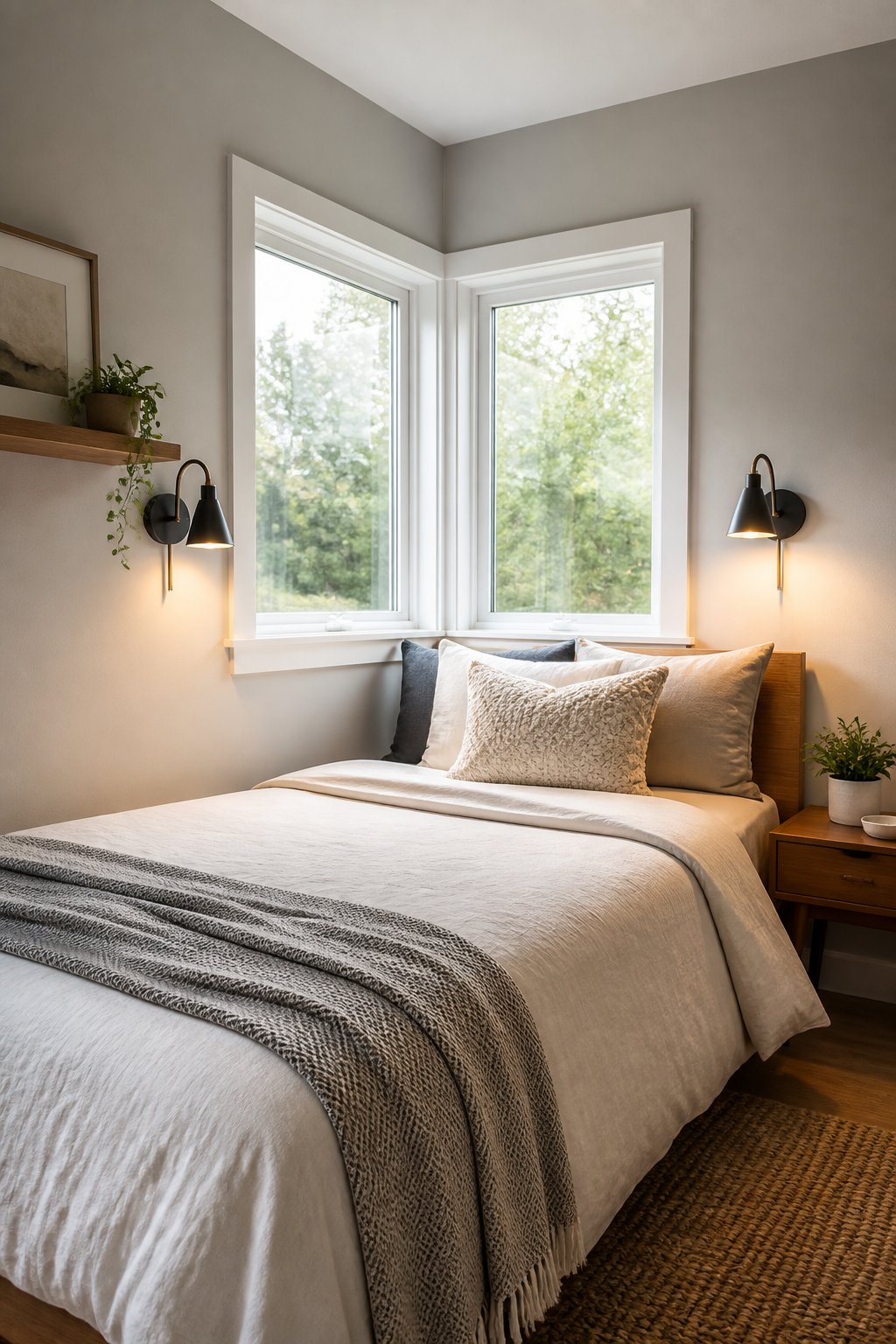
A corner window brings daylight from two directions and frees the main wall for the bed. Wall-mounted reading lights preserve nightstand space and keep the window zone visually light.
Use adjustable shades on each pane so privacy control matches the sun angle. Electrical placement requires planning during a renovation. In a rental, plug-in sconces and tension-mounted shades offer a lower-impact version.
11) Black-Framed Casement Window for a Modern Look
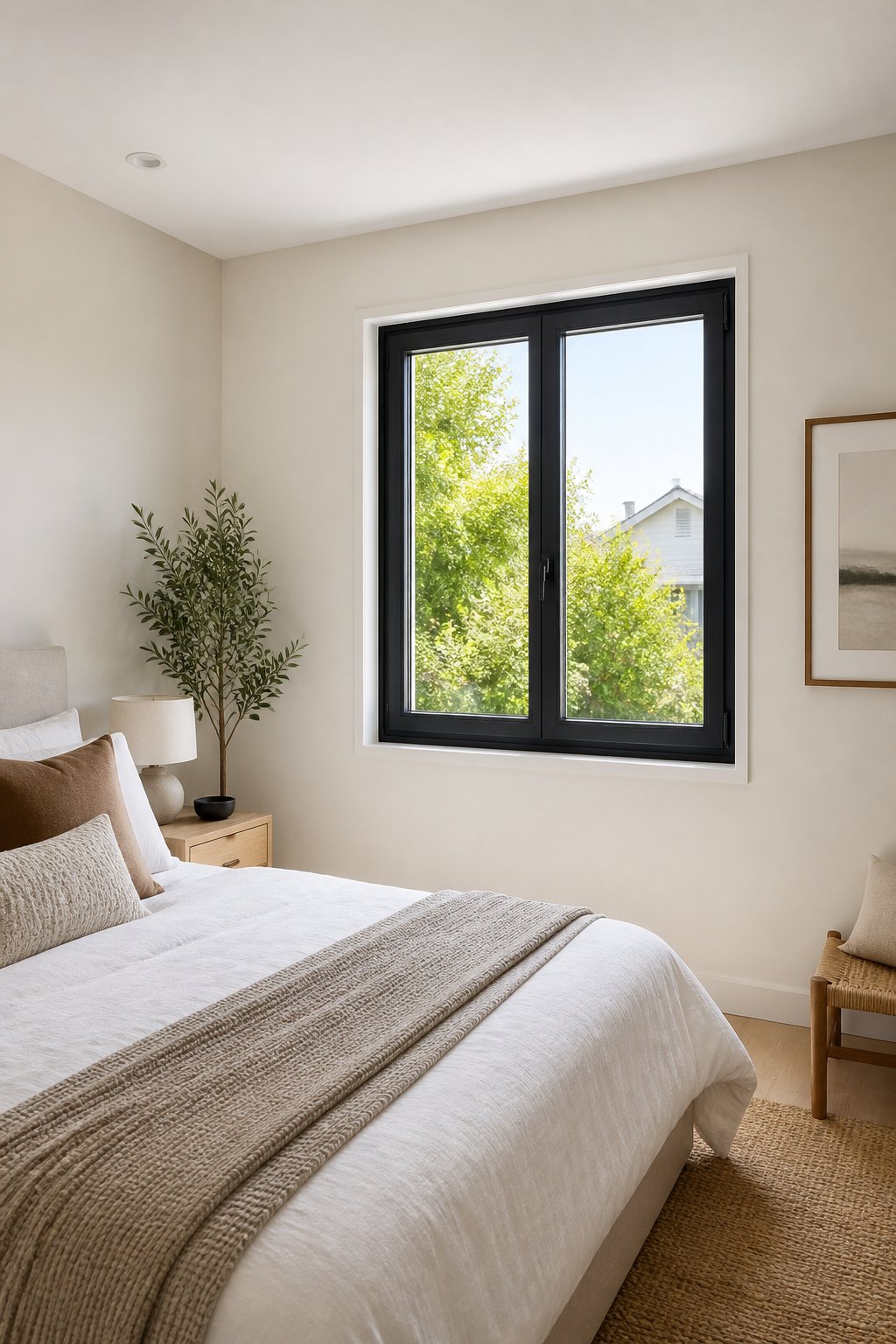
A black-framed casement window adds a strong outline to a small bedroom and opens outward for broad ventilation. The vertical frame suits a narrow wall and creates a clear architectural focal point.
The dark finish absorbs visual attention, so pale walls and simple window coverings keep the room balanced. Check exterior clearance before selecting this style, especially near a walkway, balcony, or neighboring building.
12) Bay Window Reading Nook With Under-Seat Storage
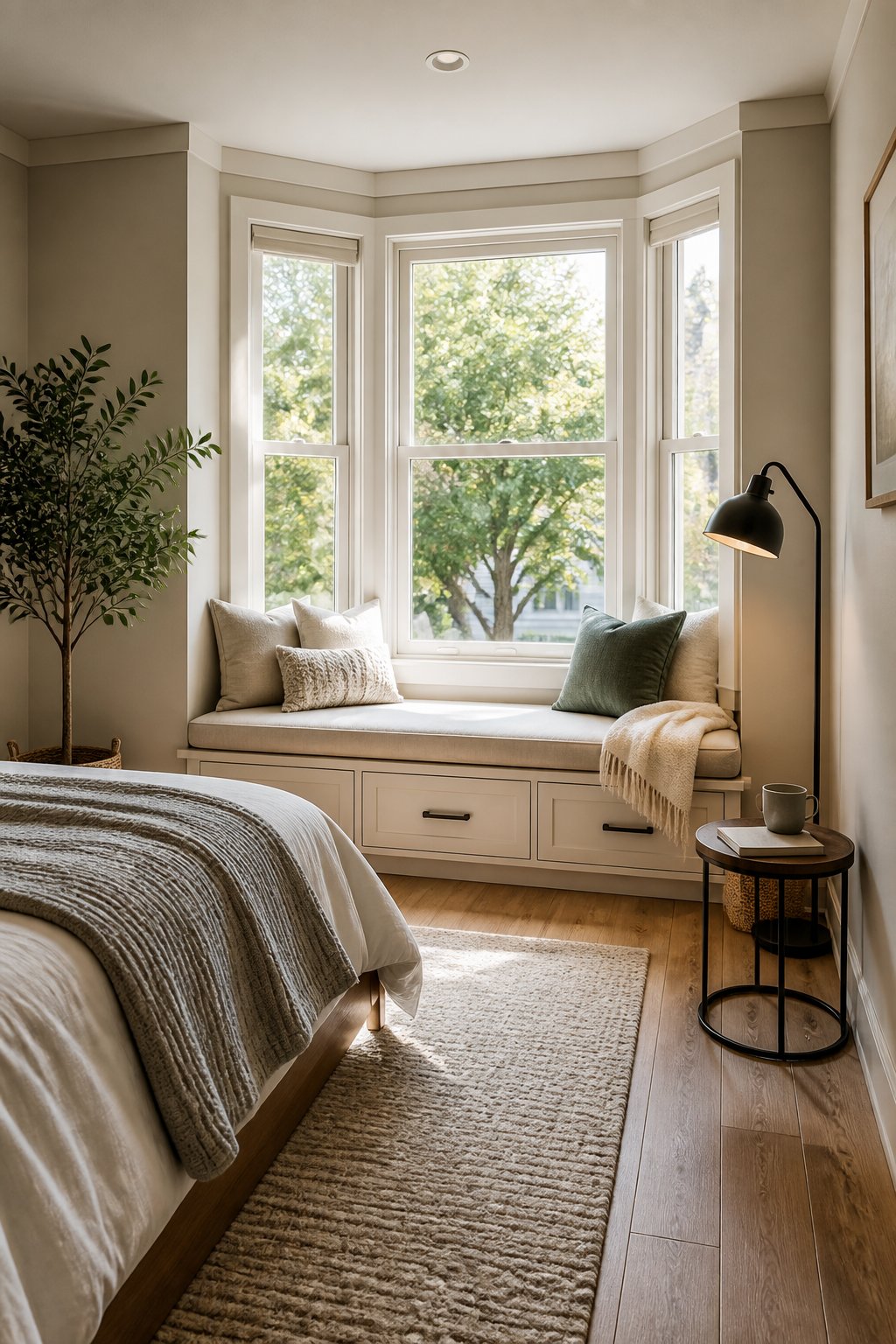
A small bay window creates extra wall depth for a reading nook and built-in storage. A fitted cushion follows the shape of the projection, while drawers keep blankets and books off the floor.
This design needs structural work and precise measurements around the sill, trim, and heating system. Light-filtering shades control glare across several panes. A freestanding bench can provide a similar function without changing the building envelope.
13) Small Arched Window With a Soft Fabric Shade
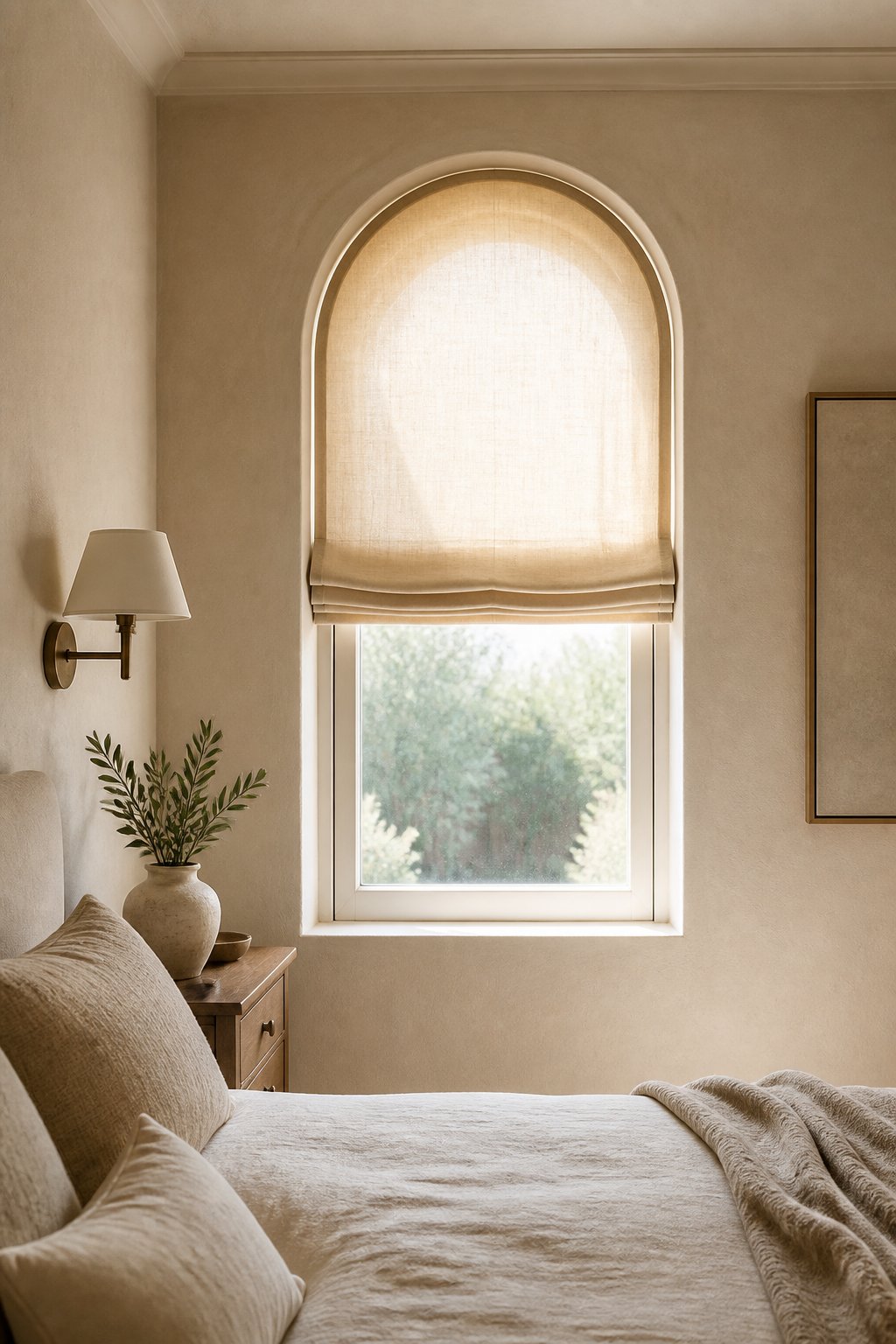
A small arched window adds character while a soft fabric shade controls glare and privacy. A shaped top treatment can follow the curve, while a straight lower shade covers the portion within reach.
Custom hardware costs more than standard roller shades, so measure the arch before ordering. Keep the surrounding wall quiet with pale paint and limited decoration. The curved frame works best when furniture stays below its spring line.
14) High Transom Window Above a Wardrobe
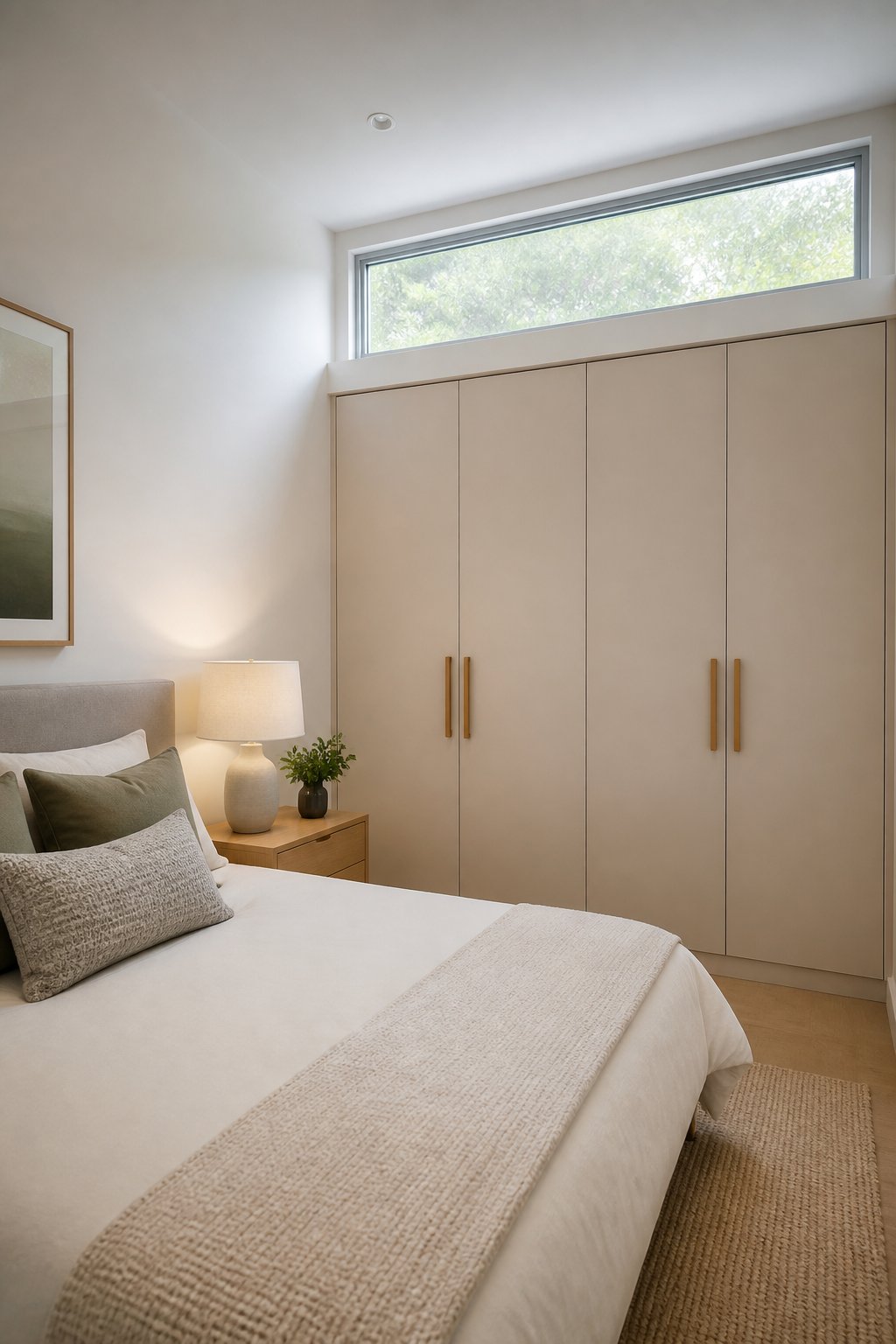
A high transom window brings daylight above a wardrobe while preserving valuable lower-wall storage. Its elevated position also limits direct sightlines into the bedroom, which supports privacy near a street or shared courtyard.
Use a slim roller shade if afternoon glare reaches the bed. Since the opening may sit beyond reach, choose a chain extension, motorized control, or a fixed privacy film. Keep the wardrobe doors clear of the frame and shade hardware.
15) Light-Filtering Roller Shade With Side Channels
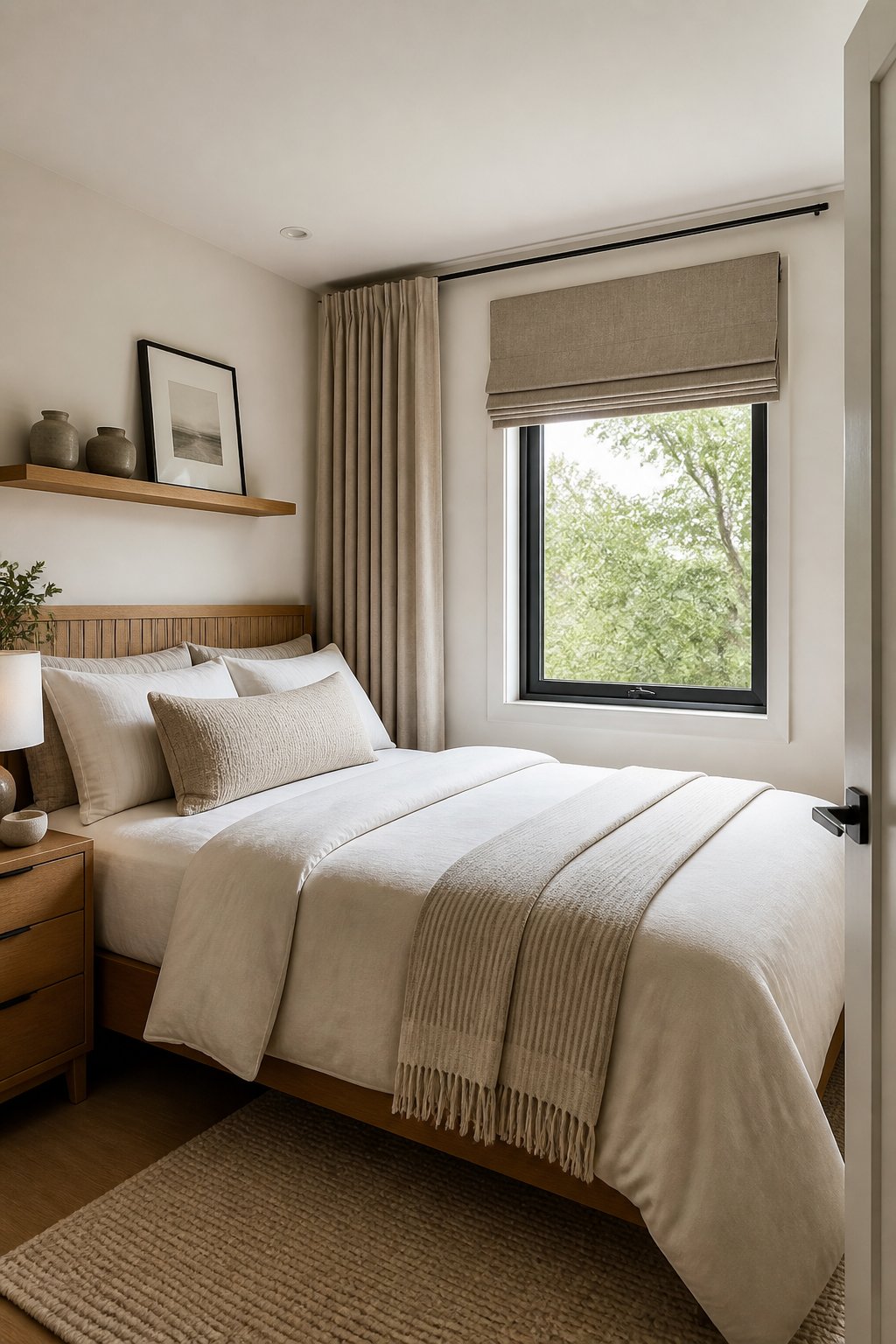
A light-filtering roller shade with side channels controls glare and reduces edge gaps along a compact window. The channels guide the fabric and improve privacy, especially when the window faces a close neighboring building.
A pale solar or translucent fabric keeps daylight present during the day. Side channels need accurate installation and a flat frame, so renters should confirm whether the brackets can be removed cleanly. Choose a cassette with a shallow profile to protect wall space.
Frequently Asked Questions
What curtains work best for a small bedroom window?
Sheer linen or cotton voile curtains work well because they filter daylight and keep the wall visually light. A blackout lining or separate roller shade adds nighttime privacy without requiring heavy panels.
Which bedroom window provides privacy while still letting in light?
Frosted film, a top-down cellular shade, and a high transom window provide strong privacy with useful daylight. A clear upper band on frosted film preserves sky light while covering the main sightline.
Which opening style fits the available clearance?
A sliding window suits tight interiors because the sash stays within the frame. An awning or casement window needs exterior clearance, while a fixed transom works where ventilation is less important than daylight and privacy.