
A small bedroom works best for two people when every item has a clear home and both partners can reach the storage they use daily.
The strongest small bedroom ideas for couples combine vertical storage, under-bed capacity, and narrow furniture that protects a usable path around the bed.
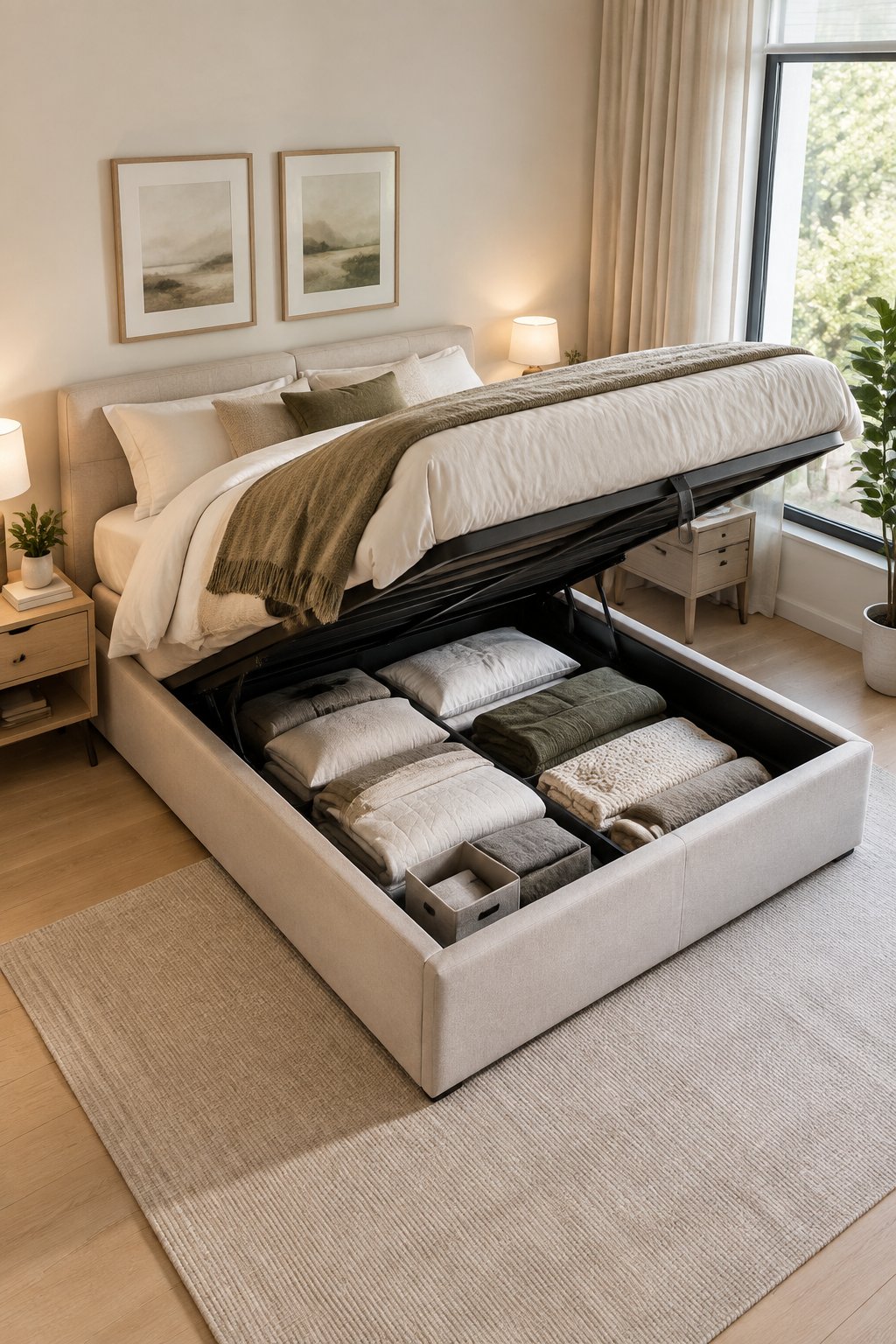
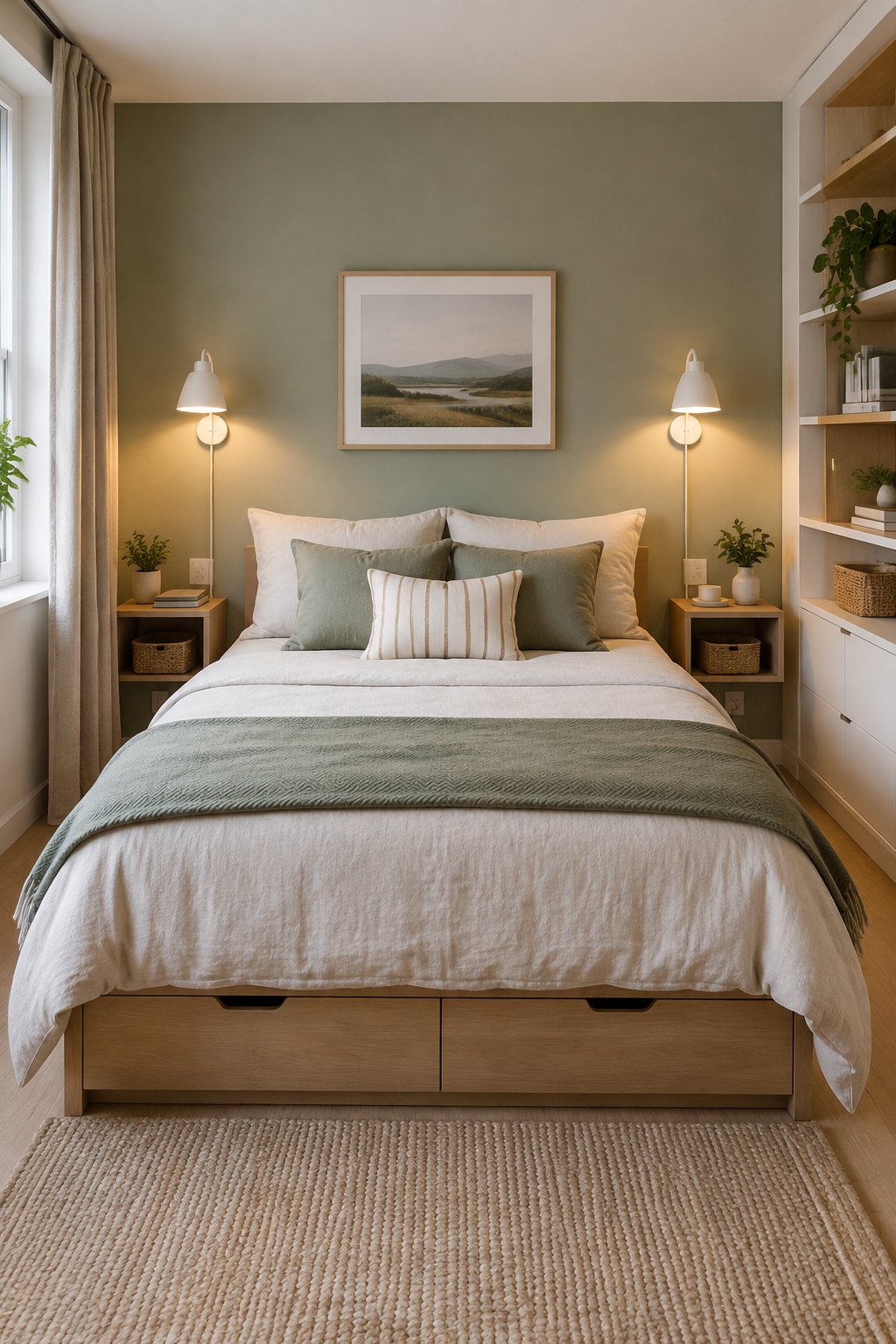
A lift-up storage bed is a strong starting point for couples with limited closet space because it turns the full footprint of the mattress into hidden storage.
Pair it with divided wardrobe zones, floating bedside shelves, and labeled containers so clothing, bedding, charging cables, and personal items stay easy to find.
1) Choose a Lift-Up Ottoman Storage Bed
A lift-up ottoman bed stores bulky items across the entire mattress footprint. It suits couples who need space for spare bedding, luggage, shoes, or seasonal clothing and who have limited closet capacity.
Use labeled soft bags or low boxes inside so both partners can reach their belongings. The trade-off is that the mattress must be lifted to access the compartment, making it best for items used weekly or seasonally.
2) Build a Floor-to-Ceiling IKEA PAX Wardrobe Wall
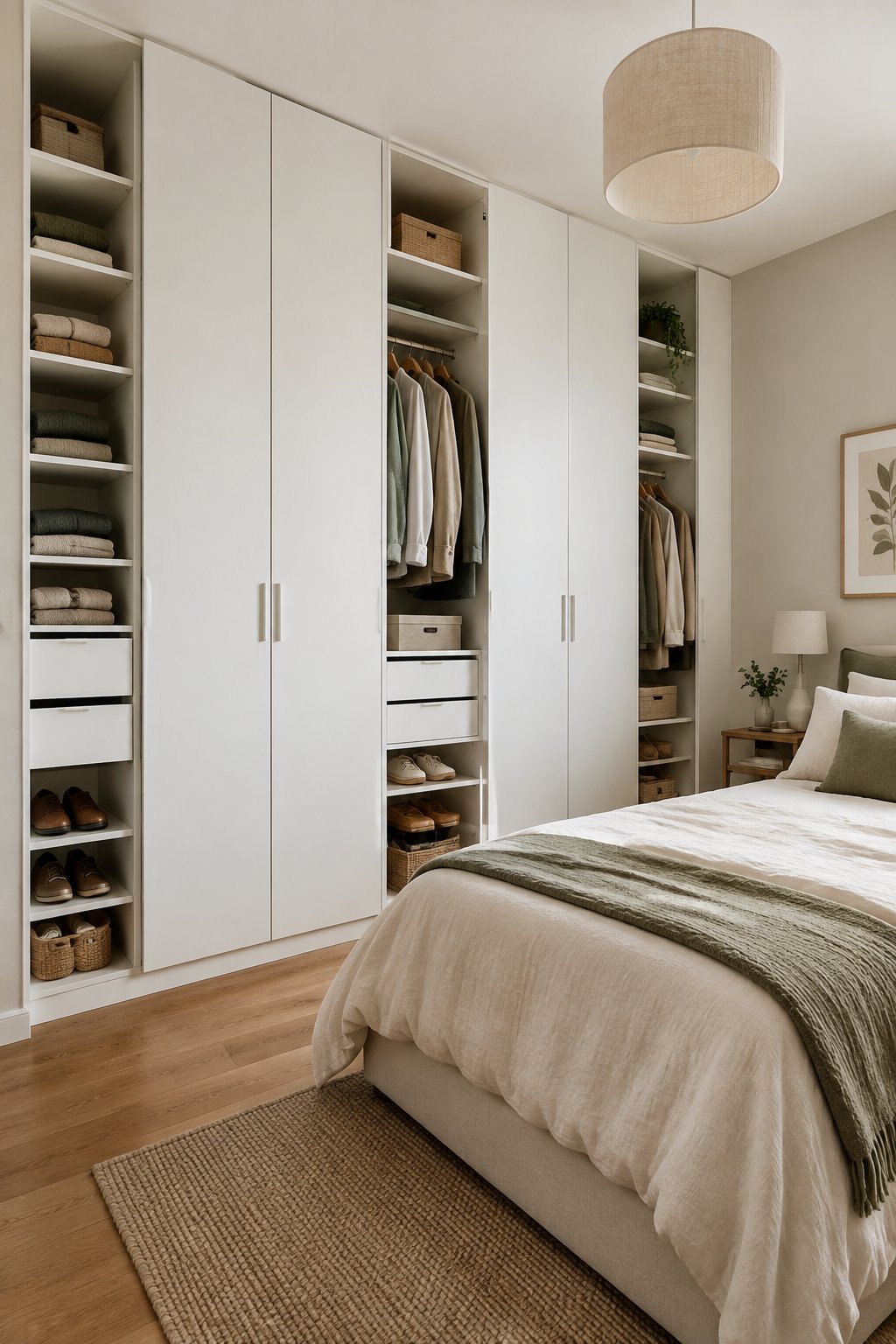
A floor-to-ceiling IKEA PAX wardrobe wall uses vertical space for two clearly divided clothing systems. Give each partner a matching bay with hanging space, drawers, adjustable shelves, and one shared section for linens.
Measure door swing, baseboards, and ceiling height before planning the frames. The trade-off is the fixed visual weight of a full wall, which feels lighter with matching fronts, pale finishes, and simple handles.
3) Install Wall-Mounted Bedside Shelves With Drawers
Wall-mounted bedside shelves with drawers keep phones, glasses, books, and chargers within reach while preserving floor clearance. Install one on each side of the bed at matching heights, with a cable opening behind each charging device.
Choose a drawer for private items and an open shelf for a lamp or book. The trade-off is reduced surface area compared with a full nightstand, so each partner needs a small daily-item limit.

4) Use a Storage Headboard With Individual Cubbies
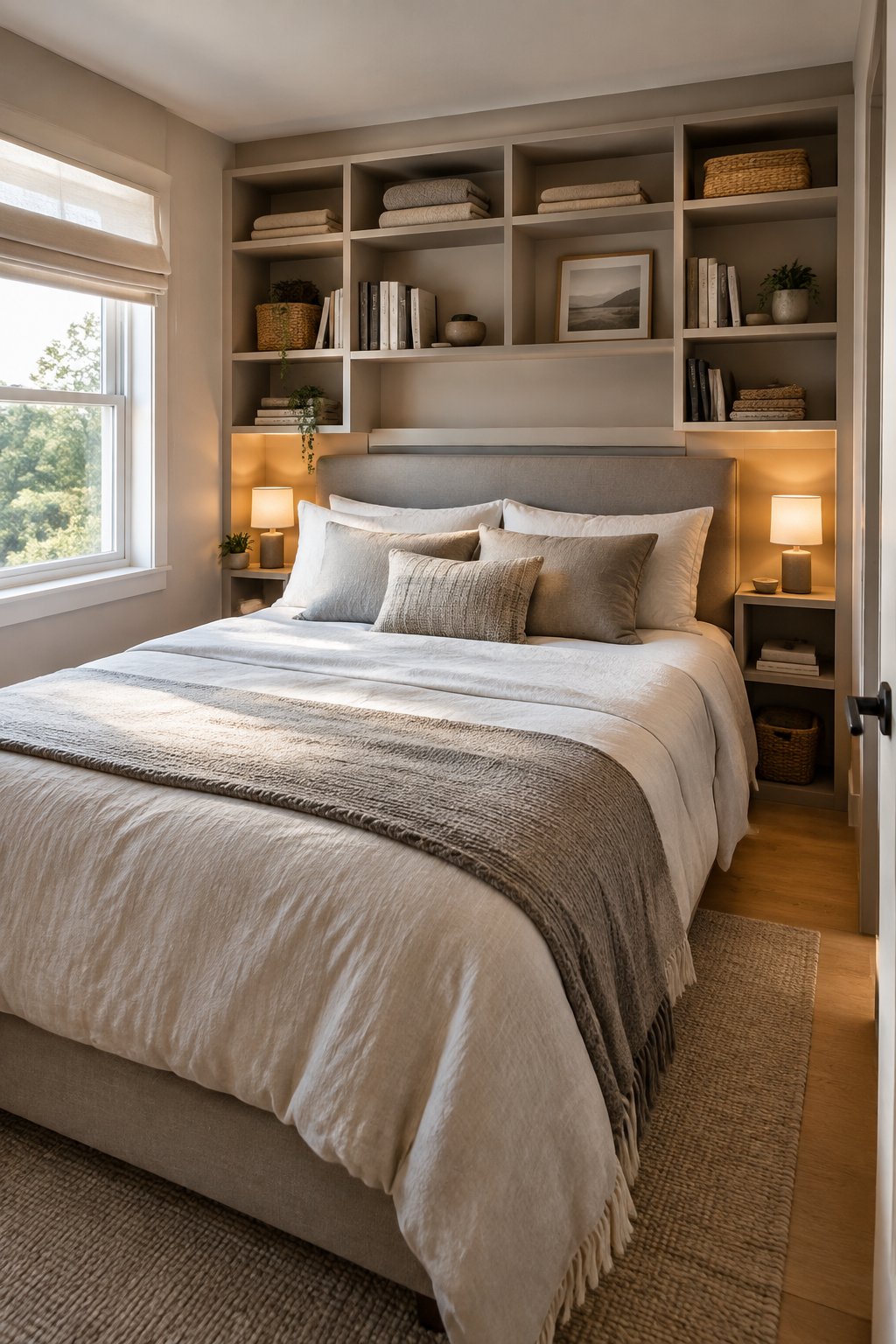
A storage headboard creates shared bedside capacity without extending furniture into the walkway. Individual cubbies give each partner a defined place for books, glasses, small electronics, and personal items.
Check these 4 small bedroom measurements first
A functional couple’s bedroom depends on more than furniture size. Measure movement paths before adding storage pieces or bedside solutions.
Keep walking space open around the bed.
Avoid furniture blocking doors or closets.
Choose shallow units where space is tight.
Give each person dedicated storage.
Use matching baskets to hide visual clutter and reserve the center cubbies for shared items. The trade-off is depth: a deep headboard reduces room behind the bed, so check the remaining clearance before installation.
5) Create Separate His-and-Hers Closet Zones
Separate closet zones reduce daily conflicts by giving each partner control over a defined amount of hanging and folded storage. Divide the closet by vertical bay, shelf, or drawer tower, then label one shared area for bedding and household items.
Match the storage layout when both partners have similar needs, or assign extra hanging space to the partner with more long garments. The trade-off is less flexibility for shared overflow, so reserve one high shelf for occasional items.

6) Add Rolling Under-Bed Drawers on Both Sides
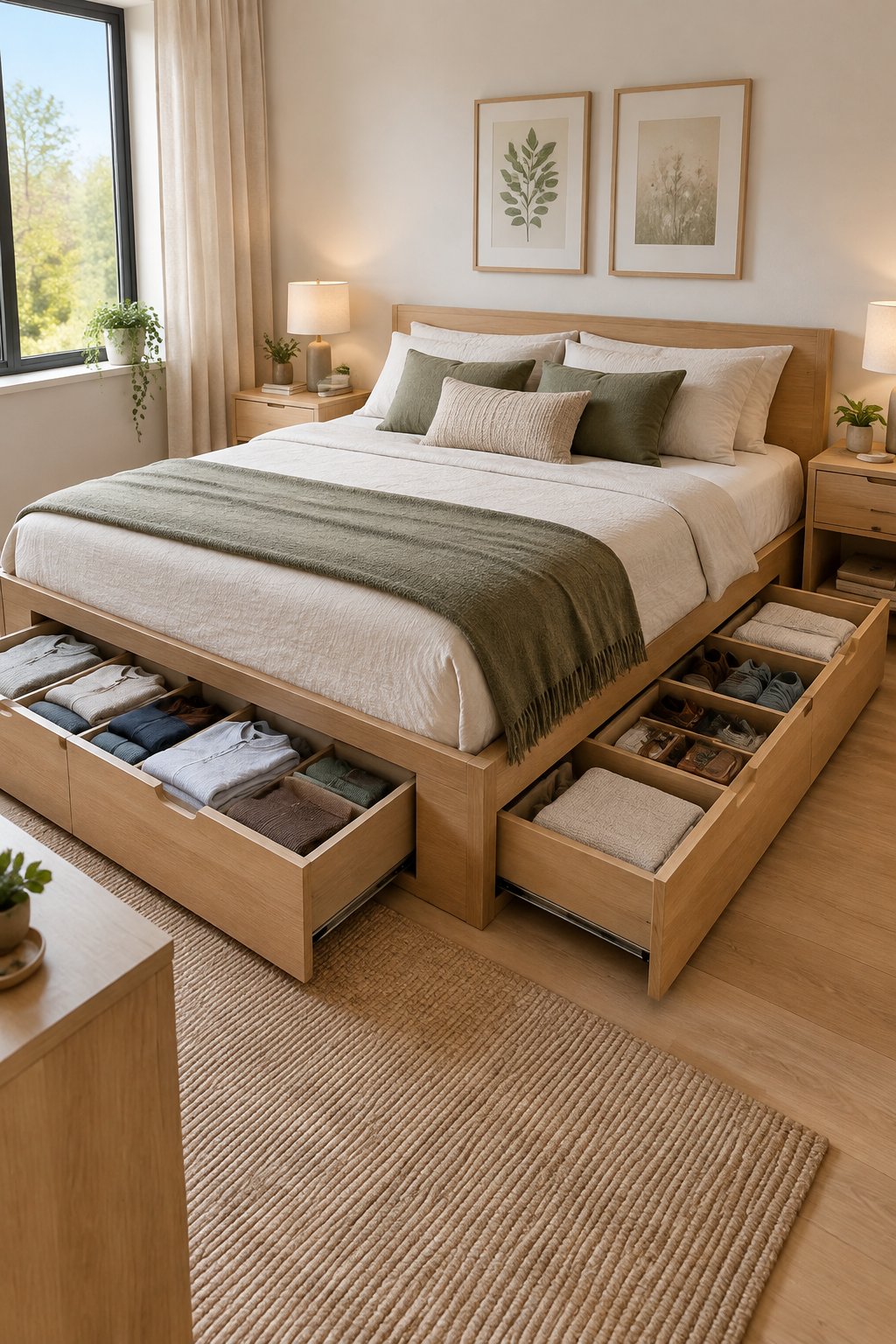
Rolling under-bed drawers give each partner direct access to storage from their own side of the bed. Use them for folded clothes, shoes, extra blankets, or personal items that need more access than seasonal storage.
Choose drawers with recessed handles and casters suited to the floor surface. The trade-off is the clearance needed to pull them out, so keep rugs, baskets, and benches outside the drawer path.
7) Replace Bulky Nightstands With Floating Nightstands
Floating nightstands free the floor beneath each bedside while keeping a small landing surface available. Install matching shelves or compact cabinets for a phone, water glass, reading light, and charging station.
Mount them high enough for comfortable reach and low enough to use from bed. The trade-off is limited storage volume, so a floating drawer works best beside a bed with larger storage elsewhere.

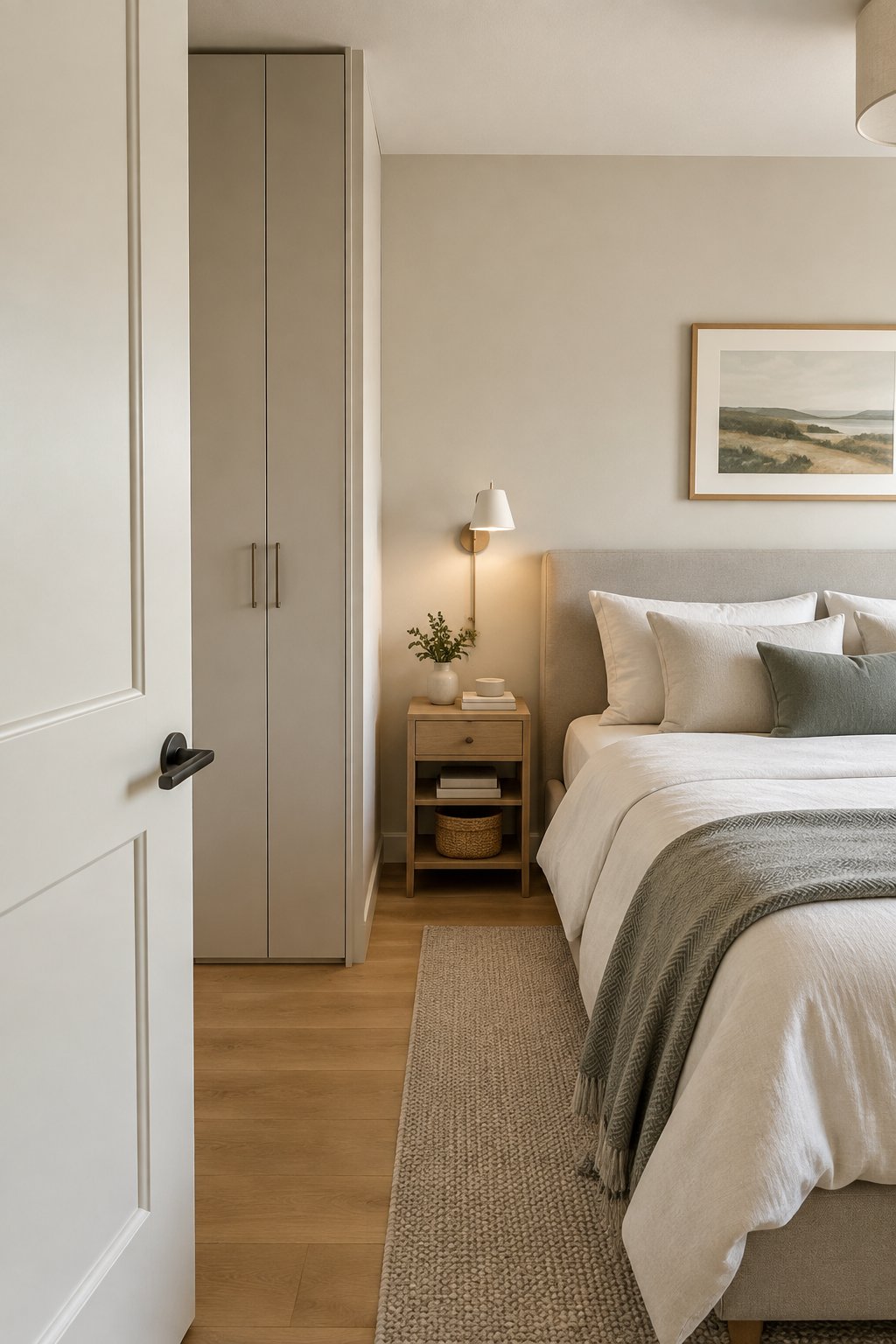
8) Fit a Narrow Wardrobe Behind the Bedroom Door
A narrow wardrobe behind the door uses an overlooked wall for coats, folded clothing, or accessories. Choose a shallow unit that allows the door to open fully and keeps handles clear of the door swing.
Use adjustable shelves and slim hangers to increase capacity without blocking movement. The trade-off is reduced depth, so this solution suits shirts, shoes, and folded items better than bulky coats.
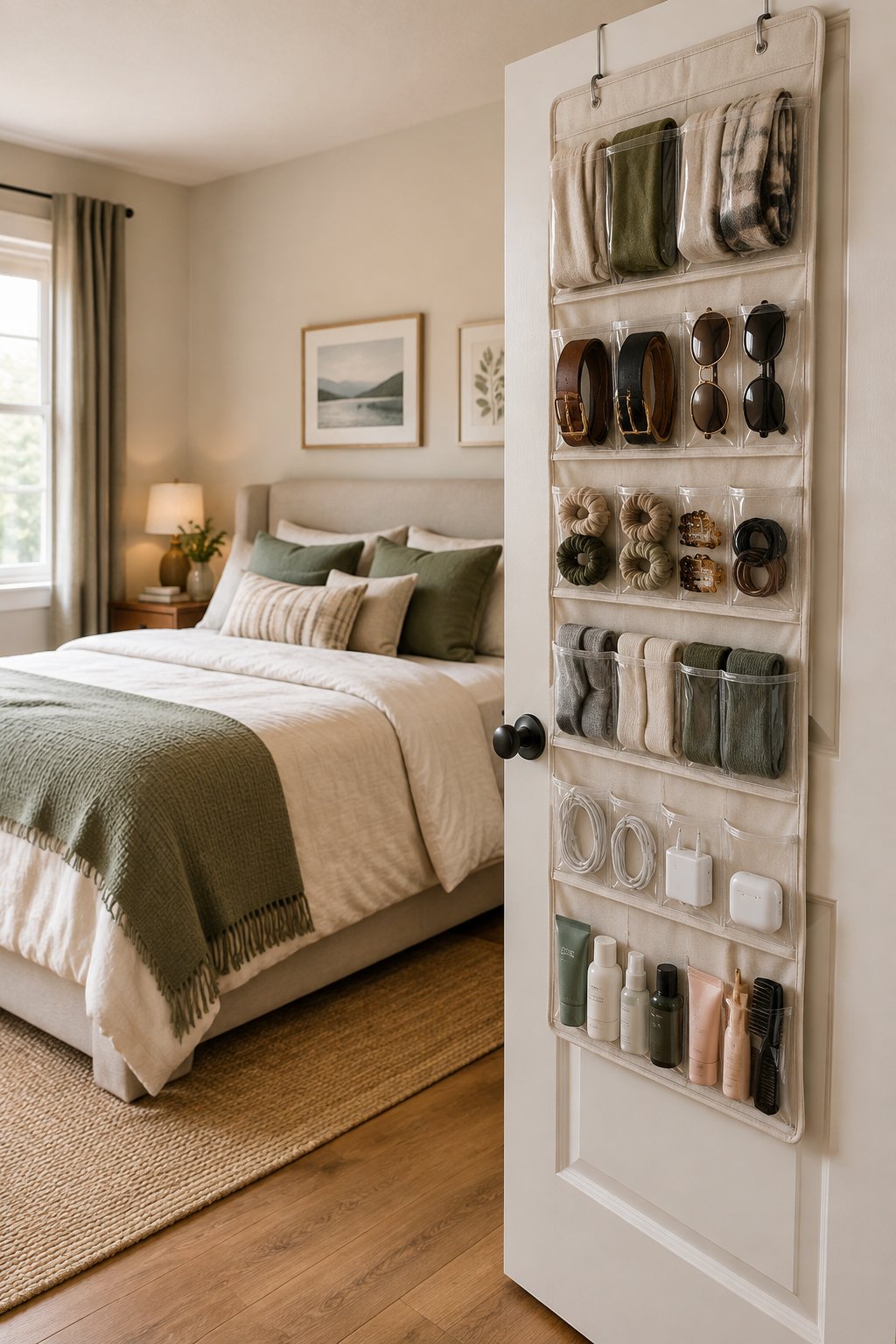
9) Use Over-the-Door Organizers for Small Daily Items
An over-the-door organizer holds small items that create surface clutter, including belts, scarves, hair tools, toiletries, and accessories. Assign separate rows or pockets to each partner to keep shared storage easy to manage.
Select a model that clears the door frame and closes without pressure. The trade-off is added door weight and visual activity, so use matching bins or opaque pockets for a calmer appearance.
10) Turn the Window Wall Into a Storage Bench
A storage bench beneath the window adds seating and concealed capacity without taking a second wall. Store extra pillows, folded throws, shoes, or infrequently used clothing in lift-top compartments or drawers.
Keep the bench height below the window sill and leave access to vents, outlets, and window controls. The trade-off is that deep seating can reduce walking space, so a shallow built-in profile works best in tight rooms.

11) Mount Matching Plug-In Wall Sconces Above Each Side
Matching plug-in wall sconces free bedside surfaces for personal items and provide separate reading light for each partner. Mount each fixture above its corresponding side of the bed, with cords routed through clips or a slim cord cover.
Choose adjustable shades when one partner reads in bed. The trade-off is visible wiring in some rentals, though paintable cord covers create a neater line without opening the wall.
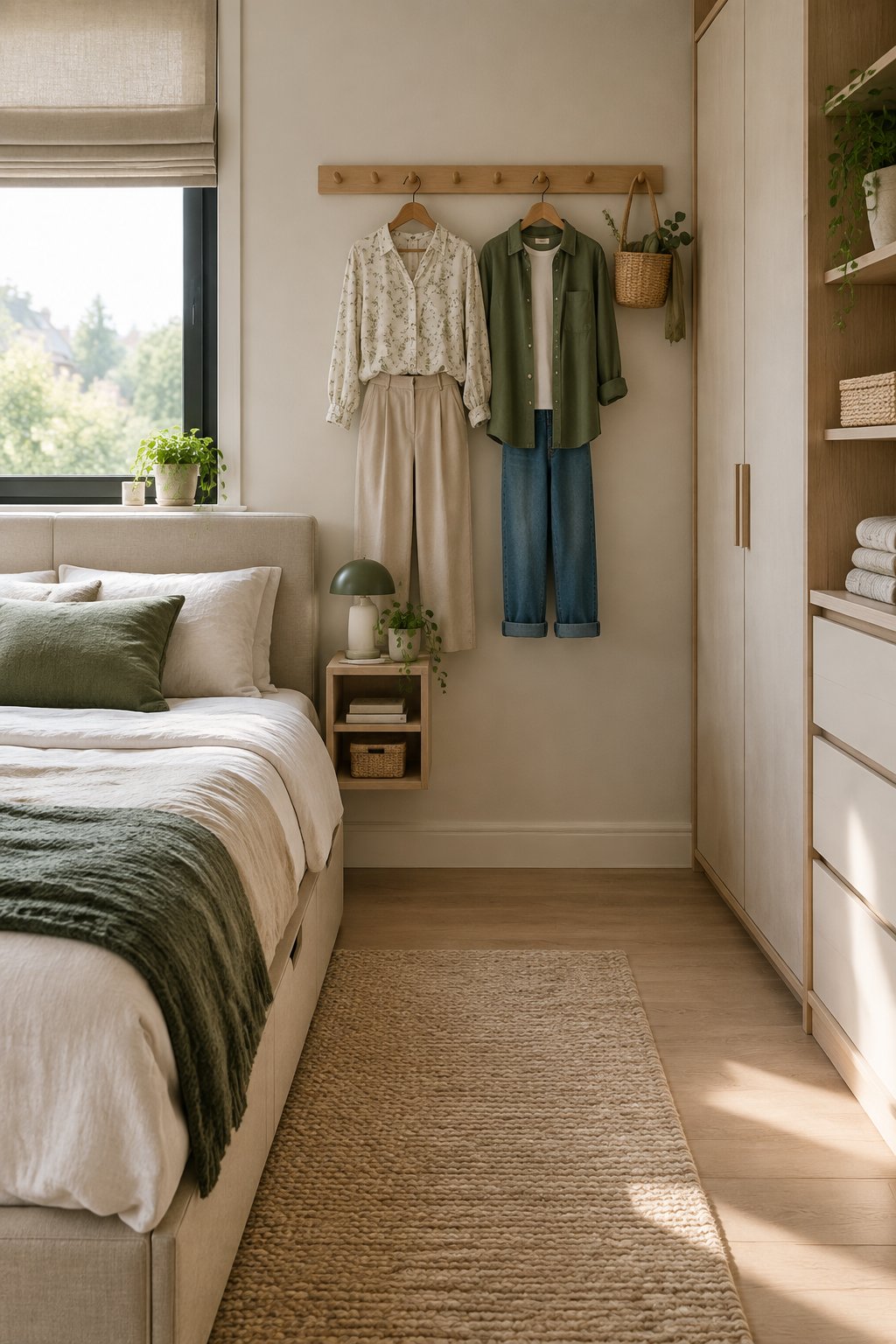
12) Add a Peg Rail for Tomorrow’s Outfits
A peg rail keeps the next day’s clothing off chairs and clear of the floor. Install two or more pegs per partner, with a small gap between zones for shared accessories or a laundry bag.
Place the rail on an unused wall near the closet and keep it above the main walking path. The trade-off is visible clothing, so limit each person to one outfit and choose coordinated hangers.
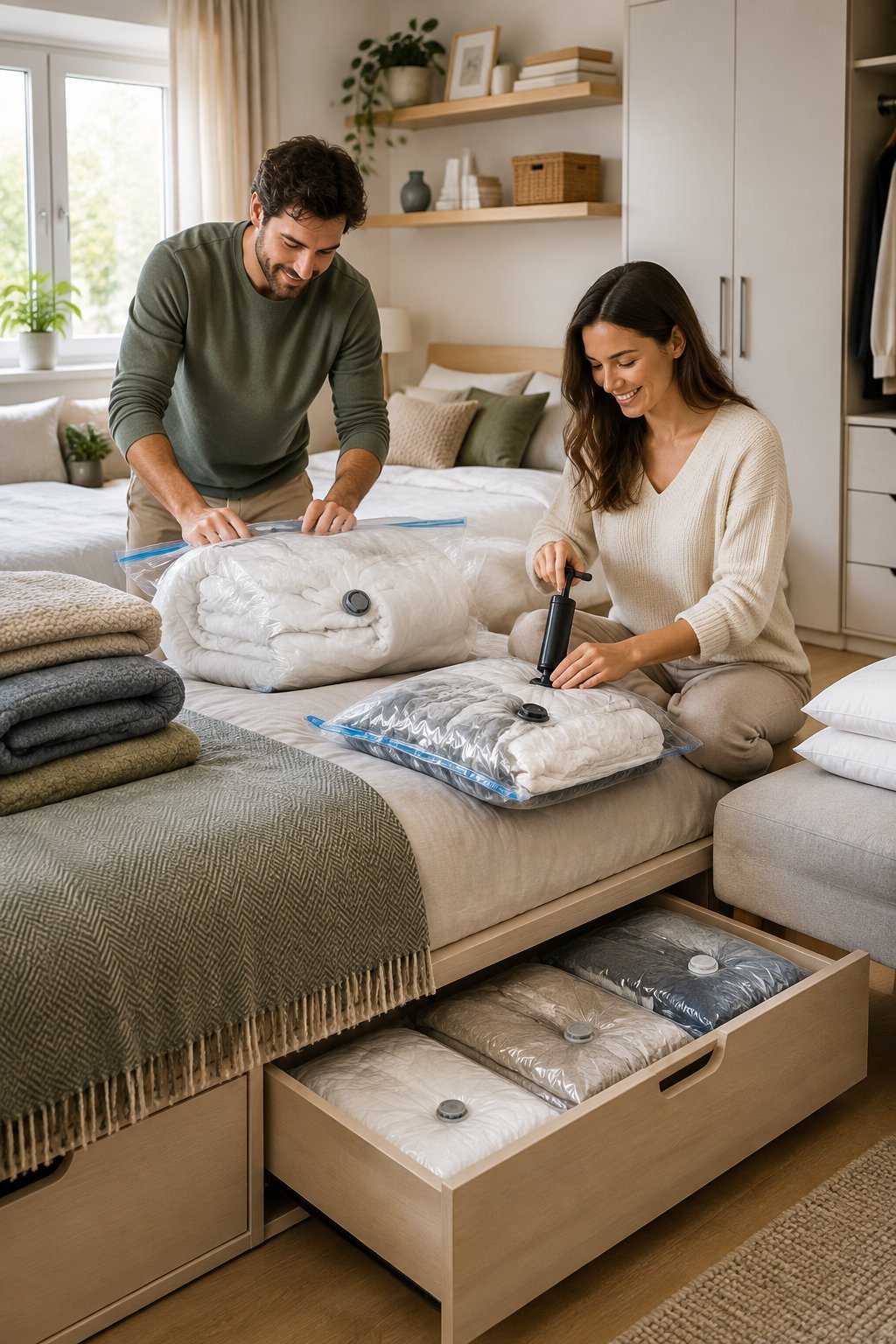
13) Use Vacuum Storage Bags for Out-of-Season Bedding
Vacuum storage bags compress spare comforters, blankets, and seasonal clothing for a lift-up bed, closet shelf, or high cabinet. Label each bag by contents and season so both partners can locate items without opening several packages.
Use bags sized for the available compartment and keep daily bedding separate. The trade-off is that compressed textiles need time to regain their loft after storage.
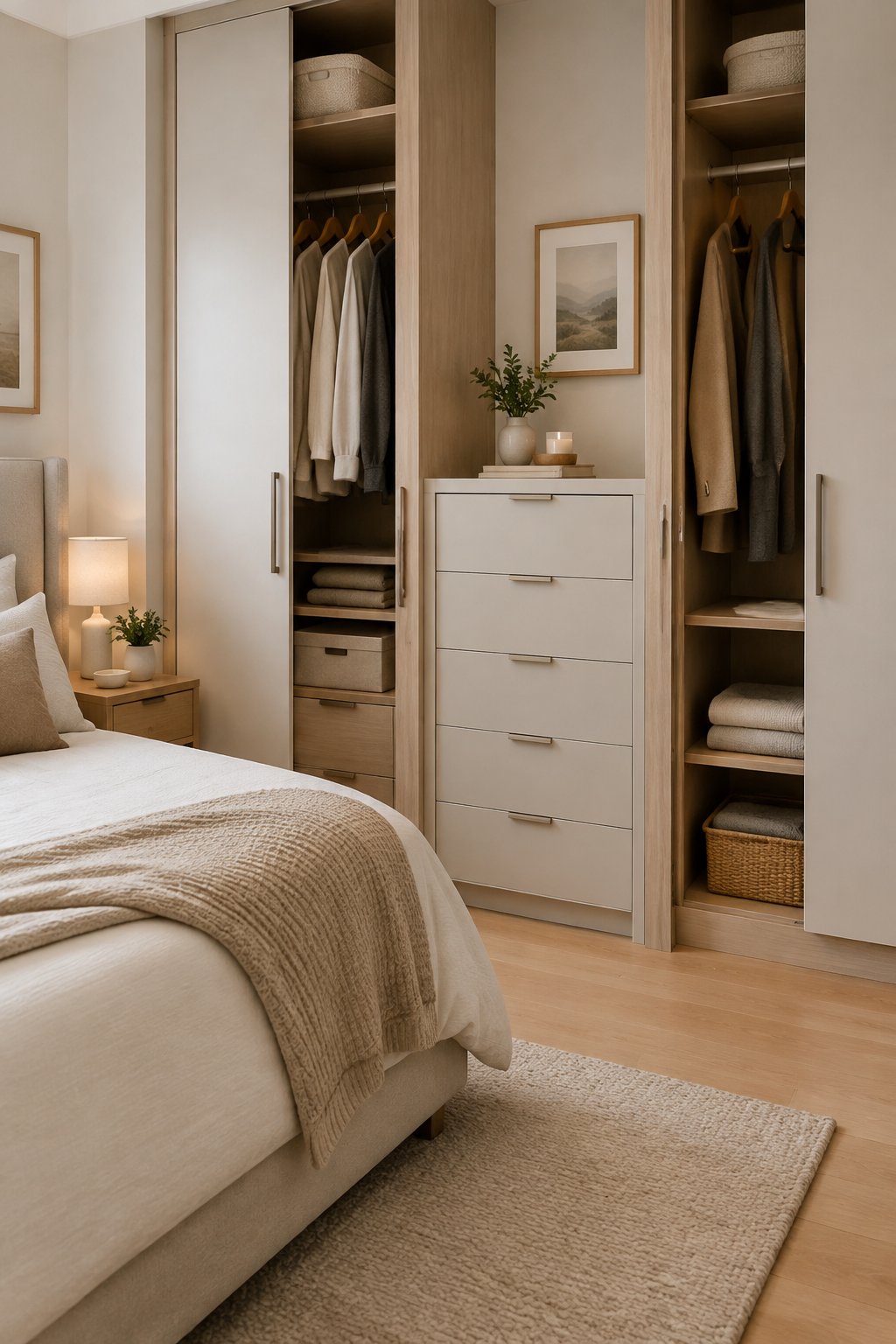
14) Place a Slim Drawer Unit Between Two Closet Sections
A slim drawer unit fills a narrow gap between wardrobe sections and gives each partner accessible folded storage. Assign drawers by person, then use one shared drawer for socks, linens, or clothing accessories.
Measure the gap, skirting boards, and drawer clearance before choosing a unit. The trade-off is modest capacity, so shallow drawers work best for small garments and accessories.
15) Store Luggage and Linens in Matching Lidded Bins
Matching lidded bins keep luggage, spare sheets, guest blankets, and rarely used accessories contained on high shelves or beneath the bed. Choose sturdy bins with front labels so the contents remain visible without opening each one.
Assign one bin to each partner and keep shared linens together in a larger labeled container. The trade-off is the height needed for stacked bins, so confirm shelf clearance before buying containers.
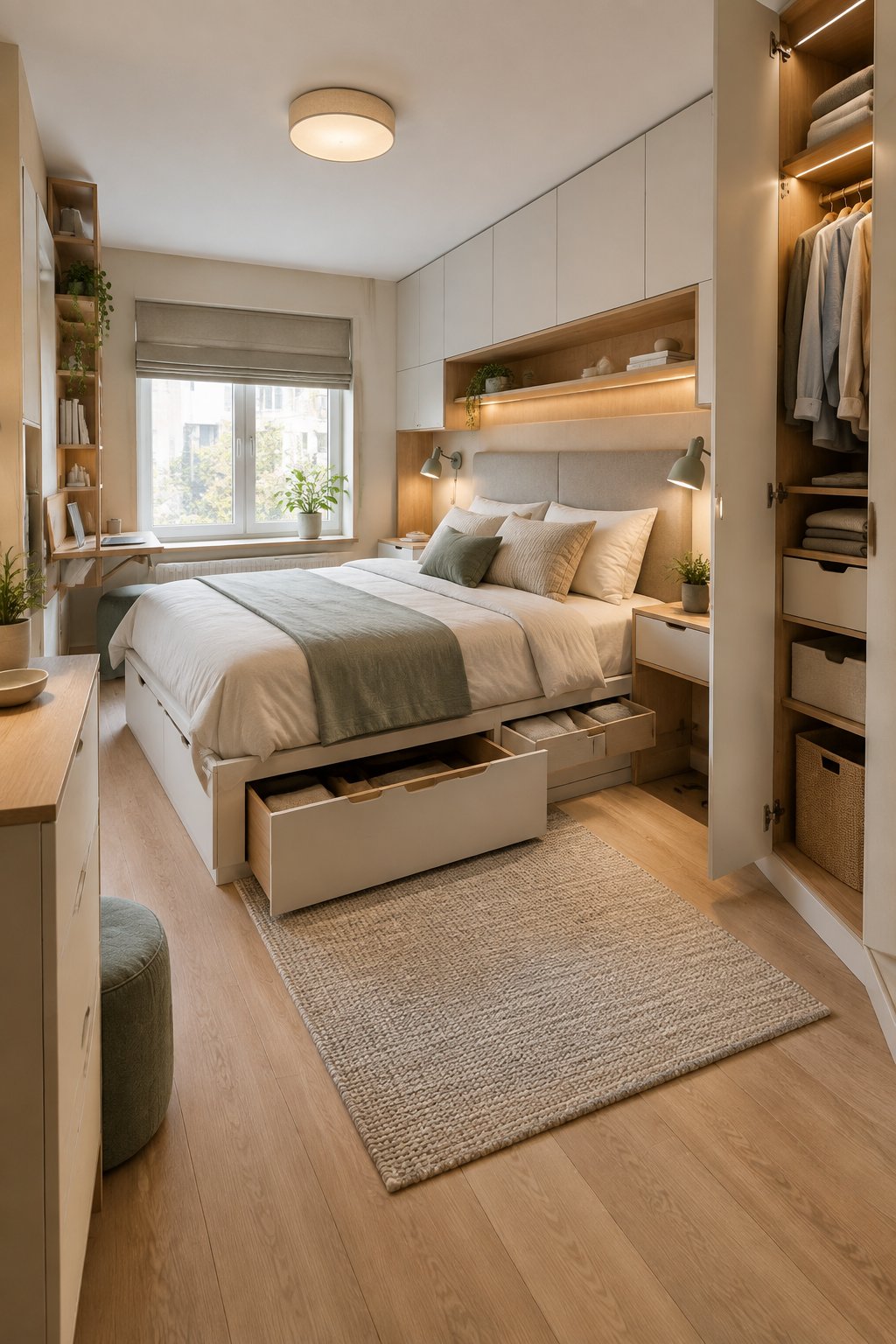
How to Plan Shared Bedroom Storage
Shared bedroom storage works best when personal zones, shared supplies, and walking clearance are planned together. Measure the room, bed footprint, door swing, closet openings, and radiator or vent locations before selecting furniture.
A useful layout keeps daily items within arm’s reach, seasonal goods in high or hidden storage, and the main route around the bed clear. Couples can also review small bedroom wardrobe design ideas when planning a built-in or modular closet wall.
How Much Storage Does Each Partner Actually Need?
Each partner needs a defined share of hanging space, folded storage, bedside space, and overflow capacity. Count the clothing categories each person owns, then divide drawers and closet bays by volume instead of assuming identical needs.
Shared areas should hold household items such as spare bedding, luggage, and first-aid supplies. A labeled overflow bin prevents one partner’s belongings from spreading into the other person’s zone.
Which Items Need Daily Access?
Daily-access items include work clothes, sleepwear, underwear, medication, glasses, phones, chargers, and frequently used accessories. Place them in waist-to-shoulder-height drawers, bedside shelves, or the front portion of a closet.
Store seasonal bedding, special-occasion clothing, and travel gear higher up or beneath the bed. This access-based layout reduces repeated searching and keeps open surfaces clear.
How Do You Protect Walking Space Around the Bed?
Protect the main route by choosing shallow bedside furniture, keeping drawer openings out of the walkway, and measuring the clearance on both sides of the bed. A wall-mounted shelf preserves floor area where a freestanding nightstand would create an obstacle.
Use masking tape to mark the bed, furniture edges, and door swing before installation. For more layout guidance, a small queen bed bedroom layout can help compare bed placement and circulation.
What Storage Changes Work in a Rental?
Renters can add storage with over-the-door organizers, freestanding wardrobes, rolling drawers, adhesive hooks suited to the wall finish, and plug-in sconces. Floating furniture requires careful attention to lease terms and wall construction.
A removable wardrobe system creates personal closet zones without a built-in installation. More rental-friendly ideas appear in these small bedroom ideas for renters.
Frequently Asked Questions
What is the best bed for storage in a small bedroom for couples?
A lift-up ottoman bed provides the largest hidden storage area because the compartment spans much of the mattress footprint. It suits couples who need room for bedding, luggage, or seasonal clothing and who can access stored items from above.
How can couples divide a small closet fairly?
Couples can divide a small closet by assigning each partner a measured bay, drawer group, or shelf area. A shared section should be reserved for linens and household items, while extra space can follow actual clothing volume.
How can I add bedside storage without using nightstands?
Wall-mounted shelves, floating drawers, storage headboards, and narrow bedside cabinets add capacity without using a full nightstand footprint. Each partner should have a defined surface or drawer for phones, glasses, chargers, and personal items.